
 By admin
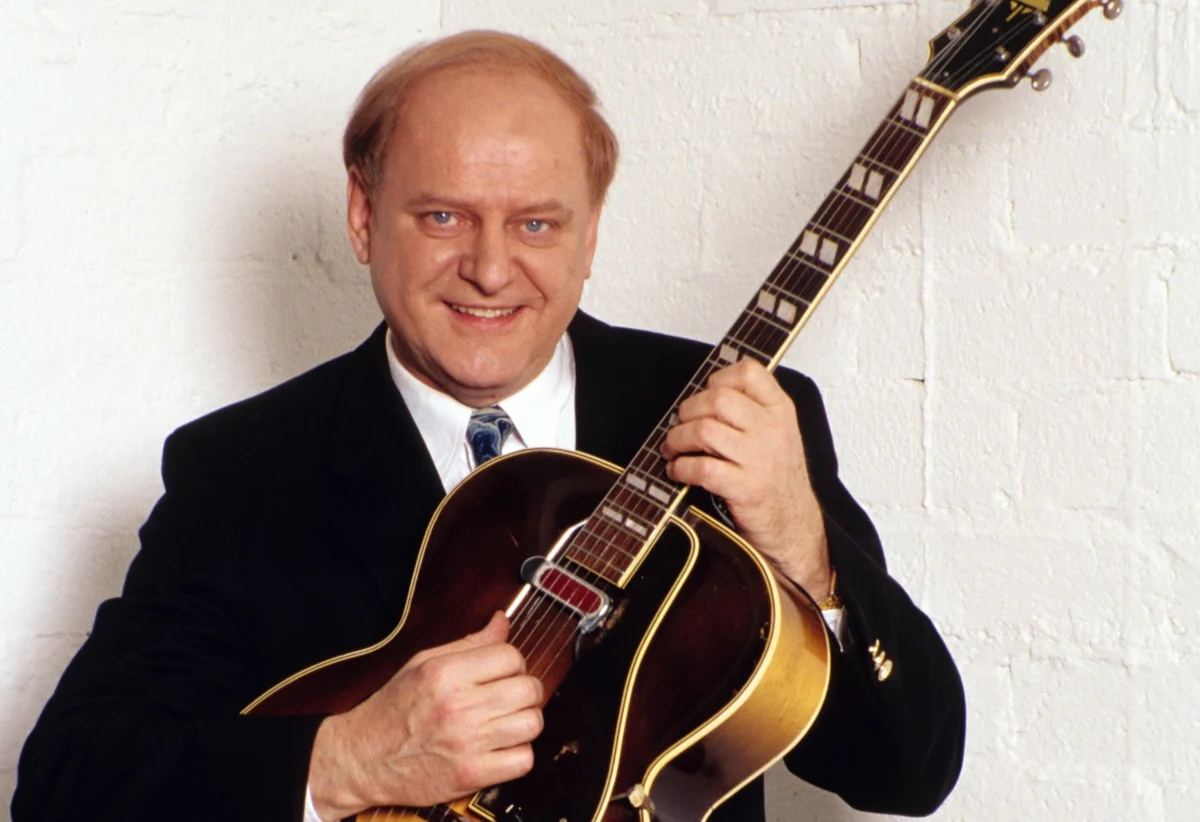
HangupsMusic.com – The music world mourns the passing of Del Casher, a visionary guitarist and prolific inventor whose ingenuity profoundly shaped the sound of modern music. Casher, born Delton Kacher, died on October 1 at the age of 88, following a valiant battle with cancer. His passing was first reported by TMZ and confirmed via a GoFundMe campaign established to support his widow, Eiko. Casher leaves behind a monumental legacy, primarily credited with conceiving the iconic wah-wah pedal, an effect that has become indispensable to countless guitarists across genres and generations.
Born in Hammond, Indiana, Casher’s musical journey began early, characterized by an insatiable curiosity and a drive to push the boundaries of electric guitar performance. In an era when electric guitars were still relatively new, Casher quickly established himself as a versatile and innovative musician. His early career saw him share stages with a diverse array of artists, from the legendary Western star Gene Autry, known for his cowboy songs and films, to the polished big band sounds of Lawrence Welk, and the sophisticated arrangements of The Three Suns. These varied experiences not only honed his technical prowess but also fueled his desire to create unique sonic textures that would set his playing apart. He was not content with merely performing; he sought to invent.
This inventive spirit found its most significant expression in the early 1960s. While working with the Thomas Organ company’s Vox Ampliphonic Orchestra, Casher encountered a challenge that would lead to a revolutionary solution. He harbored a desire to make his electric guitar emulate the expressive, vocal-like qualities of a brass instrument, specifically a trumpet, complete with the ability to dynamically "mute" or "open" its tone mid-performance. This aspiration was more than a mere stylistic whim; it was a quest to inject a new level of emotional nuance and articulation into the guitar’s voice, mirroring the human-like qualities that horns could achieve.
Casher brought this ambitious concept to Brad Plunkett, an engineer at Thomas Organ. Their collaboration proved fruitful, resulting in the development of a foot-controlled device that could sweep through the frequency spectrum, mimicking the "wah" and "mow" sounds produced by a trumpet player manipulating a mute. While Casher often humbly credited Plunkett with the engineering, the conceptual brilliance and the initial spark for this ground-breaking effect were unequivocally Casher’s. He envisioned the sound, and together they brought it to life. This device, initially named the "Cry Baby" pedal, was ready for market by 1967.
To introduce his creation to the world, Casher meticulously recorded a demonstration tape, showcasing the pedal’s capabilities and guiding musicians on how to integrate it into their playing. He also released an accompanying single, aiming to popularize the unique sonic palette the wah-wah offered. However, despite his pioneering efforts, the "Cry Baby" pedal and its promotional materials initially failed to capture the imagination of the wider music-playing public upon its release. It seemed the world wasn’t quite ready for the vocal-like expressiveness it offered, or perhaps its potential was simply not yet fully understood by the masses.
The turning point for the wah-wah pedal, and Casher’s legacy, arrived through an unexpected and serendipitous chain of events involving two of rock music’s most influential figures. In 1966, even before its official commercial release, Frank Zappa, ever the experimentalist, encountered Casher and his nascent invention. Casher famously sat in with Zappa’s Mothers of Invention, introducing them to the nascent wah-wah sound. Zappa, immediately recognizing its groundbreaking potential, became an early adopter and evangelist. It was Zappa who, in a gesture that would alter the course of guitar history, gifted one of these early pedals to a then-burgeoning guitar phenomenon: Jimi Hendrix.
Hendrix, a true sonic alchemist, took the wah-wah pedal and integrated it into his arsenal with unparalleled artistry. He didn’t just use it; he made it an extension of his voice, transforming it from a mere effect into a powerful tool for expression. His seminal 1968 album, Electric Ladyland, became a masterclass in wah-wah application. Tracks like the sprawling blues epic "Voodoo Child (Slight Return)" feature the pedal prominently, its rhythmic swells and cries mirroring Hendrix’s soulful improvisation. "Burning of the Midnight Lamp" showcased its ethereal, almost psychedelic textures, while "All Along the Watchtower" demonstrated its ability to add dramatic intensity and vocal-like bends to a melody. Hendrix’s innovative use solidified the wah-wah’s place in the pantheon of essential guitar effects, inspiring countless musicians to explore its possibilities.
The ripple effect was immediate and widespread. Another guitar titan, Eric Clapton, quickly embraced the pedal, famously employing it on Cream tracks such as "Tales of Brave Ulysses," where its distinctive voice added a psychedelic flair to his blues-rock explorations. Soon, the wah-wah pedal was no longer a niche invention but a cornerstone of the burgeoning rock sound. Guitarists like Jimmy Page of Led Zeppelin, Tony Iommi of Black Sabbath, and David Gilmour of Pink Floyd—all innovators in their own right—began experimenting with its expressive capabilities, weaving its signature sound into their iconic compositions and pushing the boundaries of what an electric guitar could convey.
By 1971, the wah-wah pedal had transcended its rock origins and achieved mainstream pop culture prominence. It became an integral component of Isaac Hayes’ "Theme From Shaft," a track that not only climbed to Number One on the charts but also earned an Academy Award for Best Original Song. The wah-wah’s funky, percussive pulse became synonymous with the blaxploitation film genre and the broader sound of funk and soul, demonstrating its versatility across diverse musical landscapes. From its initially overlooked release, the wah-wah had, in just a few short years, become a ubiquitous and defining sound of an entire era, continuing to influence generations of guitar players across virtually every genre imaginable, from funk and jazz to metal and pop.
Casher’s inventive genius extended beyond the wah-wah pedal. He is also credited with significant contributions to other groundbreaking audio technologies, including the Ecco-Fonic, an early tape echo unit, and the Fender Electronic Echo Chamber. These devices were crucial in shaping the sonic textures of their time, providing musicians with new ways to add depth, space, and psychedelic ambience to their recordings and live performances. They underscored Casher’s consistent pursuit of innovative sound manipulation, establishing him as a true pioneer in the field of electronic music effects.
Beyond his inventions, Casher maintained an active and diverse musical career. His talent as a guitarist led him to collaborations with some of the biggest names in entertainment. Notably, he worked with Elvis Presley, appearing in the King’s 1964 film Roustabout. Casher’s musical contributions extended to film scores later in his career, showcasing his versatility and deep understanding of how music could enhance narrative and evoke emotion. His work as a session musician and composer solidified his reputation as a highly respected and sought-after artist in the industry.
In a 2011 interview with The New York Times, Casher reflected on his contributions with a poignant mix of satisfaction and humility. "I feel gratified that I was there at the beginning," he stated, acknowledging his pivotal role in shaping guitar’s sonic evolution. His concluding sentiment, however, was a humble plea for remembrance: "I would just like guitar players to think of me once in a while. The only thing I ask is: remember me."
Del Casher’s wish is undoubtedly granted. Every time a guitarist stomps on a wah-wah pedal, unleashing its characteristic cry, they are, consciously or unconsciously, paying tribute to his foresight and genius. His inventions didn’t just create new sounds; they created new avenues for musical expression, empowering artists to communicate with an emotional depth previously unattainable. Del Casher may have passed, but his sonic legacy will continue to resonate, ensuring that his name is etched into the very fabric of music history, remembered as the quiet innovator who gave the electric guitar its iconic voice.
