
 By Azzam Bilal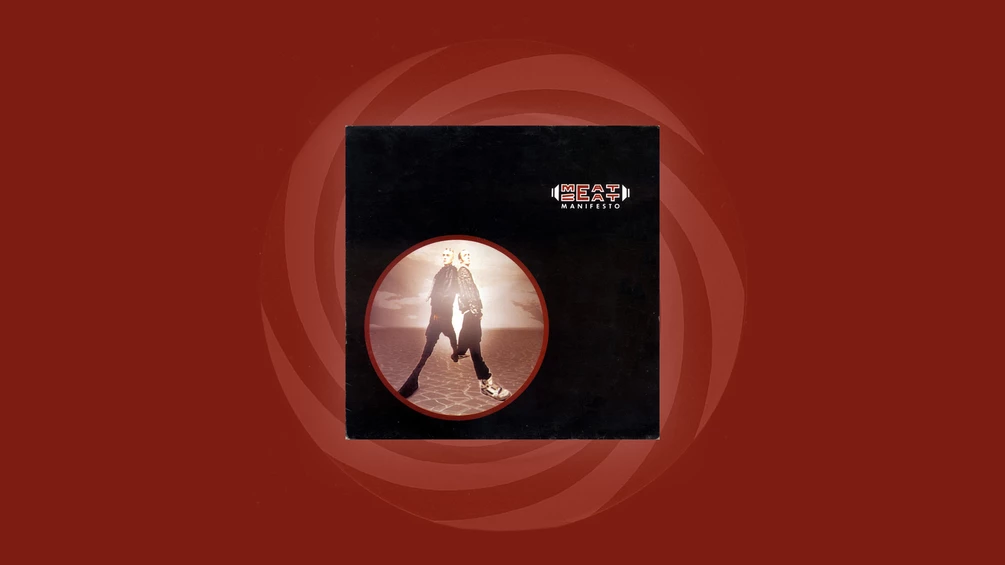
HangupsMusic.com – London, In the humid, strobe-lit warehouses of the early 1990s, a sonic revolution was brewing that would forever alter the trajectory of electronic music. While the four-to-the-floor pulse of acid house had laid the foundation, a new, more jagged energy was beginning to emerge from the UK’s burgeoning rave scene. At the heart of this transition was an unlikely anthem: "Radio Babylon" by Meat Beat Manifesto. Produced by Jack Dangers, the track was never intended to be a centerpiece for the rave movement. Instead, it was a studio experiment born from a love of dub, industrial textures, and the art of the collage. Yet, despite its unconventional origins, it became a seminal blueprint for breakbeat hardcore and proto-jungle, influencing a generation of producers from The Prodigy to Aphex Twin.
The story of "Radio Babylon" begins not in a London nightclub, but in the industrial town of Swindon, Wiltshire. Born and raised there, Jack Dangers grew up immersed in a diverse musical diet provided by the airwaves. His early influences were a mix of the avant-garde and the electronic, ranging from the robotic precision of Kraftwerk to the raw, experimental synth-pop of the Human League’s Holiday 80 EP. However, the most profound impact came from the legendary John Peel. Tuning into Peel’s BBC Radio 1 show, Dangers was exposed to a world of eclectic sounds, from the industrial grit of Cabaret Voltaire to the deep, cavernous echoes of Jamaican dub and reggae. These sessions planted the seeds for a career defined by the subversion of genre boundaries.
Dangers’ path into production was hands-on. In the early 1980s, he secured a position at Tudor Studios in Swindon, the town’s primary recording facility. Starting at the bottom, he spent his days making tea and operating tape machines, all while absorbing the technical nuances of engineering. By the mid-80s, he had moved to Drive Studio, where he worked as a professional engineer. The work was often mundane—recording cover versions of children’s songs and pop hits—but the experience was invaluable. During the quiet night hours, Dangers would strike deals with other engineers, trading dinner for studio time so he could experiment with his own ideas. Influenced by the funky post-punk of 23 Skidoo and the heavy, left-field dub production of Adrian Sherwood, he began crafting a sound that prioritized rhythm and texture over traditional melody.
After a stint with the band Perennial Divide, Dangers launched Meat Beat Manifesto (MBM). The project’s debut, Storm The Studio, was a chaotic, brilliant explosion of breakbeats and industrial noise. By the time he began working on the follow-up material for the 99% era, Dangers was refining his "cut ‘n’ paste" philosophy. In November 1989, he entered the studio with the intent of remixing a track called "Dog Star Man." This session resulted in "Helter Skelter," a breakbeat-heavy track that found immediate favor in the UK’s exploding rave scene. However, it was the deconstruction of "Helter Skelter" that would lead to his greatest achievement.
"Radio Babylon" was essentially a stripped-back, bass-heavy evolution of those sessions. The track’s foundation is a massive, tectonic dub bassline, which Dangers performed on his Aria Pro II bass guitar. The recording process, however, was far from standard. Rather than a clean studio take, Dangers plugged his bass into an Akai S-1000 sampler at home, playing random notes while distracted—legend has it he even had a piece of toast in his mouth at the time. He took the resulting floppy disk to the studio, where he manipulated the samples, tuning them down several semitones to create a sound that felt "odd and weird." This element of randomness, inspired by the experimental theories of John Cage, gave the bassline its unique, almost supernatural presence.
Complementing the bass was a drum loop that would become legendary in its own right. Dangers utilized a reissue of Bobby Byrd’s "Hot Pants," a James Brown-produced classic. While "Hot Pants" was a staple for hip-hop producers like Big Daddy Kane, Dangers re-contextualized it for the UK underground. He focused on the second snare hit, which landed naturally on the off-beat, and programmed additional kicks and snares from a Roland R8 Rhythm Machine to make the rhythm choppier and more aggressive. To give the track its signature "cavernous" feel, he ran the break through a Yamaha Rev 5 reverb and utilized a Vesta Fire RV-2 spring reverb alongside Roland digital delay and tape echo pedals. The result was a sound that felt as if it were vibrating through the walls of a concrete bunker.
The "collage" aspect of the track was further enriched by a bizarre array of samples. Dangers’ love for film and television manifested in the "burning with ecstasy" vocal snippet, taken from the 1950s detective drama Johnny Staccato. He added shouts from soul singer Cheryl Lynn, snippets of The Troggs, and dub echoes from Mikey Dread. Perhaps most surprising was the use of a sample from Boney M’s "Rivers of Babylon." By including a snippet from a mainstream pop act, Dangers aimed to puncture the overly serious image of industrial music, adding a layer of humor and irony to the track’s dark, heavy atmosphere.
The naming of the track was as spontaneous as its production. On his way to the mastering house in London, Dangers stopped at a secondhand bookstore and purchased a copy of Kenneth Anger’s Hollywood Babylon. While on the train, listening to "Radio Clash" by The Clash, the two titles merged in his mind. When the mastering engineer asked for the track’s name, "Radio Babylon" was the immediate answer.
Upon its release in 1990 as an AA-side to "Helter Skelter," the track initially met with indifference from the British music press. One particularly dismissive review even jokingly referred to the band as "Meat Ball Manifesto." However, the underground dance community had a different opinion. DJs like Hype, Jumpin Jack Frost, Fabio, and Grooverider began championing the record. It became a staple at seminal London club nights like AWOL and Rage, where its heavy dub aesthetics and complex breakbeats bridged the gap between the fading acid house era and the nascent jungle scene. Its influence was so pervasive that it was soon sampled by major players in the electronic world; The Prodigy used it for "Weather Experience," and Aphex Twin and Future Sound of London also drew from its sonic palette.
Since the success of "Radio Babylon," Jack Dangers has remained a prolific and restless figure in the music world. In 1993, he relocated to San Francisco, a move prompted by his collaborations with industrial hip-hop acts like Consolidated and the Disposable Heroes of Hiphoprisy. Over the decades, Meat Beat Manifesto has explored everything from the bass-heavy depths of dubstep on the 2008 album Autoimmune to the abrasive, experimental noise of 2024’s Extinct, a collaboration with the Japanese legend Merzbow. Dangers describes the Merzbow project as a rhythmic take on noise, likening it to a "dance record made by The Jesus and Mary Chain in 1984."
Today, Dangers continues to push boundaries. He recently contributed to the soundtrack for Tron: Ares, working alongside Trent Reznor, and has produced a club-ready remix of the track "Infiltrator." Furthermore, he is finalizing a massive new Meat Beat Manifesto album consisting of 34 tracks. This upcoming project aims to encapsulate the entirety of his musical journey, touching on every influence from Boards of Canada-esque melodies to Merzbow-inspired chaos. He admits that his work is often "all over the place," but it is precisely this refusal to stay in one lane that has allowed him to remain relevant for over three decades.
Reflecting on the legacy of "Radio Babylon," Dangers remains humble about its "accidental" status. He never set out to create a rave anthem or a blueprint for a new genre; he simply wanted to create something he liked, using the tools and techniques he had mastered in the shadows of the studio. Yet, in doing so, he captured the zeitgeist of a generation, proving that sometimes the most enduring music is that which is born from pure experimentation and a refusal to follow the rules. "Radio Babylon" stands today not just as a nostalgia piece, but as a testament to the power of the sampler and the enduring genius of Jack Dangers.
