
 By Rose Miami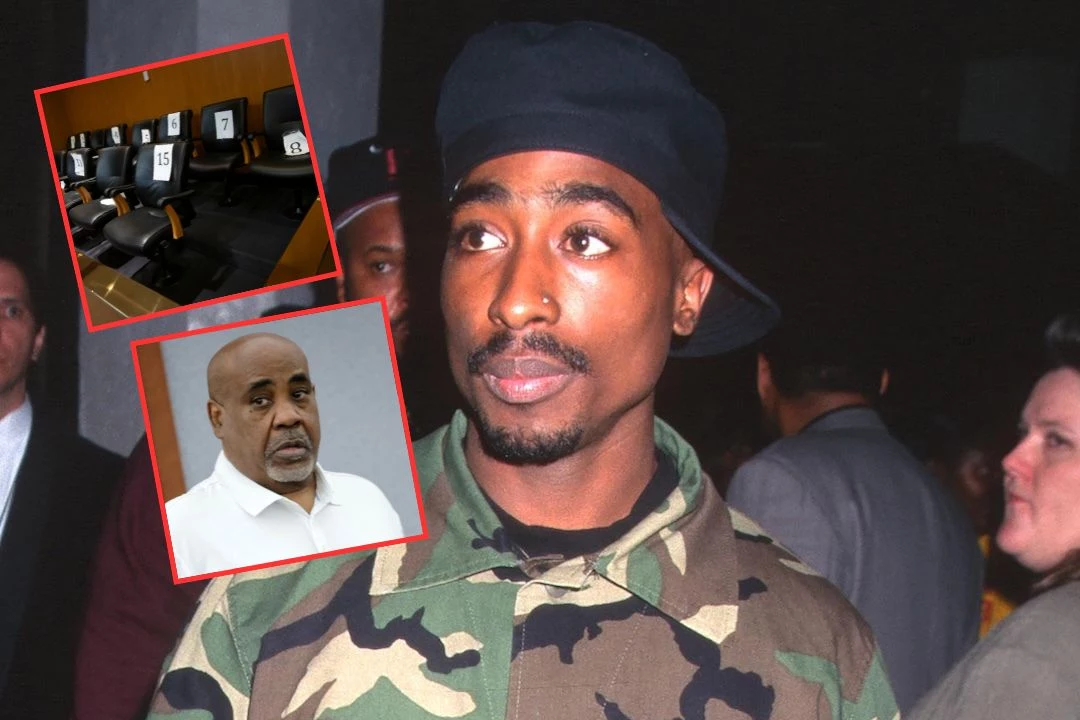
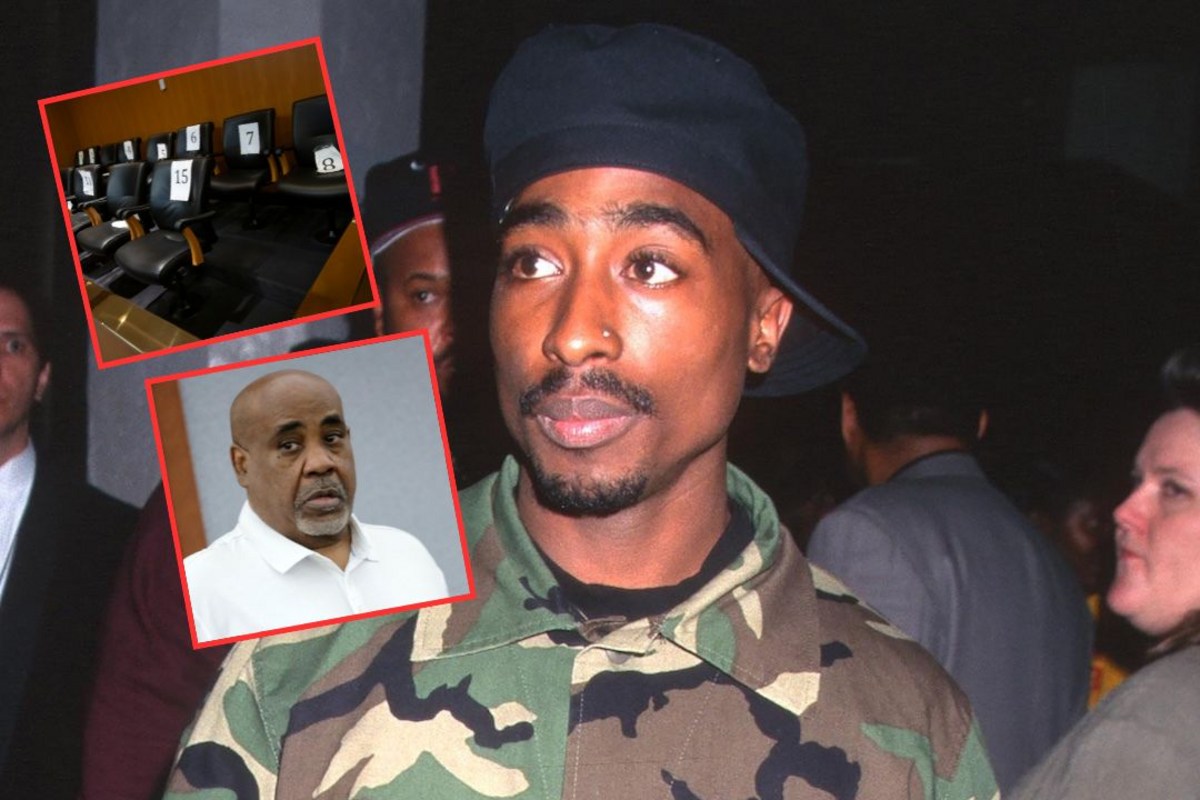
HangupsMusic.com – Las Vegas, NV – A diverse panel of twelve individuals, comprising six men and ten women, has been meticulously selected to preside over the highly anticipated trial of Duane "Keefe D" Davis, accused of orchestrating the murder of legendary rapper Tupac Shakur. The selection process, which concluded on Friday, August 14th, marks a pivotal moment in the nearly three-decade-long pursuit of justice for the iconic artist, who was fatally shot in Las Vegas in 1996.
The composition of the jury, while detailed in its gender balance, has not had specific demographic information regarding ethnicity or age publicly disclosed. This deliberate confidentiality is a standard practice aimed at safeguarding potential jurors from external influence and ensuring impartiality throughout the proceedings. During their extensive questioning, prospective jurors were subjected to a rigorous vetting process designed to assess their suitability for such a high-profile and emotionally charged case. Crucially, their familiarity with Tupac Shakur’s extensive musical catalog, their perspectives on the pervasive issue of gang activity, and their general cultural consumption habits, including their preferred books and films, were all thoroughly explored. This multifaceted approach sought to identify individuals who could approach the evidence with an open mind, unburdened by preconceived notions or biases.
With the jury now firmly in place, the legal battle is poised to commence in earnest. Opening statements are scheduled to be delivered on Monday, August 17th, signaling the official start of the trial. Duane "Keefe D" Davis, a 63-year-old former gang leader, faces the grave charge of murder with a deadly weapon, specifically with the intent to promote, further, or assist a criminal gang in the commission of Tupac Shakur’s death. The prosecution’s case is expected to hinge on a complex web of evidence and testimony, aiming to prove Davis’s direct involvement in the planning and execution of the fatal shooting. The trial is anticipated to be an extensive undertaking, with projections suggesting it could last for up to six weeks, a testament to the depth and breadth of the evidence expected to be presented.
One of the most intriguing, yet uncertain, figures who could potentially be called to testify is Marion "Suge" Knight, the co-founder of Death Row Records and a key associate of Tupac Shakur at the time of his death. However, Knight has publicly distanced himself from any involvement in the upcoming proceedings, emphatically stating his desire to remain uninvolved. In a recent interview with ABC News, Knight made his position unequivocally clear, warning that his forced appearance in court would be detrimental to whichever party compelled him to testify. "This trial has nothing to do with me," Knight reportedly stated, his tone leaving no room for interpretation. "And if somebody brings me there, it’s gonna hurt whoever brings me there. I promise you that." He further elaborated on the potential negative repercussions, asserting, "They make me come there against my will, if [Keefe D]’s lawyers bring me there, it don’t look good for him. If the prosecution brings me there, it don’t look good for them. Leave me out of it." This strong declaration from Knight adds another layer of complexity to the trial, as his testimony, if it were to materialize, could be highly influential, but his reluctance suggests a potentially volatile dynamic.
Adding further intrigue, prosecutors are expected to heavily rely on Keefe D’s own words, detailed in his 2019 memoir, Compton Street Legend. In this book, Davis purportedly chronicles his alleged involvement in Tupac Shakur’s murder. However, in a surprising turn of events, Keefe D has since publicly disavowed significant portions of his memoir, creating a contentious point that the defense will likely exploit. Prior to his recent retractions, the former Crip leader had previously acknowledged being present in the vehicle that pulled alongside Tupac and Suge Knight on that fateful night of September 7, 1996, at a Las Vegas intersection, moments before the fatal shots were fired. Tupac Shakur succumbed to his injuries six days later, on September 13, 1996, at the age of 25, leaving an indelible void in the music world and a decades-long mystery.
The gravity of the charges against Keefe D is underscored by the potential penalty he faces. If convicted of murder with a deadly weapon, he is looking at a sentence of life in prison, a stark consequence for the alleged culmination of a long-standing feud and a life of gang affiliation. The trial is not only a pursuit of justice for Tupac Shakur and his legacy but also a critical examination of the intersection of hip-hop culture, gang violence, and the pursuit of truth within the legal system. The world will be watching as the evidence unfolds and the jury deliberates on a case that has captivated public attention for nearly three decades. The proceedings promise to be a compelling, and potentially revealing, chapter in the ongoing narrative of one of hip-hop’s most tragic and enduring figures.
