 By Rose Miami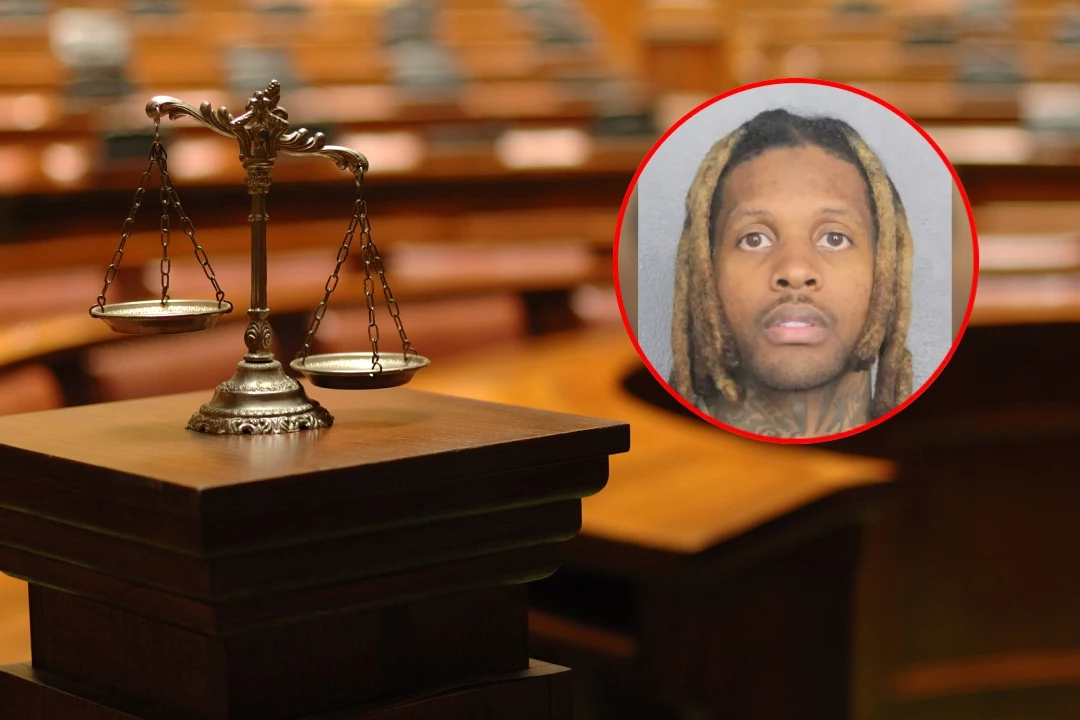
HangupsMusic.com – LOS ANGELES, CA – The fate of rapper Lil Durk, whose legal name is Durk D. Banks, and his co-defendants now rests with a jury after a gripping conclusion to the prosecution and defense’s closing arguments in their high-profile murder-for-hire trial. The proceedings, which have captivated the hip-hop world and legal observers alike, culminated on Tuesday, September 8th, marking the eleventh day of testimony in the Los Angeles federal courthouse.
The atmosphere outside the courthouse was charged with a palpable energy as a contingent of Lil Durk supporters gathered, their signs and chants echoing a fervent belief in the rapper’s innocence. Speculation swirled regarding the authenticity of some of the protestors, with whispers of paid participants adding another layer of intrigue to the already dramatic legal spectacle. Inside the courtroom, however, the focus narrowed to the starkly contrasting narratives presented by the prosecution and defense, each striving to sway the twelve jurors toward their respective conclusions.
Assistant U.S. Attorney Ian Yanniello, in his closing address, painted a grim picture of alleged orchestrations and deadly consequences. He characterized the case as straightforward, asserting that the evidence would demonstrate how Banks allegedly leveraged his considerable influence, financial resources, and public persona in a purported plot to eliminate a significant rival. Yanniello specifically referenced an attempted assassination targeting rapper Quando Rondo at a Los Angeles gas station, an incident that tragically resulted in the death of Rondo’s cousin, Saviay’a Robinson, also known as Lul Pab. The prosecutor laid the blame for Robinson’s demise squarely at the feet of OTF members, who he claimed "went straight to hunting their victims from the second they arrived [in L.A.]."

According to journalist Michael Blackshire, who has provided extensive on-the-ground coverage of the trial, Yanniello emphasized the devastating reality for the victim, stating, "[Robinson] had no idea when he [woke] up that morning that the defendants [OTF members] had already determined his fate." Further elaborating on the alleged motive, Yanniello described Lil Durk as the central figure of OTF, a collective he portrayed as driven by a retaliatory ethos of "body for a body. Blood for blood." The prosecution’s case also implicated co-defendant Deandre "OTF Dede" Wilson, whom Yanniello accused of directly hiring David "Browneyez" Lindsey and Keith "Flacka" Jones to execute the fatal plan. Yanniello concluded his summation by firmly stating, "This case is not about rap. It’s not about celebrity. It’s about Saviay’a Robinson. They are guilty on all counts."
The defense, led by the renowned attorney Brian Steel, launched a vigorous counter-offensive, primarily targeting the credibility of the government’s key witnesses. Steel emphatically dismissed the testimonies of Kevon "OTF Vonnie" Grant, Kacey "OTF Jam" Hester, and Keith Jones, labeling them as "snitches, corroborators and rats" whose accounts should be disregarded by the jury. He argued that these individuals, having allegedly cooperated with the authorities, could not be trusted to deliver truthful narratives.
Adding to the defense’s strategy, fellow attorney Drew Findling took aim at the investigative integrity of both the FBI and the LAPD. Findling went a step further by identifying Kevon Grant as the alleged "mastermind" behind Robinson’s murder, accusing him of deliberately manipulating investigators and the prosecution to deflect blame. In his closing remarks, Findling sought to humanize Lil Durk, presenting him not as a perpetrator of violence, but as a loyal figure deeply connected to his community in Chicago. He described Durk as "a lyricist. He is blessed from above," and famously declared him "The Voice. The Voice that has the ability to express what other people think." This portrayal aimed to position the rapper as an artist whose words resonated with a broader populace, rather than a criminal mastermind.
Lil Durk, along with co-defendants David Lindsey and DeAndre Wilson, face the daunting prospect of life imprisonment should the jury return a guilty verdict on charges of stalking Quando Rondo and orchestrating the murder of his cousin in August 2022. The jury’s deliberations, which commenced after the closing arguments, now mark the pivotal phase of a trial that has held significant attention within the music and legal spheres. The outcome will undoubtedly have profound implications for the careers and futures of the artists and individuals involved, and will be closely watched as a barometer of justice in a case deeply intertwined with the narratives and realities of street culture and hip-hop.
