
 By Azzam Bilal
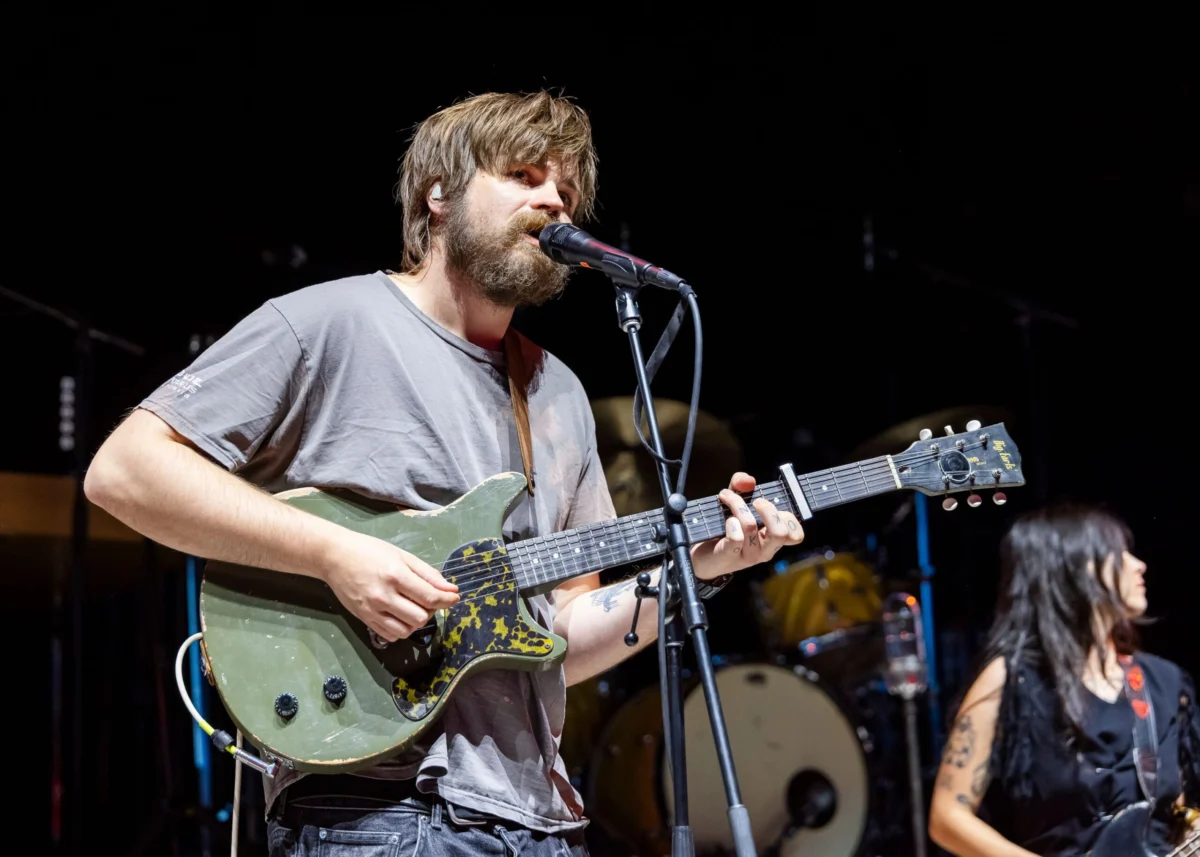
HangupsMusic.com – Santa Monica, the landscape of contemporary indie rock is often defined by its restless energy and the constant movement of its most prolific creators. Few embody this spirit more effectively than Nate Amos, the creative engine behind the solo project This is Lorelei. Recently, Amos brought the latest iteration of this project to the studios of KCRW, the influential Santa Monica public radio station, for a performance that served as both a showcase for his new material and a testament to his evolving artistry. The session provided a rare, stripped-back look at the songs from his latest full-length offering, The Singer in My Band, an album that has quickly garnered acclaim for its vulnerability and its sharp, observational songwriting.
Accompanied by a tightly knit four-piece ensemble, Amos navigated a five-song set that highlighted the eclectic textures of his recent work. The band, featuring bassist Al Nardo, keyboardist Bailey Wollowitz, and drummer Cameron Wisch, provided a robust foundation for Amos’ unique vocal delivery and melodic sensibilities. Together, they transformed the studio space into a microcosm of the "road record" atmosphere that defines the new album. The performance began with the evocative “I Will Eat My Heart In The Morning Light,” a track that sets the tone for Amos’ current creative phase with its blend of melancholic reflection and bright, indie-pop arrangements.
As the set progressed, the group delved into “Billy Came Back” and “Watching Heaven Fall,” two tracks that demonstrate Amos’ ability to weave narrative storytelling into complex musical structures. In the live setting, these songs took on a new dimension; the interplay between Wollowitz’s atmospheric keys and Nardo’s grounding bass lines allowed the lyrical nuances to come to the forefront. Amos, known for his work in the experimental duo Water From Your Eyes, has often utilized This is Lorelei as a more direct channel for his personal songwriting. This KCRW session underscored that distinction, revealing a performer who is as comfortable with a poignant ballad as he is with the avant-garde textures of his other projects.
The centerpiece of the performance was the title track, “The Singer in My Band.” As a song that explores the dualities of performance and identity, it served as a fitting anchor for the session. The live rendition captured the song’s inherent tension—the push and pull between the public persona of a touring musician and the private reality of the individual behind the microphone. It is a theme that resonates deeply within the context of The Singer in My Band, which Amos has described as a record born from the experience of constant travel and the disorientation that often accompanies a life spent on the move.
The session concluded with “The Kid With The Crown,” a track that left the audience with a sense of the expansive sonic territory Amos is currently exploring. The choice of these five songs offered a comprehensive snapshot of an artist in transition, moving away from the lo-fi, home-recorded aesthetics of his earlier work toward a more polished, yet no less idiosyncratic, sound. This evolution is perhaps most evident in the album’s production, which marks a significant milestone in Amos’ career as his first release under the prestigious Matador Records banner.
The transition to Matador Records represents more than just a change in distribution; it signifies a maturing of the This is Lorelei project. For years, Amos utilized the moniker to release a staggering volume of music—often characterized by its experimental nature and rapid-fire delivery. However, with The Singer in My Band, there is a palpable sense of intentionality. The album, which arrived in September, feels like a cohesive statement, curated with a level of focus that distinguishes it from the sprawling discography that preceded it. By signing with a label known for fostering legendary indie acts like Pavement and Yo La Tengo, Amos has positioned This is Lorelei within a lineage of songwriters who prioritize artistic integrity and sonic exploration.
The concept of the "road record" is central to understanding the current state of Amos’ work. Much of the material for the new album was conceived and refined while Amos was immersed in the grueling schedule of a professional musician. This sense of transience is baked into the DNA of the songs, reflecting the sights, sounds, and emotional shifts that occur when one is perpetually between destinations. It is a theme that Amos continues to live out in real-time. Currently, he is supporting the album on an extensive tour, sharing stages with high-profile acts such as Bleachers and the indie-folk duo @. These performances provide a stark contrast to the intimate setting of the KCRW studio, yet the core of the music remains the same: a search for connection amidst the chaos of the road.
Amos’ productivity is, by now, well-documented in the indie music community. This past summer, he was seen traversing the globe with his other primary project, Water From Your Eyes. That band, which he shares with collaborator Rachel Brown, has become a critical darling for its dissonant, danceable, and defy-categorization sound. Their most recent effort, It’s a Beautiful Place, released in 2025, further cemented their status as innovators in the experimental pop scene. Balancing the demands of two distinct and successful musical identities is no small feat, yet Amos seems to thrive in the overlap. While Water From Your Eyes allows him to explore the outer reaches of sound design and rhythmic complexity, This is Lorelei offers a space for a more traditional, albeit still quirky, form of expression.
The depth of Amos’ recent output is further highlighted by a look back at his 2024 debut under a more formalized solo structure, Box for Buddy, Box for Star. That record was praised for its raw honesty and its ability to find beauty in the mundane. It served as a bridge between the prolific, underground roots of This is Lorelei and the more refined approach seen on The Singer in My Band. Critics have noted that Amos possesses a rare ability to be both self-deprecating and profoundly moving within the span of a single verse, a quality that was on full display during the KCRW session.
The backing band for the KCRW set—Nardo, Wollowitz, and Wisch—deserves particular mention for how they have helped flesh out Amos’ vision. In the past, This is Lorelei was often a solitary endeavor, with Amos handling the bulk of the instrumentation himself. By bringing in collaborators, he has allowed the songs to breathe and expand. Cameron Wisch’s drumming, in particular, adds a dynamic energy to the live arrangements, while Al Nardo’s bass work provides a melodic counterpoint to Amos’ guitar and vocals. This collaborative spirit has turned This is Lorelei into a formidable live act, capable of translating the studio’s intricacies into a compelling stage performance.
As the Santa Monica session circulated among fans and listeners, it served as a reminder of the vital role that public radio plays in the musical ecosystem. Stations like KCRW provide a platform for artists to present their work in an unfiltered environment, stripping away the artifice of music videos and social media campaigns to focus on the performance itself. For an artist like Nate Amos, who values the "ramblin’ man" lifestyle and the authenticity of the road, such a setting is ideal.
Looking ahead, the trajectory for This is Lorelei appears to be one of continued growth and exploration. With a solid backing from Matador Records and a touring schedule that keeps him in constant contact with new audiences, Amos is effectively bridging the gap between the experimental fringe and the indie-rock mainstream. Whether he is performing in a quiet radio studio or a crowded concert hall, the essence of his work remains rooted in the human experience—the hangups, the triumphs, and the endless miles in between. The Singer in My Band is not just an album title; it is a reflection of the roles we play and the journeys we take to find out who we really are. As Amos continues his trek across the musical landscape, his stop in Santa Monica stands as a highlight of a year defined by relentless creativity and the pursuit of a singular, wandering muse.
