
 By Azzam Bilal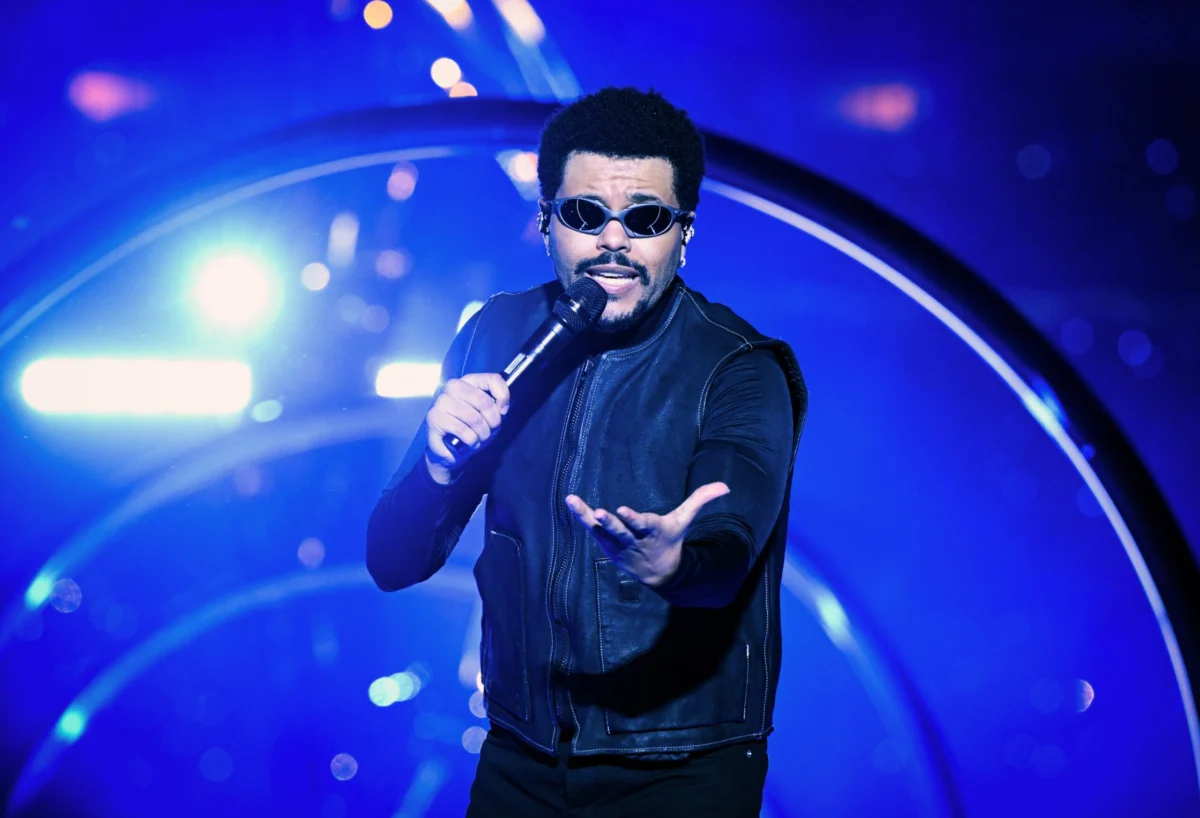
HangupsMusic.com – TOKYO, Japan. On the evening of September 19, the Belluna Dome in Tokyo became the epicenter of a historic cultural convergence as Abel Tesfaye, the global phenomenon professionally known as The Weeknd, launched the highly anticipated Asian leg of his After Hours Til Dawn Stadium Tour. The performance was not merely a continuation of a years-long global trek; it served as a profound homage to Japanese pop culture, blending the boundaries between Western R&B, legendary anime, and avant-garde video game aesthetics. The highlight of the evening was the debut of a brand-new track that featured a prominent sample from one of the most culturally significant anime series in history, Neon Genesis Evangelion.
The atmosphere inside the dome reached a fever pitch when the familiar, driving rhythms of "A Cruel Angel’s Thesis"—the iconic opening theme of Neon Genesis Evangelion—began to echo through the stadium. In a move that stunned the thousands in attendance, Tesfaye was joined on stage by Yoko Takahashi, the Japanese vocalist whose voice has been synonymous with the series since its 1995 debut. The collaboration represented a rare bridge between the "Anisong" world and the peak of American pop music. While the title and official release date for this new composition remain under wraps, the live rendition showcased a seamless integration of Takahashi’s soaring, operatic melodies with Tesfaye’s signature moody, atmospheric production. In a moment of artistic humility, Tesfaye stepped back during the performance, allowing Takahashi to command the spotlight for a solo rendition of the classic theme while he remained at the rear of the stage, visibly appreciating the legendary singer’s presence.
The auditory experience was complemented by a visual spectacle curated by the renowned video game director and writer Yoko Taro. Known for his work on the NieR and Drakengard series, Taro’s involvement brought a distinct layer of philosophical and dystopian depth to the show. The stage visuals incorporated haunting imagery from Taro’s 2007 masterpiece, NieR:Automata, alongside motifs from Neon Genesis Evangelion. The synergy between Tesfaye’s career-long exploration of isolation and excess and Taro’s themes of existentialism and cybernetic decay created a cohesive narrative that resonated deeply with the Tokyo audience. This collaboration highlights Tesfaye’s growing inclination toward high-concept, multimedia storytelling, moving beyond the traditional constraints of a concert to create an immersive, cross-media event.
This Tokyo performance marks a significant chapter in the After Hours Til Dawn Stadium Tour, an odyssey that began in 2022 following the massive success of the After Hours (2020) and Dawn FM (2022) albums. The tour has been one of the most ambitious undertakings in modern music history, characterized by its massive set pieces—including a giant, glowing moon and a post-apocalyptic cityscape—and its stamina. Over the course of the last two years, Tesfaye has used the stage as a living laboratory, evolving his sound and persona in real-time as he transitioned through different creative eras.
Since the tour’s inception, Tesfaye’s output has remained prolific and eclectic. In 2023, he released the soundtrack for the HBO series The Idol, a project in which he also starred and served as a co-creator. While the series itself faced a tumultuous critical reception, the music—billed as The Idol Vol. 1—further explored Tesfaye’s fascination with the dark underbelly of fame and the cinematic textures of 1980s synth-pop. However, the most pivotal development in his recent career came with the 2025 release of Hurry Up Tomorrow. This album has been framed by Tesfaye as the definitive conclusion to the trilogy that began with After Hours, serving as a final artistic statement under The Weeknd moniker.
The "death" of The Weeknd persona has been a recurring theme in Tesfaye’s recent interviews and promotional materials. By billing Hurry Up Tomorrow as his final release under this name, he has signaled a desire to shed the artifice of the character he has inhabited for over a decade. This transition was further emphasized by the announcement of a companion film directed by Trey Edward Shults, the filmmaker behind acclaimed dramas like Waves and It Comes at Night. The film, which features a high-profile cast including Barry Keoghan and Jenna Ortega alongside Tesfaye, is expected to provide a visual and narrative anchor to the themes explored in the album. The inclusion of such prominent cinematic talent suggests that Tesfaye’s future may lie as much in the film industry as it does in the recording studio.
The choice to debut the Evangelion-sampled track in Tokyo was a strategic and sentimental masterstroke. Neon Genesis Evangelion is more than just an anime in Japan; it is a cultural touchstone that redefined the "mecha" genre and explored complex psychological and religious themes. By aligning himself with this legacy, Tesfaye tapped into a deep well of local reverence while simultaneously introducing a new generation of global fans to Takahashi’s work. The "A Cruel Angel’s Thesis" sample acts as a sonic metaphor for the themes Tesfaye has explored throughout his trilogy: the struggle for identity, the pain of human connection, and the inevitability of change.
Industry analysts have noted that Tesfaye’s ability to remain relevant over a four-year tour cycle is a testament to his curated mystique and his willingness to experiment with global influences. The Tokyo show demonstrates a shift away from the North American-centric model of pop stardom toward a more globalized, polyglot approach to entertainment. By collaborating with Yoko Takahashi and Yoko Taro, Tesfaye is not merely "visiting" a foreign market; he is actively engaging with its artistic history and contributing to its modern discourse.
As the tour continues across Asia and beyond, the music world remains on high alert for the official release of the Tokyo debut. The track represents a bridge between the high-octane energy of After Hours and the introspective, perhaps final, notes of Hurry Up Tomorrow. It also raises questions about what the post-Weeknd era will look like for Abel Tesfaye. If the Tokyo performance is any indication, his future work will likely be characterized by a total lack of boundaries between music, film, gaming, and animation.
The Belluna Dome show was a reminder that even as he prepares to retire one of the most successful personas in music history, Tesfaye remains at the height of his creative powers. The "After Hours Til Dawn" era is nearing its twilight, but in the neon glow of Tokyo, it felt as though a new dawn was simultaneously breaking. Whether he continues as Abel Tesfaye or under a new pseudonym, the artistry displayed in this collaboration suggests that his narrative is far from finished. For the fans in Tokyo, the night was a rare opportunity to witness the collision of two distinct cultural worlds, orchestrated by an artist who has spent his career proving that the most compelling stories are often found in the dark, sampled from the past, and projected into a futuristic, uncertain tomorrow.
