
 By Azzam Bilal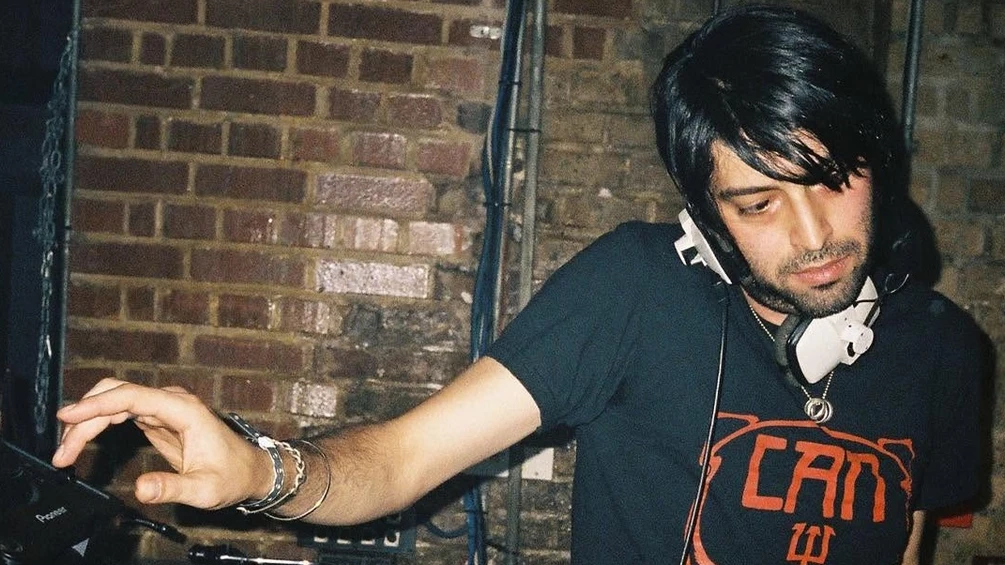
HangupsMusic.com – London, For more than a decade, the London nightlife landscape was defined by a singular, weekly pilgrimage to the intersection of guitar-driven grit and electronic innovation. That pilgrimage was known simply as Trash. Since its doors closed in 2007, the club night has occupied a hallowed space in the annals of UK subculture, remembered as the birthplace of "indie-sleaze" and the catalyst for a genre-blurring revolution. Now, after nearly twenty years of silence, the mastermind behind the movement, Erol Alkan, has ignited a firestorm of speculation by hinting that the "light that never goes out" might be flickering back to life.
The revelation arrived via a cryptic but emotionally resonant social media post on the official Trash Instagram account. The message was concise yet heavy with historical weight: “January 2027 will mark 20 years since we closed our doors forever. But there is a light that never goes out. Got something to share with you, so let’s stay in touch.” Accompanying the text was a link to a fresh mailing list, a modern digital breadcrumb for a community that once relied on flyers and word-of-mouth. The mention of 2027 suggests a long-term plan, perhaps a series of commemorative events or a full-scale resurrection of the weekly format that once dominated Monday nights in the capital.
To understand why a simple Instagram post has caused such a stir, one must look back to 1997, the year Alkan founded Trash. At the time, London’s club scene was largely segregated. You were either a "rock kid" or a "dance head." The idea of playing a Stooges record followed by a techno track was considered stylistic heresy. Alkan, however, saw a bridge where others saw a wall. Starting in the intimate, basement confines of Plastic People—a venue that would itself become legendary—Trash began as an experiment in musical fluidity. It was a place where the energy of punk met the pulse of the dancefloor, creating a friction that would eventually ignite the electroclash and nu-rave movements.
As the night grew in stature, it moved to larger venues like The Annexe and, most famously, The End in Holborn. Throughout its ten-year residency, Trash became the definitive proving ground for a new generation of artists who would go on to reshape the global music landscape. It wasn’t uncommon to see a fledgling LCD Soundsystem, a pre-fame Yeah Yeah Yeahs, or the neon-clad Klaxons performing to a crowd that was as fashionable as it was feral. Alkan, alongside resident DJs like Rory Phillips and James Dickie, curated an atmosphere where the avant-garde felt accessible and the underground felt like the center of the universe.
The musical identity of Trash was built on the "blog house" aesthetic before blogs even existed. It was a precursor to the digital era’s obsession with mashups and genre-hopping. Alkan’s own sets became the stuff of myth; he possessed a unique ability to find the rhythmic commonality between a Mylo remix and a Joy Division anthem. This approach didn’t just entertain; it educated. A generation of clubbers grew up at Trash learning that the visceral energy of a guitar riff was not so different from the oscillating sweep of a synthesizer. This philosophy paved the way for the mid-2000s boom of "indie-dance," a sound that would eventually dominate festival main stages worldwide.
When Trash eventually shuttered in January 2007, it did so at the absolute peak of its influence. Alkan famously wanted to end the night while it still felt vital, avoiding the slow decline into nostalgia that plagues so many long-running institutions. In the years following the closure, Alkan’s own career reached new heights. He transitioned from a star DJ into a world-class producer, working with artists like Ride, The Killers, and Duran Duran. He also founded Phantasy Sound, a label that has become a bastion of high-quality electronic music, releasing works by Daniel Avery, Terrace Martin, and Red Axes.
Despite his continued success, the ghost of Trash has always lingered. Last year, Alkan paid tribute to the 18th anniversary of the club’s final nights by unearthing archival recordings of his sets from 2002. These recordings served as a potent reminder of the night’s raw, unpolished energy. More recently, Alkan has been digging into his musical roots, reissuing "Fools Are Friendly" by the Croydon duo Xclusiv on Phantasy Sound. This "lost disco gem," as he described it, highlights Alkan’s ongoing obsession with the fringes of music history—the tracks that "slipped through the cracks" but still possess the power to move a room.
The timing of this new teaser is particularly poignant. We are currently witnessing a massive resurgence of interest in the "indie-sleaze" era. On platforms like TikTok and Instagram, younger generations are romanticizing the grainy photography, American Apparel aesthetics, and DIY spirit of the early 2000s. For those who were actually there, Trash was the epicenter of that aesthetic. A return in 2027 would not just be a nostalgic exercise for forty-somethings; it would likely find a massive, hungry audience among Gen Z clubbers looking for an alternative to the increasingly commercialized and sanitized nightlife of the 2020s.
However, a revival in 2027 faces a very different London than the one Alkan navigated in 1997 or 2007. The city’s nightlife has been under siege for years, facing rising rents, strict licensing laws, and the closure of iconic spaces like The End and the original Plastic People. If Trash is to return, it will have to contend with a landscape where "guerrilla" clubbing is harder than ever. Yet, Alkan has always been a master of adaptation. Whether the "return" manifests as a one-off festival, a new permanent residency, or a traveling series of pop-ups, his involvement ensures a level of curation and authenticity that few others can match.
The phrase Alkan used—“there is a light that never goes out”—is a direct nod to The Smiths, a band whose melancholic anthems were a staple of the Trash playlist. It suggests that while the physical doors closed nearly two decades ago, the spirit of the night has remained a constant in the cultural ether. By opening a new mailing list, Alkan is beginning the process of reassembling the tribe. It is a slow-burn marketing strategy that respects the history of the brand while building a bridge toward its future.
As the 20-year anniversary approaches, the questions remain: Who will be the new residents? Which venue could possibly capture the lightning-in-a-bottle atmosphere of The End? And most importantly, can the "Trash sound" evolve to reflect the sounds of 2027 while remaining true to its rock-and-roll heart? In an era of algorithmic playlists and safe, predictable club lineups, the prospect of Erol Alkan returning to the helm of his most influential project is a beacon of hope for those who believe that clubbing should be unpredictable, messy, and loud.
For now, fans are left to sign up, wait, and wonder. The three-year lead time until 2027 suggests that whatever Alkan is planning, it is of a scale and significance that requires meticulous preparation. If the original run of Trash taught us anything, it’s that Alkan doesn’t do things by halves. When the light finally flickers back on in 2027, it won’t just be a look back at the past; it will likely be a defiant statement on the future of London’s alternative culture. The "Trash" name carries a heavy legacy, but in the hands of its creator, it remains one of the most potent symbols of musical rebellion in the modern age. Stay tuned, because the next chapter of London’s most legendary Monday night is finally being written.
