
 By Azzam Bilal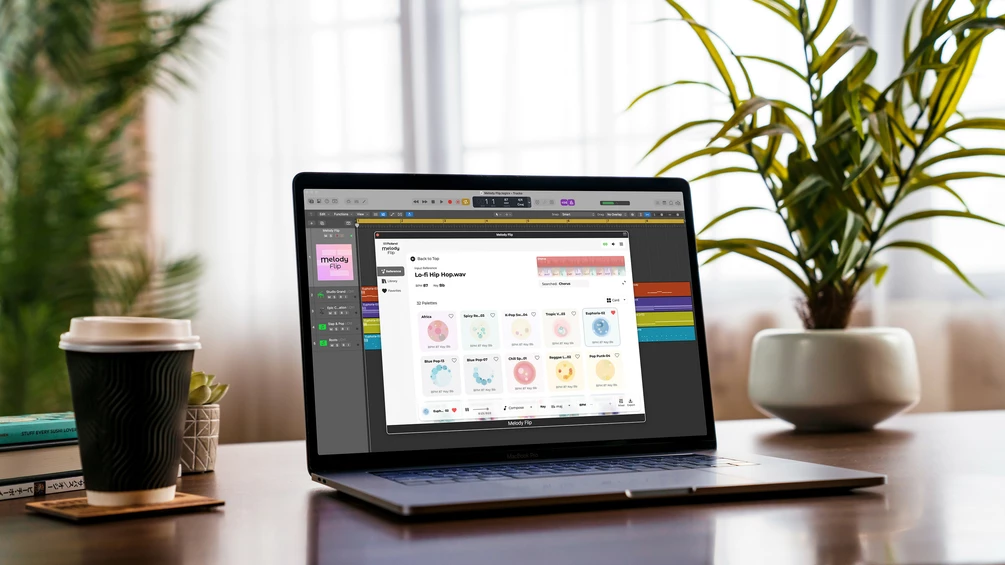
HangupsMusic.com – Tokyo, In a move that signals a significant shift toward the integration of machine learning in the creative process, Roland has announced the release of Melody Flip, a sophisticated AI-assisted melody generation plug-in. This new software arrives as part of the company’s broader initiative to position itself not just as a manufacturer of iconic hardware, but as a comprehensive "music creation partner" for the modern era. By blending the company’s legendary understanding of groove and harmony with contemporary algorithmic processing, Melody Flip aims to solve one of the most persistent challenges in the studio: the "blank page" syndrome that often stalls the creative momentum of producers and composers.
The core functionality of Melody Flip revolves around a structured library of musical patterns organized into what Roland calls "Palettes." These Palettes are more than just static loops; they are dynamic musical frameworks that cover the essential pillars of a contemporary production: melodies, chord progressions, basslines, and drum patterns. With a library exceeding 250 distinct Palettes, the plug-in offers a vast spectrum of stylistic starting points. This breadth ensures that whether a producer is working on high-energy dance music, atmospheric ambient tracks, or structured pop, there is a foundational element available to spark the next phase of the writing process.
What distinguishes Melody Flip from traditional pattern generators is its "AI-assisted" intelligence, which allows for a high degree of personalization and contextual relevance. One of the standout features of the software is its ability to ingest and analyze external audio. Users can import their favorite tracks or existing project stems into the plug-in, which then utilizes AI to dissect the audio for critical musical data. The software identifies characteristics such as tempo, key, and harmonic structure, and then generates suggestions that align with those specific qualities. This allows producers to mine their own influences or existing works for new variations, creating a feedback loop of inspiration that feels tailored to their specific aesthetic rather than sounding like generic, computer-generated MIDI.
The workflow of Melody Flip is designed to be as frictionless as possible, acknowledging the diverse ways in which modern artists interact with their Digital Audio Workstations (DAWs). Once the AI has generated a sequence or a pattern that resonates with the user, the content can be exported in two primary formats: MIDI or audio. The MIDI export functionality is particularly powerful for those who wish to maintain total control over their sound design, allowing them to route the AI-generated patterns into their favorite virtual instruments or external hardware synthesizers. Conversely, the audio export provides a quick and efficient way to "lock in" a vibe and move forward with the arrangement. Roland has ensured that Melody Flip is compatible with most major DAWs, ensuring it fits seamlessly into the established ecosystems of professional and bedroom producers alike.
The launch of Melody Flip comes at a time when Roland is aggressively expanding its software offerings, often by looking back at its own storied history. Earlier in 2026, the company revisited its archives to release the CR-78 Software Rhythm Composer. This plug-in is a meticulous digital recreation of the original 1978 hardware, a machine that famously provided the rhythmic backbone for era-defining hits like Phil Collins’ "In the Air Tonight" and Blondie’s "Heart of Glass." By bringing the CR-78 into the virtual realm, Roland has allowed a new generation of artists to access the warm, analog character of one of the world’s first programmable drum machines, but with the added flexibility of modern automation and DAW integration.
However, Roland’s commitment to physical hardware remains a cornerstone of its identity. Last year, the company surprised the industry with the release of the TR-1000 Rhythm Creator. This unit marked Roland’s first true analog drum machine in over four decades, representing a bold return to the tactile, voltage-controlled roots that made the company a household name in the 1980s. The TR-1000 was designed to capture the "lightning in a bottle" energy of its predecessors while incorporating modern connectivity and sequencing capabilities. The coexistence of the TR-1000 and Melody Flip illustrates Roland’s dual-track strategy: honoring the physical, analog past while pioneering a digital, AI-enhanced future.
To understand why the release of an AI melody generator from Roland is so significant, one must look at the company’s half-century legacy. For over 50 years, Roland has been more than just a gear manufacturer; it has been a primary architect of the sound of electronic music. In the early 1980s, the company released a series of instruments that were initially commercial failures but eventually became the foundation for entire genres. The TR-808 and TR-909 drum machines provided the heartbeat for hip-hop and techno, while the TB-303 Bass Line synthesizer—originally intended to accompany practicing guitarists—was repurposed by innovative producers in Chicago to create the squelching, resonant sounds of acid house.
Roland’s impact on dance music culture cannot be overstated. The "Roland sound" is characterized by a certain grit, swing, and presence that has defined the sonic palette of the underground and the mainstream alike. By entering the AI space with Melody Flip, the company is attempting to translate that historical expertise into an algorithmic format. The goal is to move beyond simple automation and toward a system that understands the nuances of what makes a melody "work" within the context of a groove.
The introduction of AI into music production is often met with a mixture of excitement and skepticism. Some purists argue that algorithmic assistance diminishes the human element of songwriting. However, Roland’s positioning of Melody Flip as a "creation partner" suggests a more collaborative philosophy. Rather than replacing the artist, the tool is intended to act as a digital sounding board—a way to quickly cycle through ideas and find the "happy accidents" that often lead to a hit record. In many ways, this is a digital evolution of the way producers have always worked, using technology to push the boundaries of what is musically possible.
As the music industry continues to grapple with the implications of generative AI, Roland’s approach stands out for its focus on utility and artist agency. Melody Flip does not write the song for the user; instead, it provides the building blocks and the analytical tools to help the user make better creative decisions. By allowing the analysis of imported tracks, Roland is acknowledging that music is an iterative process, built on the foundations of what came before.
Looking ahead, the integration of Melody Flip into the Roland Cloud ecosystem suggests that this is just the beginning of the company’s foray into intelligent software. As machine learning models become more sophisticated, we can expect to see even deeper levels of integration between Roland’s legendary sound libraries and AI-driven composition tools. For now, Melody Flip stands as a bridge between the company’s analog heritage and its digital future, offering producers a new way to interact with the building blocks of music.
Whether it is through the warm pulse of a TR-1000 analog kick drum or the AI-generated complexity of a Melody Flip sequence, Roland continues to provide the tools that shape the global soundscape. As the company moves past its 50th anniversary, its ability to reinvent itself while staying true to its core mission of "designing the future" remains its greatest strength. Melody Flip is not just a new plug-in; it is a testament to the enduring relevance of a brand that has spent five decades at the intersection of art and technology.
