
 By Azzam Bilal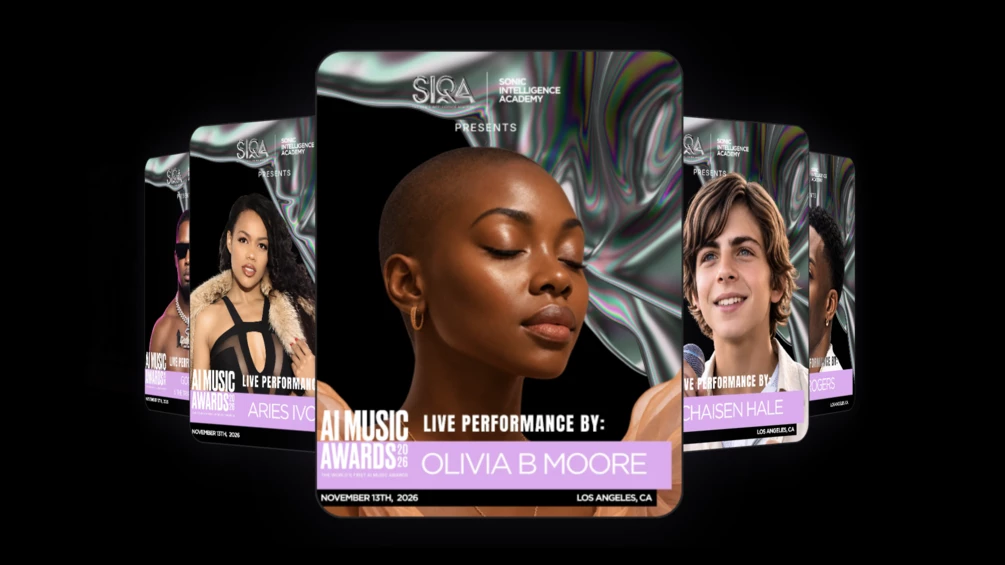
HangupsMusic.com – Los Angeles, The historic Mayan theater in downtown Los Angeles, a venue traditionally known for its ornate pre-Columbian revival architecture and its history of hosting legendary human performers, is preparing to serve as the backdrop for a radical shift in the entertainment landscape. On November 13th, the inaugural AI Music Awards will take place, marking the first major industry event dedicated exclusively to the celebration and recognition of music generated and assisted by artificial intelligence. This ceremony represents more than just a niche gathering for tech enthusiasts; it is a signal to the global music industry that the era of the synthetic artist has transitioned from a theoretical possibility to a commercial reality.
At the heart of the evening’s festivities is a lineup of "performers" who challenge the traditional definition of a musical act. Leading the roster of digital talent is Xania Monet, a name that has already carved a path through the traditional industry gatekeepers. Monet gained international notoriety as the persona behind "How Was I Supposed To Know," a track that holds the distinction of being the first AI-generated song to successfully navigate its way onto a Billboard radio airplay chart. The creation of songwriter and visionary Telisha "Nikki" Jones, Xania Monet became the subject of an intense bidding war among major and independent record labels, ultimately resulting in a high-profile signing with Hallwood Media for a reported $3 million. The success of Monet serves as a case study for the burgeoning "virtual idol" market, where the creative direction of a human producer is funneled through a sophisticated digital avatar and vocal model.
The event’s lineup extends far beyond a single breakout star. A diverse group of non-human entities is scheduled to take the stage, including Sheena Taylor, Olivia B Moore, Godfellow, Aries Ivory, Chaisen Hale, and EJ Rogers. While the concept of a "live" performance by an AI might seem like a contradiction in terms, the organizers have designed a "hybrid" showcase intended to bridge the gap between human intuition and algorithmic execution. According to the Sonic Intelligence Academy (SIQA), the organization behind the event, the night will feature creators directing the stage in real-time. Far from being a sterile playback of digital files, these showcases will incorporate live backing bands, immersive visual projections, and synchronized light displays, creating a multi-sensory experience that mirrors the energy of a traditional concert while highlighting the unique capabilities of generative technology.
The Sonic Intelligence Academy (SIQA) positions itself as a central pillar for what it terms "ethical, innovative, and groundbreaking AI music." Backed by the 1517 Fund—a venture capital firm known for supporting disruptive technologies and unconventional founders—SIQA aims to provide a framework for an industry that is currently navigating a "Wild West" phase. The awards themselves are structured to mirror traditional ceremonies, with a comprehensive list of categories that acknowledge the various facets of modern music production. Attendees will see trophies handed out for Best AI Song, Artist of the Year, Album of the Year, and Producer of the Year. Additionally, the academy will recognize specific achievements in collaboration, music videos, and "AI-Assisted" tracks—a category specifically designed for human artists who use machine learning as a tool rather than a total replacement for their own creative output.
The recognition of genre-specific excellence further emphasizes the academy’s desire to see AI integrated across the entire musical spectrum. Awards will be presented for achievements in R&B, country, gospel, pop, rock/alternative, hip-hop, and jazz. This broad approach suggests that the organizers view AI not as a genre in itself, but as a medium that can adapt to and enhance any existing musical tradition. By honoring excellence in jazz or gospel, for instance, SIQA is making a bold claim about the ability of algorithms to capture the nuances and emotional resonances that have long been considered the exclusive domain of human experience.
Beyond the glitz of the awards ceremony, SIQA is also focused on the data and infrastructure that underpin the movement. Earlier this year, the organization launched the first-ever AI music charts, providing a statistical look at which digital acts are gaining traction with listeners. This was accompanied by the introduction of a Verified Registry and a dedicated mobile application. This technology is designed to act as a transparency tool, allowing creators to document exactly how much of a given track was generated by AI and which parts were contributed by humans. This move toward a "verified" standard is seen as a crucial step in addressing the ethical concerns surrounding copyright, authorship, and the "human-in-the-loop" philosophy.
The data gathered by SIQA during the first quarter of this year offers a fascinating glimpse into the tools currently dominating the landscape. Out of 1,551 tracks submitted to their registry, a staggering 90% were created using Suno, a generative AI platform that has rapidly become the industry standard for high-fidelity audio creation. Furthermore, nearly 76% of these tracks were distributed through DistroKid, the independent distribution giant. These figures highlight a democratization of music production where the barriers to entry—traditionally defined by expensive studio time and years of instrumental training—are being lowered by accessible software. However, this ease of production has also led to a massive influx of content that traditional platforms are struggling to manage.
The rise of the AI Music Awards comes at a time of significant tension within the wider music industry. While some see the technology as a revolutionary tool for creativity, others view it as an existential threat to human livelihoods and the integrity of art. Major industry players have taken varying stances. In August, the electronic music marketplace Beatport took a definitive stand by banning fully generative tracks from its platform, citing a commitment to human-produced music. Similarly, the streaming service Deezer has reported a massive surge in AI-generated content. In April, the platform noted that 44% of its daily uploads were AI-generated; by July, that number had climbed to over 50%. This "flooding" of streaming services has sparked a fierce debate over how royalties should be distributed and whether AI content should be segregated from human-made music.
Despite the pushback, some of the most respected names in the music world are choosing to engage with the technology rather than ignore it. Earlier this month, legendary DJs and producers Armin van Buuren and Laidback Luke joined Moises, a company specializing in "responsible" AI music tools, as advisors. Their involvement suggests a middle path where AI is used for stem separation, vocal processing, and creative assistance, rather than total automation. The partnership with Moises is focused on ensuring that AI serves the artist’s vision rather than replacing the artist entirely, a sentiment that echoes the "hybrid" nature of the upcoming performances at The Mayan.
As the industry converges on Los Angeles for the November 13th ceremony, the conversation will likely revolve around the future of copyright and the definition of an "artist." If a song created by an algorithm can reach the Billboard charts and a digital avatar can sign a multi-million dollar record deal, the traditional structures of the music business will need to be entirely reimagined. The AI Music Awards are not just a celebration of new technology; they are a preview of a future where the line between the organic and the synthetic is permanently blurred.
For the creators behind acts like Xania Monet, the awards represent a validation of their role as "digital architects." These individuals argue that directing an AI to create a hit song requires its own set of skills—prompt engineering, aesthetic curation, and a deep understanding of pop sensibilities. As the lights go up at The Mayan, the world will be watching to see if these digital performers can deliver the same emotional impact as the human stars who have graced that stage for the past century. Whether the public fully embraces this new era or remains skeptical, one thing is certain: the soundtrack of the future is being rewritten, one algorithm at a time.
