
 By Azzam Bilal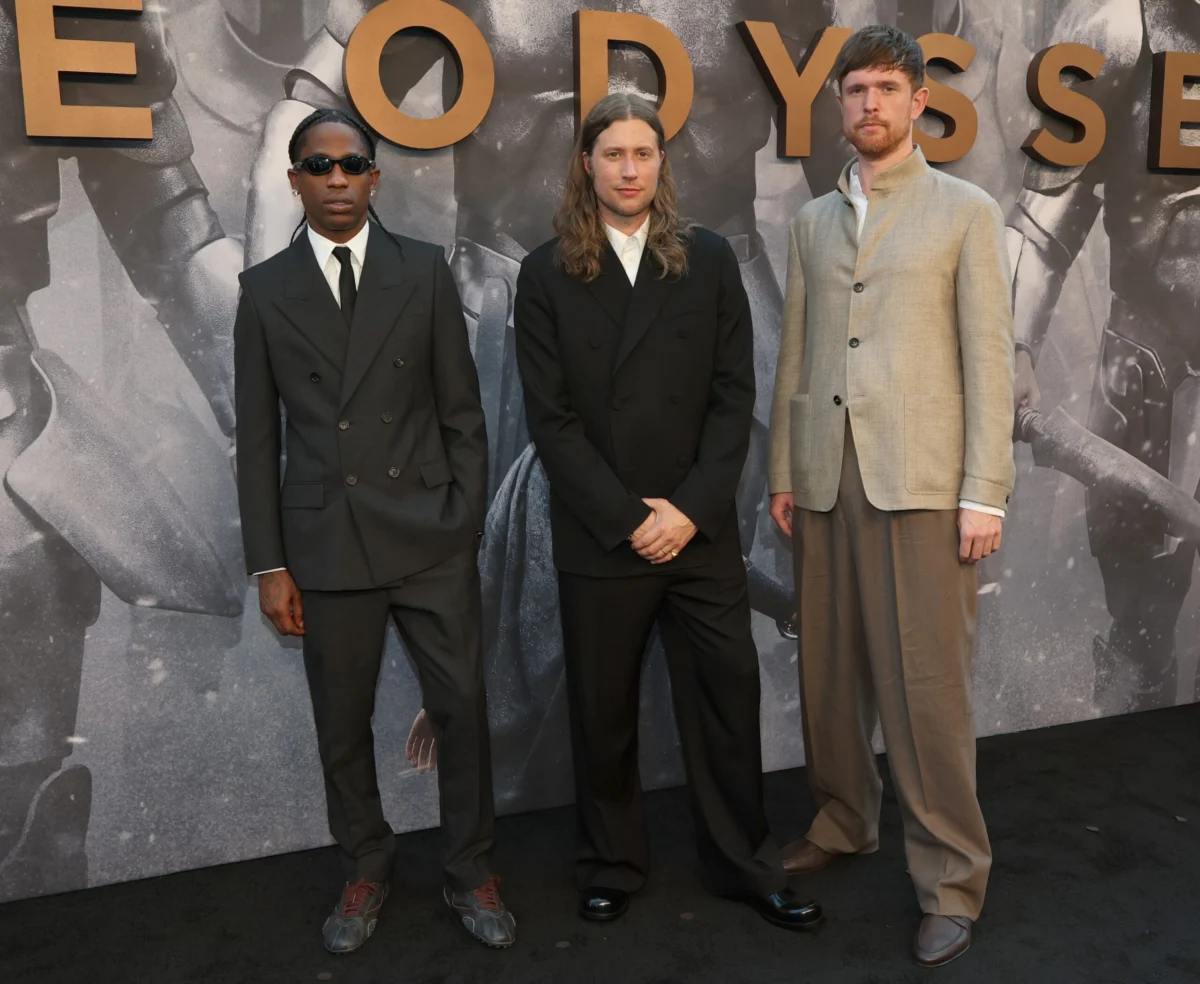
HangupsMusic.com – LOS ANGELES, The cinematic landscape witnessed a monumental shift today as Christopher Nolan’s highly anticipated adaptation of The Odyssey made its long-awaited debut in theaters. While the visual spectacle of Nolan’s reimagining of Homer’s ancient Greek epic has been the subject of intense speculation for months, the arrival of the film also marks the release of a companion piece that is equally ambitious: an original soundtrack composed by the prolific Ludwig Göransson. As audiences flock to experience the director’s latest technical marvel, the music accompanying the journey is already generating significant conversation, particularly due to a high-profile collaboration that closes both the film and its official soundtrack.
The final track on the album, titled “When I’m Home,” serves as the emotional and sonic climax of the project. It is a sprawling, multi-layered composition that brings together three distinct creative forces: the Academy Award-winning Göransson, the ethereal soul-electronic pioneer James Blake, and the global hip-hop icon Travis Scott. Perhaps most intriguingly for fans of the director’s process, the song features lyrics co-written by Christopher Nolan himself. This level of direct involvement in the songwriting process is a rare move for the filmmaker, signaling the deep thematic importance of this specific piece to the narrative arc of Odysseus’s journey.
The partnership between Nolan and Göransson has rapidly become one of the most formidable director-composer duos in modern Hollywood. Following their successful collaborations on Tenet and the Oscar-sweeping Oppenheimer, Göransson has once again been tasked with creating a soundscape that is both alien and deeply human. For The Odyssey, the challenge was to evoke the feeling of an ancient, mythological world while maintaining the sleek, propulsive energy that characterizes Nolan’s filmography. The result is a score that utilizes a wide array of textures, from traditional instrumentation to heavily processed synthesizers, all designed to mimic the unpredictable nature of the sea and the whims of the gods.
“When I’m Home” acts as a synthesis of these elements. The track begins with the atmospheric, melancholic production style that has become James Blake’s signature. His vocals provide a haunting, vulnerable foundation, echoing the central theme of the film: the agonizing, decade-long yearning for home. As the song progresses, Travis Scott enters with a performance that is both hallucinatory and grounded. His verses are layered with complex harmonies and a rhythmic grit that contrasts sharply with Blake’s smooth delivery. The interplay between these two artists creates a sonic tension that mirrors the internal and external conflicts faced by the film’s protagonist.
However, Travis Scott’s contribution to The Odyssey extends far beyond his guest verse on the closing track. In a move that highlights Nolan’s penchant for unconventional casting and meta-narrative flourishes, Scott actually appears in the film itself. He portrays a bard, an essential figure in the oral tradition of ancient Greece. Audiences will see him at the very beginning of the film, establishing the mythological setting through song, and he briefly reprises the role later in the story. This casting choice bridges the gap between the ancient world’s version of a storyteller and the modern world’s equivalent, using Scott’s real-world status as a cultural icon to lend weight to the role of the bard.
The decision to include Scott in such a capacity suggests a desire to ground the film’s mythological elements in a contemporary aesthetic. Nolan has often played with time and perspective, and by casting a modern superstar as an ancient singer of tales, he creates a bridge between the era of Homer and the present day. This thematic bridge is reinforced by the soundtrack’s overall structure, which moves fluidly between orchestral grandeur and experimental modern production.
While “When I’m Home” is the only track on the OST to feature external recording artists in a traditional song format, it is not the only piece to utilize vocal performances in a unique way. Another standout track, “Circe,” features the acclaimed actress Samantha Morton. Morton, who portrays the formidable witch-goddess in the film, delivers her performance on the track in character. Rather than a standard vocal, Morton’s contribution is a blend of spoken word and rhythmic chanting, perfectly capturing the seductive and dangerous aura of the mythological figure. Göransson’s production on this track is particularly experimental, using distorted echoes and shimmering percussive elements to simulate the feeling of a divine enchantment.
The inclusion of Samantha Morton as a vocal contributor highlights the immersive nature of the project. The soundtrack is not merely a collection of background music; it is an extension of the film’s world-building. By having the actors contribute to the score in character, Nolan and Göransson blur the lines between the narrative and the music, ensuring that the audience is never fully removed from the atmosphere of the story, even when listening to the album independently of the film.
Ludwig Göransson’s rise to the top of the film scoring world has been characterized by his refusal to stay within the lines of any single genre. His work on Black Panther integrated traditional African instrumentation with modern trap production, while The Mandalorian used a recorder-based theme to create a space-western vibe. With The Odyssey, he continues this trend of "genre-blind" composition. The score is reportedly massive in scope, utilizing a full orchestra alongside custom-built instruments designed to sound like the wind and the waves.
The involvement of James Blake adds another layer of prestige to the project. Blake has long been a favorite of filmmakers and fellow musicians alike for his ability to convey deep emotional resonance through minimalist electronic arrangements. His work on the soundtrack brings a sense of intimacy to an otherwise gargantuan production. In “When I’m Home,” his voice represents the "Nostos"—the Greek term for the hero’s homecoming—serving as the light at the end of the tunnel for the weary traveler.
On the other hand, Travis Scott’s presence brings a sense of chaotic energy and modern relevance. Scott’s career has increasingly moved toward the cinematic, with his own visual albums and short films pushing the boundaries of the music video medium. His collaboration with Nolan feels like a natural progression of his artistic interests. For Nolan, bringing Scott into the fold allows the film to tap into a different cultural frequency, ensuring that The Odyssey feels like a living, breathing piece of modern art rather than a dusty museum piece.
The lyrical contribution from Christopher Nolan is perhaps the most significant detail for those interested in the film’s subtext. Nolan’s scripts are known for their precision and their focus on high-concept themes like memory, time, and identity. By co-writing the lyrics for “When I’m Home,” he ensures that the final message the audience hears as they exit the theater is perfectly aligned with his vision. The lyrics reportedly dwell on the concept of home not as a physical location, but as a state of being—a resolution to a long and arduous psychological journey.
As The Odyssey begins its theatrical run, the soundtrack stands as a testament to the power of collaborative art. It is a rare instance where the worlds of blockbuster cinema, avant-garde electronic music, and global hip-hop converge to create something entirely new. Ludwig Göransson has once again proven himself to be a composer who doesn’t just write music for films, but builds sonic worlds for them to inhabit.
For fans of the artists involved, the release of “When I’m Home” is a major event. It marks a significant moment in the careers of James Blake and Travis Scott, placing them within the legacy of one of the world’s most respected filmmakers. For audiences, it provides a hauntingly beautiful conclusion to a story that has been told for thousands of years, now reimagined for a new generation. As the credits roll and the lights come up, the echoes of Göransson’s score and the voices of Blake and Scott remain, a reminder that while the journey may be over, the longing for home is eternal.
