
 By Azzam Bilal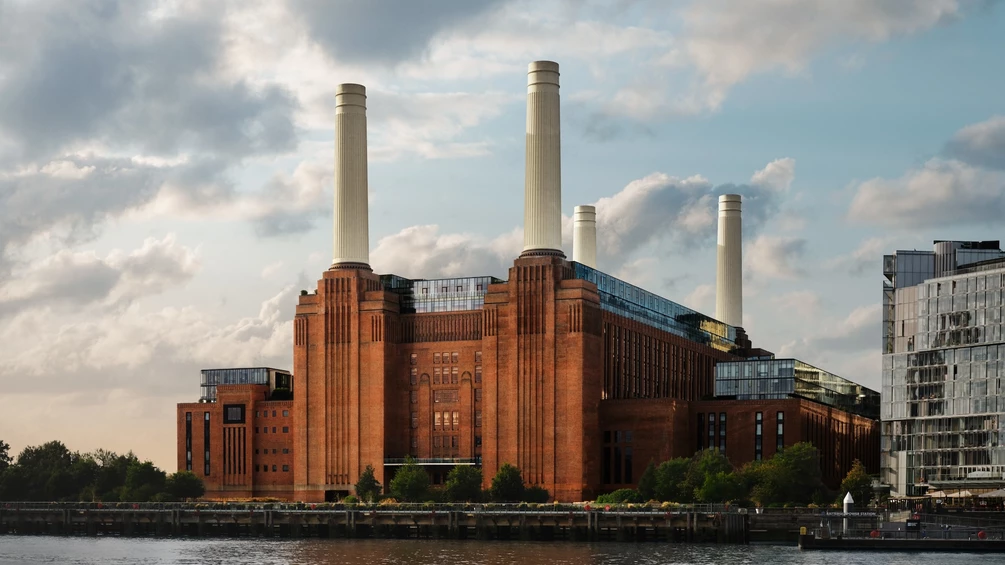
HangupsMusic.com – London, the historic skyline of the United Kingdom’s capital is undergoing a profound cultural transformation as technology giant Apple prepares to launch its most ambitious physical music project to date. Nestled within the colossal, restored brickwork of the iconic Battersea Power Station, the newly announced Apple Music Hall is scheduled to open its doors to the public on September 28th. This development marks a significant shift in the company’s strategy, moving beyond digital streaming and hardware into the realm of live, immersive performance and high-end media production. The venue, which boasts a capacity of 600 attendees, is not merely a concert hall but a sophisticated technological hub designed to bridge the gap between physical attendance and global digital consumption.
The architectural philosophy of the Apple Music Hall draws direct inspiration from its surroundings. Battersea Power Station, a Grade II* listed landmark that once fueled a fifth of London’s electricity, has recently been reimagined as a premier retail and residential destination. Apple has already established its UK headquarters within the structure, and the addition of a dedicated music venue feels like a natural extension of its presence there. The design of the hall reportedly mirrors the industrial-chic aesthetic of the power station, utilizing the vastness and the raw materials of the site while infusing it with the sleek, minimalist hardware-driven design language for which Apple is globally recognized.
At the heart of the venue’s appeal is its unprecedented technical infrastructure. While a 600-person capacity might seem modest compared to the neighboring arenas of London, the Apple Music Hall is engineered for quality rather than quantity. The sonic experience is anchored by a massive 48-speaker spatial audio system that completely surrounds the audience. This setup is designed to provide an "object-based" audio environment, allowing sound engineers to place specific musical elements in a three-dimensional space. For the audience in the room, this means a level of clarity and immersion that traditional stereo or line-array systems cannot replicate. For the global audience watching from home, the venue is equipped to record and broadcast in Spatial Audio, ensuring that the "live" feeling is preserved across the digital divide.
The visual recording capabilities are equally impressive. The hall is outfitted with a permanent array of at least 16 high-definition cameras, strategically positioned to capture every nuance of a performance without the intrusive presence of traditional mobile camera crews. This permanent installation allows for a seamless livestreaming experience. Oliver Schusser, Apple’s Vice President of Apple Music and International, emphasized the uniqueness of this setup in a recent discussion with the BBC. He noted that the density of cameras and speakers relative to the room’s size is unmatched by any other venue in the world. According to Schusser, the intention was never to compete with the city’s major stadiums or historic clubs. Instead, the focus was on creating a bespoke, intimate environment where the technology enhances the artistry rather than distracting from it. By keeping the space small, Apple can maintain a level of exclusivity and technical control that would be impossible in a larger arena.
Beyond the main stage, the facility serves as a comprehensive ecosystem for music creation. The Apple Music Hall houses two professional-grade recording and mixing studios, alongside a specialized broadcast production suite. This infrastructure allows artists to not only perform but also to record, mix, and master content in the same building. The integration of these facilities suggests that Apple intends to use the venue as a factory for exclusive content, potentially offering live albums or "Spatial Sessions" recorded directly at Battersea.
This move also signals a centralizing of Apple’s creative operations in London. The hosts and production teams for Apple Music Radio, including its most prominent global personalities, have officially relocated to new, specialized studios within the Battersea complex. These teams will now broadcast live from the power station, further cementing the site as the primary heartbeat of Apple’s musical output in Europe. Zane Lowe, the Global Creative Director for Apple Music, expressed his enthusiasm for the project, stating that the venue represents the company’s deep-seated commitment to the storytelling aspect of music. Lowe highlighted that as fans themselves, the team at Apple is constantly seeking new ways to facilitate the connection between creators and their audiences. The Apple Music Hall is positioned as the ultimate physical manifestation of that relationship—a place where world-class performances can be experienced in person and then shared instantly with millions of subscribers worldwide.
The timing of this launch comes at a pivotal moment for the streaming service. Earlier this summer, Apple Music announced its first price increase in four years, a move attributed to the rising costs of music licensing. As subscription fees climb, the pressure to provide "added value" beyond a simple library of songs has intensified. The creation of a physical venue and the promise of high-quality, exclusive live content may be seen as a strategic response to this pressure, giving subscribers a reason to remain loyal to the platform over competitors like Spotify or Amazon Music.
Furthermore, Apple is navigating the complex ethical landscape of modern music production. The company recently introduced "Transparency Tags," a system designed to clearly label music and artwork that has been generated using artificial intelligence. While currently optional, these disclosures are expected to become mandatory in the near future. The Apple Music Hall, with its emphasis on live, human performance and high-fidelity recording, stands as a counterpoint to the rise of AI-generated content. It reinforces the value of the "live" moment—something that, for now, remains uniquely human.
As the September 28th opening date approaches, the industry is closely watching for the announcement of the venue’s inaugural lineup. While specific programming details remain under wraps, the expectation is that the hall will host a mix of global superstars seeking an intimate setting and emerging artists who can benefit from the venue’s massive promotional reach. The ability to livestream a 600-person show to a global audience of millions gives Apple a unique leverage in the industry, essentially turning every concert into a worldwide event.
In summary, the Apple Music Hall at Battersea Power Station is more than just a new stage in London’s crowded music scene. It is a bold experiment in how technology can redefine the live experience. By prioritizing spatial audio, high-end cinematography, and integrated production facilities, Apple is attempting to create a new standard for how music is performed, recorded, and consumed. For the 600 lucky fans who secure a ticket to its events, it offers a glimpse into the future of immersive sound. For the rest of the world, it promises a front-row seat to the next chapter of digital entertainment, delivered straight from one of the most historic buildings in the world. The integration of history and futurism at Battersea may well set the tone for the next decade of the music industry.
