
 By Azzam Bilal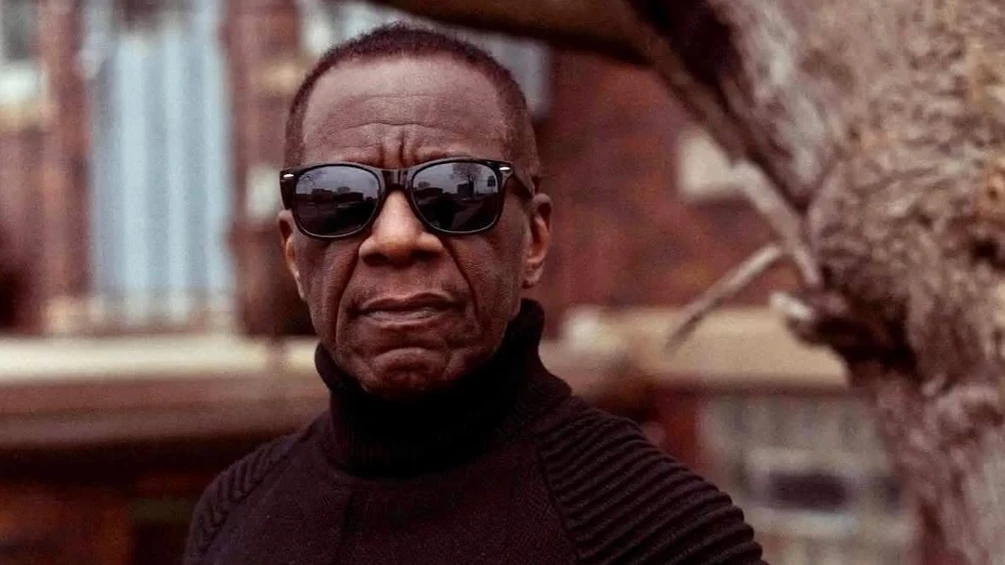
HangupsMusic.com – Detroit, the global electronic music community is in mourning following the announcement of the passing of John “Jammin” Collins, a foundational pillar of the Detroit techno scene whose influence spanned more than four decades. News of his death was confirmed on July 26 by the Detroit Techno Militia, a collective that has long championed the city’s sonic heritage. In a poignant tribute, the group highlighted Collins’ irreplaceable role in crafting the identity of Detroit’s nightlife, noting that the city’s electronic landscape would be unrecognizable—and certainly less vibrant—without his steady hand and visionary guidance. While no official cause of death has been made public, the outpouring of grief from fellow artists, fans, and historians underscores the profound void left by a man affectionately known as the "Ambassador of Techno."
John Collins was a rare figure in the music world, embodying a bridge between the clinical precision of science and the soul-stirring rhythms of the dance floor. Born and raised in Detroit, his journey into the world of DJing began in the late 1970s, a period of immense transition for the city. Interestingly, his musical ascent occurred alongside a rigorous academic and professional career. After earning a degree in biology from Wilberforce University, Collins worked as a cancer researcher, a testament to his intellect and discipline. This dual life—navigating the complexities of cellular biology by day and the nuances of beat-matching by night—imbued him with a unique perspective on the structure and evolution of sound.
The early 1980s marked a turning point for both Collins and the burgeoning electronic movement. In 1982, he secured a residency at Cheeks Nightclub, a venue that would become legendary in the annals of Detroit music history. For six years, until 1988, Collins helmed the decks at Cheeks, transforming it into a laboratory for genre-bending experimentation. During this era, the lines between disco, new wave, and the nascent sounds of techno were blurred. Collins was a master of the "long set," often performing for five or six hours straight. In interviews, he reflected on the necessity of diverse curation during these marathons, noting that a DJ had to draw from every available resource to keep a crowd engaged. His crates were a testament to this philosophy, featuring the robotic precision of Kraftwerk alongside the infectious grooves of Italian disco and New York club classics like Class Action’s “Weekend.”
What made Collins’ tenure at Cheeks particularly significant was the club’s role as a sanctuary for Detroit’s queer community. At a time when the city was deeply segregated both socially and musically, Cheeks served as a melting pot where gay, straight, Black, and white audiences converged. Collins often spoke of this period with great fondness, describing a "simpler" time when the focus was purely on the dialogue between the records and the movement of the crowd. He took immense pride in his identity, famously referring to himself as "a little gay DJ doing his thing," while earning a modest $45 a night. This inclusivity was not just a social byproduct; it was the bedrock upon which Detroit techno was built, providing the "Ambassador" with a platform to foster a culture of open-mindedness that would define his career.
As the 1990s arrived, Collins’ influence expanded from the DJ booth into the administrative and promotional heart of the industry. He held a residency at The Warehouse, another iconic Detroit institution, but his ambitions reached further. Recognizing the need for infrastructure to support local talent, he co-founded the Moshi Company with Joy Santiago. This booking agency eventually evolved into Premier Entertainment, a powerhouse that facilitated the global reach of Detroit artists. It was through these ventures that Collins solidified his lifelong affiliation with Underground Resistance (UR), the militant and fiercely independent techno collective led by "Mad" Mike Banks. Collins became an essential component of the UR ecosystem, serving as a manager and booking agent for the Submerge label, the operational hub for the collective’s global activities.
Collins was also a pioneer in the realm of professional networking and artist advocacy. In 1993, he established the Detroit Regional Music Conference. Modeled after the successful Winter Music Conference in Miami, Collins’ initiative aimed to provide a dedicated platform for local artists to connect with international industry figures. He understood early on that for Detroit techno to survive and thrive, it needed to be viewed not just as a subculture, but as a legitimate professional industry capable of sustaining its creators.
His impact was equally felt over the airwaves. The moniker “Jammin” was born during his successful tenure at WJLB FM 98 in the early 1990s, where his mixes became a staple for the city’s listeners. He later transitioned to WDRQ FM 93.1, hosting the influential program Live From Detroit: John Collins Presents The Soul of Detroit. His radio presence was crucial in educating the public on the roots of electronic music, ensuring that the history of the genre was never lost to the hype of the present. In later years, he continued this educational mission through a show on Red Bull Radio, reaching a global audience with his vast knowledge and curated selections.
Perhaps Collins’ most enduring contribution to the preservation of techno culture was his work with Exhibit 3000. Located within the Submerge building on East Grand Boulevard, Exhibit 3000 is the world’s only museum dedicated exclusively to techno. Collins served as a primary guide for the museum, personally walking visitors through the corridors of history. He would point out the original Roland TR-808 drum machines used on seminal recordings, explain the significance of the "Bellville Three," and share anecdotes from the front lines of the 1980s club scene. For Collins, the museum was not a static display of the past; it was a living testament to the resilience and creativity of Detroit’s people.
Throughout the 2000s and 2010s, Collins remained a vital force in the community. He was a key figure in the Detroit-Berlin Connection, an organization dedicated to fostering cultural exchange between the two techno capitals. His work with the Detroit Entertainment Commission further demonstrated his commitment to the city’s civic and cultural life. Despite his extensive behind-the-scenes work, he never lost his passion for production. In 2009, he released the Yeah EP on Underground Resistance. It was his first official solo release, a soulful and driving piece of music that proved his ears were as sharp as ever.
In his later years, Collins continued to mentor the next generation of DJs, offering advice on everything from technical skills to the importance of integrity in the music business. He maintained a regular presence in Detroit’s nightlife until his passing, most recently holding a residency at Spkrbox. Even as the industry changed around him, his philosophy remained steadfast. He believed that the music of Detroit was a reflection of the city’s DNA—a product of its struggles, its triumphs, and its deep-seated soul. He often remarked that the creativity of Detroit artists was frequently ahead of its time, a quality that ensured the music’s timelessness.
The legacy of John "Jammin" Collins is one of service, education, and unwavering passion. He was a man who understood that music is more than just a sequence of beats; it is a communal experience and a historical record. From the research labs where he studied the building blocks of life to the dark, strobe-lit dance floors where he shaped the future of electronic music, Collins lived a life dedicated to discovery and connection. As the Detroit Techno Militia noted, the city’s music scene is better because he was part of it. The "Ambassador" may have left the booth, but the rhythms he championed and the culture he helped build will continue to echo through the streets of Detroit and across the world for generations to come.
