
 By Azzam Bilal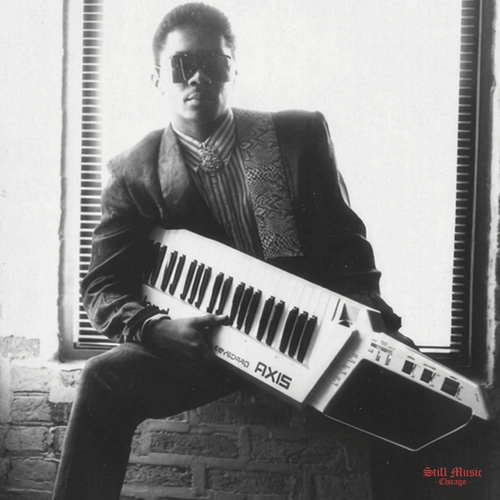
HangupsMusic.com – Chicago, the sprawling urban landscape of the American Midwest, has long been recognized as the crucible of house music, a genre that transformed the global sonic landscape. However, within the annals of electronic music history, certain names often resonate with more frequency than others. While figures like Frankie Knuckles and Marshall Jefferson are rightly canonized, the narrative of house music’s inception is incomplete without a comprehensive understanding of Irwin Larry Eberhart II, known to the world as Chip E. Often referred to as the "Architect of House," Chip E did more than just produce tracks; he provided the linguistic and rhythmic framework that allowed a local subculture to coalesce into a worldwide phenomenon. The recent archival initiative by Still Music, titled The Architect Of House – Chicago 1984-88. Volume 1: Classics, serves as a vital corrective to the historical record, offering a deep dive into the raw, unvarnished origins of a movement.
To understand the significance of Chip E, one must first look at the state of Chicago’s nightlife in the early 1980s. At the time, "house" was not yet a clearly defined genre of music produced in a studio; rather, it was a descriptive term used by record store patrons to describe the eclectic mix of disco, R&B, and European synth-pop played by Frankie Knuckles at The Warehouse. It was a lifestyle and a location-based identifier. Chip E, working at the legendary Import Etc. record store, occupied a unique vantage point. He saw firsthand how the audience’s tastes were shifting from traditional soul and disco toward something more mechanical, repetitive, and driving. He wasn’t just observing the change; he was preparing to manufacture the tools that would define it.
In 1985, Chip E released the Jack Trax EP, a seminal moment in electronic music history. This record is widely credited as the first release to explicitly use the terms "house" and "jack" in its titles and marketing, effectively branding the sound that had been brewing in the city’s underground clubs. By naming the tracks "Time to Jack" and "It’s House," Eberhart took the abstract energy of the dance floor and gave it a name, a set of instructions, and a distinct aesthetic. The term "jacking"—a rhythmic, torso-driven dance style—became synonymous with the Chicago sound, and Chip E was the primary chronicler of this kinetic energy.
The Still Music compilation meticulously gathers 11 of Chip E’s most influential early works, allowing modern listeners to hear the genre in its most skeletal and potent form. The production on these tracks is a masterclass in creative limitation. During the mid-80s, the high-end digital samplers used in professional studios were prohibitively expensive for independent producers. Chip E famously utilized a Boss sampling pedal, which offered a maximum sampling time of just one second. This technical constraint became a defining characteristic of his sound. Because he could only capture a single word or a short vocal snippet, he was forced to loop these fragments incessantly. The result was a hypnotic, delirious repetition that would eventually become a hallmark of house music’s hypnotic power.
On tracks like "Like This," perhaps his most famous contribution to the genre, this looping technique creates a rhythmic tension that feels both alien and deeply human. The vocals are stripped of their narrative context and transformed into percussive elements, working in tandem with the "spitting and hissing" of the Roland TR-909 and TR-808 drum machines. These machines, now legendary, were at the time affordable tools for inner-city creators. Chip E utilized them to create a "minimal but robust" architecture. The drums are heavy and unpolished, the rim shots crackle with a lo-fi intensity, and the overall atmosphere is thick with a sense of industrial grit. It is a sound that feels "muggy and thick with dust," reflecting the basement studios and DIY ethos of the era.
Beyond the sheer rhythmic force, the compilation highlights Chip E’s versatility. While much of his work is "darkly seductive and fiercely functional," there are moments of surprising melodic light. "Get On Up" showcases a brighter, more emotive side of his production. The track features tinny, soulful chords that carry a distinct emotional weight—a precursor to the "high-tech soul" sound that artists like Omar S would later refine in Detroit. Similarly, "If You Only Knew (If You Dance Mix)" incorporates frilly, Prince-esque guitar riffs, bridging the gap between the Minneapolis funk sound and the emerging electronic underground of Chicago.
One of the most compelling inclusions is "Godfather Of House (Club Version)." Unlike the more brooding and claustrophobic tracks in his catalog, this piece possesses a "looser, more elastic groove." It trades the heavy industrial weight for an ecstatic, celebratory energy that captures the communal spirit of the early house parties. It serves as a reminder that while the music was often born from a place of technical minimalism and urban toughness, its ultimate goal was liberation on the dance floor.
Despite his foundational role, Chip E’s career faced significant hurdles in the early 1990s. Contractual disputes and legal entanglements led to an extended hiatus from the music industry. This period of absence allowed other figures to step into the limelight, and in many ways, the history of house music began to be rewritten without him at the center. While contemporaries continued to tour and release music, Chip E’s contributions were relegated to the memories of those who were there and the record bags of dedicated crate-diggers. This "understated" role in history makes the Still Music series all the more essential. It functions as an act of sonic restoration, ensuring that the "Architect" is given his due credit.
The influence of Chip E’s early work extends far beyond the mid-80s Chicago scene. The stripped-back, aggressive nature of his "Jack Trax" provided the structural DNA for what would later become Ghetto House and, eventually, the high-speed, polyrhythmic world of Footwork. The emphasis on raw vocal loops and punishing drum patterns can be heard in the works of DJ Deeon, DJ Milton, and the subsequent generations of South Side producers. By stripping house music to its bare bones, Chip E created a template that was infinitely adaptable and resilient.
Furthermore, the "dusty" and "functional" nature of these recordings resonates deeply with the contemporary "lo-fi" house movement. Modern producers often spend thousands of dollars trying to replicate the exact hiss and crunch that Chip E achieved out of necessity in 1985. Listening to these original classics in the context of today’s polished digital landscape is a grounding experience. It reminds us that the power of house music does not lie in high-fidelity production or complex arrangements, but in the "inescapable bite" of a well-placed kick drum and the hypnotic pull of a repetitive groove.
The three-part series by Still Music is not merely a collection of old songs; it is a curriculum in dance music history. Volume 1 focuses on the "Classics," the tracks that built the walls of the house. As we look toward the subsequent volumes, the importance of Eberhart’s vision becomes even clearer. He was a pioneer who understood that the future of music lay in the intersection of man and machine. He took the soulful roots of Chicago’s disco past and processed them through the grit and machinery of the city’s industrial present.
In conclusion, Chip E’s legacy is one of innovation born from necessity. He took a one-second sampling pedal and a drum machine and built a world. He gave a name to a feeling and a rhythm to a movement. While history may have momentarily looked away, the music itself remains undeniable. The Architect Of House – Chicago 1984-88 is a testament to the enduring power of the "Jack." It is a reminder that before house was a global industry, it was a raw, fiercely functional, and darkly seductive sound coming out of a Chicago basement, driven by a man who saw the blueprint of the future before anyone else. As these tracks crackle and hiss through the speakers decades later, it is clear that the architecture Chip E built is as solid as ever.
