
 By Azzam Bilal
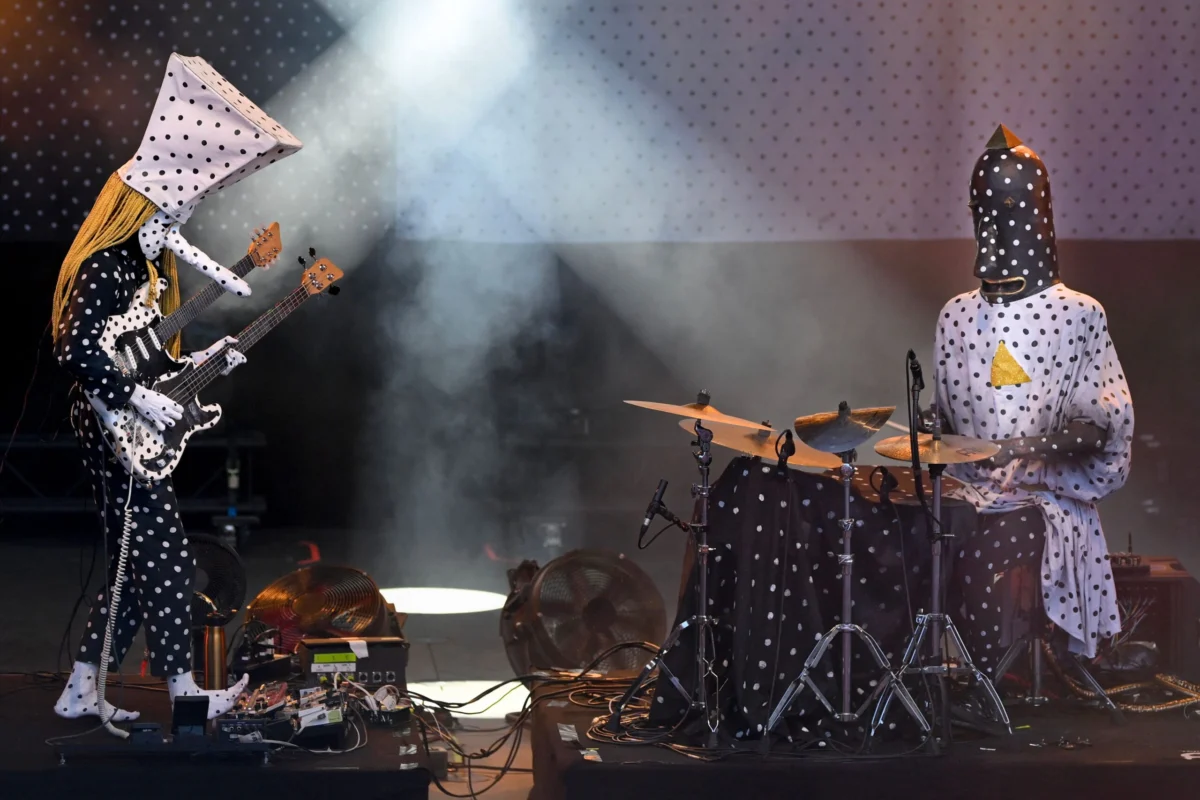
HangupsMusic.com – The landscape of contemporary experimental music has long been defined by its ability to subvert expectations, yet few acts in recent memory have managed to maintain a veil of secrecy as effectively as Angine de Poitrine. On Thursday evening, the enigmatic duo, known for their signature polka-dotted attire and their refusal to engage with the traditional machinery of celebrity, offered a rare glimpse into a potential evolution of their project. During a performance that was already charged with the kinetic energy of their current North American tour, the core members, identified only as Khn and Klek, were joined on stage by a third figure. This newcomer, dressed in the same distinctive monochromatic patterns that have become the group’s visual hallmark, did not arrive with a synthesizer or a guitar, but rather with a triangle. This subtle yet profound addition to their live lineup has sent shockwaves through their dedicated fanbase and raised significant questions about the future trajectory of the band’s sonic identity.
The appearance of the third member occurred during the debut of a previously unheard composition. As Khn and Klek wove their characteristic tapestry of rhythmic complexity and atmospheric tension, the unnamed individual shuffled onto the stage with a deliberate, almost ritualistic cadence. The inclusion of the triangle provided a bright, metallic counterpoint to the dense, often abrasive textures that define the Angine de Poitrine sound. While the instrument itself is often relegated to the background of orchestral arrangements or used as a punchline in popular culture, in the hands of this new collaborator, it became a focal point of precision. The performance suggested a meticulous level of rehearsal, as the triangle strikes landed with a mathematical accuracy that complemented the duo’s existing interplay.
The mystery surrounding this expansion is compounded by the lack of clarity from the group’s official channels. In an industry where every move is typically choreographed by public relations firms and social media managers, Angine de Poitrine continues to operate in a vacuum of information. Even their own publicist appeared caught off guard by the development, indicating to industry observers that they were uncertain whether this third member represents a permanent addition to the roster or a singular guest appearance for the current tour. This ambiguity is consistent with the band’s established ethos; by refusing to provide a narrative, they force the audience to focus entirely on the auditory and visual experience of the performance itself.
To understand the significance of this moment, one must look at the meteoric rise of Angine de Poitrine over the last few years. Emerging from the underground with a sound that defies easy categorization—blending elements of industrial noise, avant-garde electronics, and minimalist percussion—the group has become a "buzzy" fixture in the independent music scene. Their visual presentation, characterized by full-body suits covered in polka dots, serves a dual purpose: it creates a striking, unforgettable stage presence while simultaneously stripping away the individuality of the performers. By becoming living canvases, Khn and Klek redirect the viewer’s gaze toward the collective output rather than the personal identities of the creators. The introduction of a third polka-dotted figure only deepens this commitment to anonymity, suggesting that "Angine de Poitrine" is less a duo and more a conceptual framework that can expand or contract as the music requires.
The timing of this development is particularly noteworthy as the group nears the conclusion of their North American tour dates. These performances have been characterized by high demand and critical acclaim, solidifying their status as one of the most compelling live acts in the experimental circuit. Following the wrap-up of these dates, the group is expected to enter a period of "powering down." This hiatus is not merely a break from the rigors of the road but a strategic interval before they embark on a massive international trek scheduled for 2027. The three-year gap between the current tour and their next major outing suggests a period of intensive studio work and conceptual refinement. It invites speculation that the "triangle player" may be a central figure in the next chapter of their discography, potentially appearing on the recordings that will emerge during this transition.
Critics have long attempted to parse the dense layers of the band’s output. Christopher R. Weingarten, in his recent assessment of the group’s latest album, Vol. II, noted the band’s uncanny ability to balance mechanical rigidity with moments of startling human emotion. Vol. II was seen as a significant leap forward from their debut, showcasing a more sophisticated approach to song structure without sacrificing the raw, confrontational energy that first brought them to prominence. The introduction of a third live member could be the logical extension of the sonic exploration found on that record—a move toward a more "orchestrated" version of their minimalist aesthetic. If Vol. I was about the spark of creation and Vol. II was about the refinement of their tools, the current era seems to be about the expansion of their physical and auditory space.
The choice of the triangle as the instrument of choice for the new member is also worth a deeper analysis. In the context of Angine de Poitrine’s music, which often utilizes heavy low-end frequencies and distorted textures, the high-frequency "ping" of a triangle serves as a sharp contrast. It acts as a sonic beacon, cutting through the noise and providing a sense of clarity and timing. It is a minimalist choice for a minimalist band, yet it carries a weight of intentionality. In the video footage circulating among fan communities, the third member’s performance is marked by a stoic intensity, treating the small metal instrument with the same gravity one might afford a lead vocal or a primary synthesizer hook.
As the music world looks toward 2027, the "Angine thing," as some have affectionately dubbed the phenomenon, shows no signs of losing its luster. The group has managed to do something rare in the digital age: they have maintained a genuine sense of wonder and curiosity among their listeners. In an era of oversharing, their silence is their loudest statement. Whether the trio format becomes the new standard for the group or remains a fleeting highlight of the 2024 tour, it has served its purpose by reinvigorating the conversation surrounding the band.
The upcoming international tour will likely be one of the most anticipated events in the avant-garde calendar. By announcing dates so far in advance, Angine de Poitrine has created a sense of permanence and long-term vision. It suggests that Khn and Klek—and perhaps their new companion—are not interested in the fleeting cycles of internet fame, but are instead focused on building a lasting body of work. The "power down" phase will undoubtedly be filled with rumors and theories, as fans pore over every frame of concert footage and every cryptic hint dropped by the group.
Ultimately, the Thursday night performance was more than just a concert; it was a testament to the power of mystery in art. By adding a third person to their ranks without explanation, Angine de Poitrine reminded their audience that the most engaging stories are the ones that are not fully told. As the final notes of the triangle faded into the feedback of the closing set, the message was clear: the world of Khn and Klek is still growing, one polka dot at a time. The road to 2027 is long, but if the precision and mystery of their current incarnation are any indication, the wait will be well worth the silence that precedes it. For now, the "mean triangle" remains the most talked-about instrument in the underground, a small silver symbol of a band that continues to reinvent itself in the shadows.
