
 By Azzam Bilal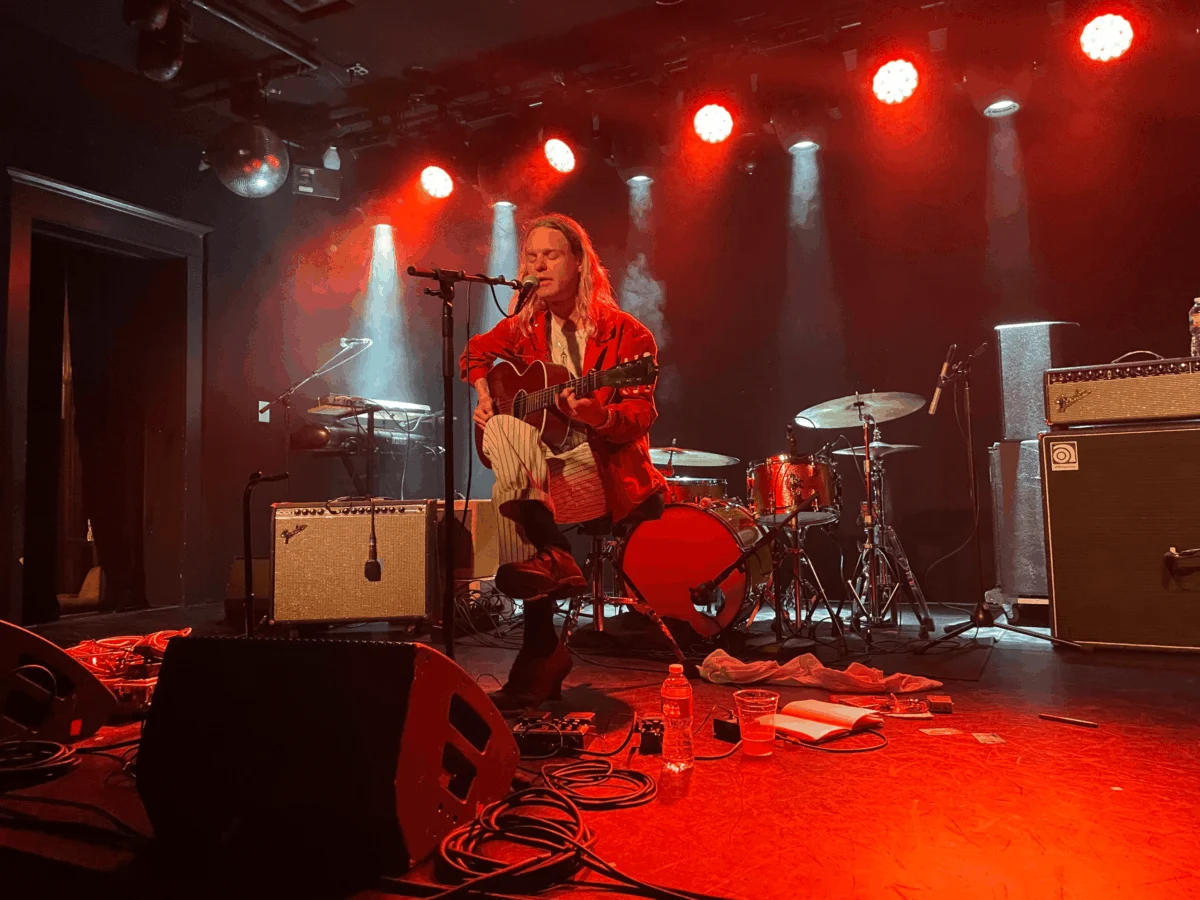
HangupsMusic.com – NEW YORK, The independent music landscape is mourning the loss of one of its most versatile and enigmatic figures. Doug Shaw, a multi-instrumentalist whose influence spanned across genres and continents, passed away on Tuesday, May 26, following a stroke. He was 43 years old. Known to his peers and fans by the affectionate moniker “Sleepy” Doug Shaw, his death marks the end of a chapter for the New York underground, a scene he helped shape through his work with seminal acts like Gang Gang Dance and White Magic, as well as his own visionary solo project, Highlife.
Born in London in 1982, Shaw’s musical journey was one of constant motion and evolution. He spent his formative years immersed in the eclectic sounds of the United Kingdom before making the pivotal decision to relocate to the United States in 2003. Arriving in New York City during a period of intense creative ferment, Shaw quickly found his footing within the experimental and indie-rock circles of Brooklyn and Manhattan. It was here that his reputation as a "musician’s musician" began to take root, characterized by a rare ability to blend technical proficiency with a deeply felt, almost spiritual approach to sound.
Shaw was perhaps best known for his tenure as the bassist for Gang Gang Dance, a band that defied easy categorization by weaving together threads of electronic music, world rhythms, and psych-rock. As the rhythmic anchor of the group, Shaw provided the essential pulse that allowed their avant-garde explorations to remain grounded yet transcendent. His work with the band helped define the "freak folk" and experimental movements of the mid-2000s, pushing the boundaries of what indie music could be.
Beyond the low-end grooves of Gang Gang Dance, Shaw was a vital component of White Magic, the project led by Mira Billotte. As a multi-instrumentalist in the group, he contributed to a sound that was often described as mystical, haunting, and rooted in an alternative folk tradition. His versatility was his hallmark; whether he was holding a bass, a guitar, or experimental percussion, Shaw’s presence was always felt as a stabilizing yet inventive force.
In his solo endeavors under the name Highlife, Shaw explored his fascination with global sounds, particularly the polyrhythmic complexities of West African music. The name itself—a nod to the Ghanaian music genre—signified his deep respect for traditional structures, which he filtered through a modern, experimental lens. His work as Highlife was celebrated for its vibrant energy and its ability to transport listeners to a place where disparate cultures and eras met in harmony. This interest in global music also led him to collaborate with the late Janka Nabay, the Sierra Leonean pioneer of bubu music. Shaw served in Nabay’s touring band, helping to bring the ancient, frenetic sounds of bubu to modern Western audiences, further cementing his role as a bridge between different musical worlds.
The list of Shaw’s collaborators reads like a "who’s who" of contemporary music royalty. Over the decades, he shared stages and recording studios with titans such as Lou Reed, Sonic Youth, and Bonnie "Prince" Billy. He also worked closely with modern innovators like Mdou Moctar, the Tuareg guitar virtuoso. These partnerships were never merely professional arrangements; they were dialogues between artists who recognized in Shaw a kindred spirit—a "deep thinker" and a "real freak" in the most complimentary sense of the words.
Most recently, Shaw had been focusing on his solo catalog under the initials D.S. This era of his career was highlighted by a significant collaboration with Geologist, also known as Brian Weitz of Animal Collective. Their 2025 album, A Shaw Deal, was met with critical acclaim, praised for its intricate textures and the seamless chemistry between the two experimental stalwarts. The album served as a reminder that, even after two decades in the industry, Shaw remained at the cutting edge of sonic exploration, never content to rest on his laurels or repeat past successes.
Upon the news of his passing, Drag City Records, the label that championed much of his work, released a poignant statement reflecting on his unique character. “Whether you knew Doug from Gang Gang Dance, White Magic, Highlife or by his ‘Sleepy’ nom-du-profession, he was a dude of incredible energies,” the label shared. They described him as a musician capable of “bubbling over effervescently” while simultaneously possessing the ability to delve into the deepest, most introspective corners of the human experience. Drag City’s tribute highlighted his singular guitar style, noting that when he played, "one felt in the presence of the absolute latest in the name of the real folk blues, a mirage of history conjured, rolling over the hills and the ocean beyond."
The outpouring of grief from the music community has been immense, reflecting the deep personal connections Shaw made throughout his life. Lizzi Bougatsos, his longtime bandmate in Gang Gang Dance, was among the first to pay tribute, joined by a diverse array of artists including Cass McCombs, Deradoorian, Cat Power, Coby Sey, and Eartheater. Their messages painted a picture of a man who was as beloved for his kindness and humanity as he was for his immense talent.
Alexis Taylor of the band Hot Chip shared a particularly moving tribute, accompanied by footage of Shaw in his element. “What an incredible talent, and friend, and lovely human being, with so much to give. No one else like him,” Taylor wrote. He emphasized Shaw’s unique vocal ability, stating that "no one could sing the blues like Sleepy Doug Shaw." This sentiment—that Shaw possessed a soulfulness that could not be taught or replicated—was a recurring theme in the many memorials posted across social media.
For many in the New York scene, Shaw was a fixture of the local landscape, a constant presence at venues like Union Pool in Brooklyn. The venue, which served as a second home for Shaw and his various projects over the years, announced that it would host a gathering to celebrate his life and legacy. These types of community spaces were where Shaw truly thrived, engaging with fellow musicians and fans in an environment that valued artistic integrity above all else.
Doug Shaw’s legacy is not just found in the discographies of the bands he played in, but in the spirit of experimentation he championed. He belonged to a lineage of artists who viewed music as a vast, open frontier, free from the constraints of genre or commercial expectation. His move from London to New York in 2003 was more than just a change of scenery; it was a commitment to a life lived through sound. In the twenty-two years that followed, he became an indispensable part of the city’s cultural fabric.
As the industry reflects on his contributions, the consensus is clear: Doug Shaw was a rare talent who managed to be both a virtuoso and a visionary. He approached the bass with the mind of a composer and the guitar with the soul of a bluesman, all while keeping his ears open to the rhythms of the world. His work with Janka Nabay and Highlife, in particular, showcased his belief that music is a universal language, capable of transcending borders and connecting people across vast distances.
The loss of "Sleepy" Doug Shaw at the age of 43 is a profound blow to the world of independent music. However, the "incredible energies" described by his friends and colleagues will undoubtedly live on through his extensive body of work. From the rhythmic intensity of Gang Gang Dance to the atmospheric beauty of A Shaw Deal, his recordings stand as a testament to a life dedicated to the pursuit of the "absolute latest in the name of the real folk blues."
Tonight, as friends and fans gather at Union Pool to share stories and songs, they will remember a man who was as much a "deep thinker" as he was a "picker unto himself." Doug Shaw may have moved on to "the ocean beyond, far away," but the echoes of his guitar and the warmth of his spirit remain firmly rooted in the city he called home and the music he left behind. He is survived by a global network of collaborators and a legacy that will continue to inspire the next generation of musical "freaks" and deep thinkers.
