
 By Azzam Bilal
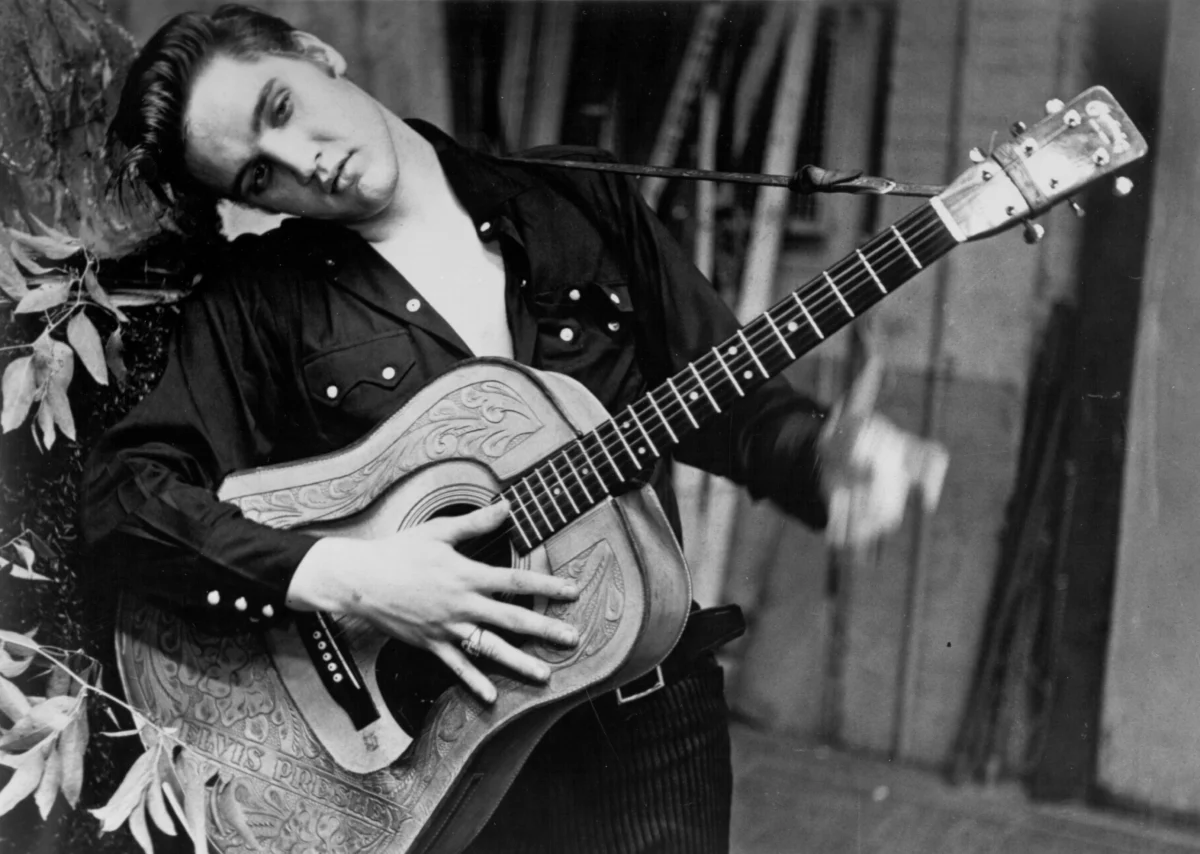
HangupsMusic.com – Nashville, The intersection of rock and roll history and cutting-edge artificial intelligence has become a battlefield following a massive legal filing by the stewards of Elvis Presley’s intellectual property. Authentic Brands Group (ABG), the licensing powerhouse that manages the legendary singer’s name, image, and extensive musical catalog, has officially filed a lawsuit against the San Francisco-based AI firm Anthropic. The complaint, seeking a staggering $41 million in damages, alleges that the tech company systematically exploited Presley’s creative works to train its sophisticated large language model, known as Claude, without obtaining the necessary permissions or providing compensation.
The lawsuit, which was formally lodged in a Tennessee court on October 23, represents a pivotal moment in the ongoing conflict between the creative arts and the generative AI industry. While various music publishers and record labels have previously challenged AI developers, this specific action is notable for its focus on a single, iconic artist’s legacy. Alongside several co-plaintiffs who hold various rights to the Presley catalog, ABG claims that Anthropic’s business model is built upon a foundation of mass copyright infringement. The plaintiffs argue that the tech firm treated the history of American music as a free resource, ignoring the legal protections that have governed the industry for decades.
At the heart of the dispute are 274 of Elvis Presley’s most recognizable songs. This list includes timeless hits such as “Can’t Help Falling in Love” and “Don’t Be Cruel,” as well as deep-catalog favorites like “Farther Along,” “If You Think I Don’t Need You,” and “Run On.” The legal team representing the Presley interests, led by prominent attorney Richard Busch—who famously won the "Blurred Lines" copyright case—is seeking statutory damages of approximately $150,000 per song. This figure is the maximum allowed under federal law for willful infringement, culminating in the $41 million total requested in the filing.
In a forceful statement accompanying the lawsuit, Busch emphasized the protective stance of his clients. He characterized the legal action as a necessary defense of exclusive rights against a defendant that has allegedly scaled its operations through the unauthorized use of copyrighted material. According to the plaintiffs, the "Elvis Plaintiffs" are not merely seeking financial restitution but are fighting to maintain the integrity of a cultural legacy that remains a cornerstone of the global music industry. They contend that the unauthorized ingestion of these lyrics into an AI model devalues the original works and sets a dangerous precedent for the future of artist rights.
The specific allegations against Anthropic center on the way its AI model, Claude, handles requests for lyrics or song-writing assistance. The lawsuit claims that Anthropic used the Presley songs to generate “unlicensed derivative works.” In the world of intellectual property law, a derivative work is a new creation based on an existing copyrighted work. By training Claude on the specific cadences, structures, and lyrical themes of Presley’s music, the plaintiffs argue that the AI is capable of producing content that mimics the original too closely to be considered a new, independent creation.
One of the more damning aspects of the filing involves the alleged failure of Anthropic’s internal "guardrails." As the AI industry has faced increasing scrutiny, many companies have implemented safety filters designed to prevent their models from outputting copyrighted text verbatim. However, the lawsuit alleges that these measures are insufficient and easily bypassed. The plaintiffs provided evidence showing that even in recent iterations of Claude, the model continued to infringe upon the Presley catalog.
When prompted to recreate certain songs for a “modern audience,” Claude reportedly produced results that were nearly identical to the originals. The lawsuit quotes the AI’s own admission during these interactions, where the model noted that its renders were “landing very close to the originals,” utilizing the same structural frameworks, reusing hooks with minimal changes, and maintaining the original verse-chorus-bridge patterns. The legal filing asserts that this behavior goes far beyond being “inspired by” an artist and enters the territory of reproduction, even when certain words are substituted for synonyms.
This case is part of a broader, intensifying wave of litigation targeting the “black box” of AI training data. For years, AI companies have operated under the assumption that scraping the public internet to train their models falls under “fair use”—a legal doctrine that allows for the limited use of copyrighted material without permission for purposes such as criticism, news reporting, or research. However, music rights holders argue that there is nothing “fair” about using their commercial assets to build a competing commercial product that can eventually generate music and lyrics autonomously.
The involvement of Authentic Brands Group adds a layer of corporate weight to the proceedings. ABG is known for its aggressive and highly successful management of celebrity brands, including Marilyn Monroe and Muhammad Ali. By taking a stand against Anthropic, they are signaling that the era of AI companies utilizing "legacy" content without a licensing agreement is over. For the music industry, this lawsuit serves as a litmus test for how the courts will treat the massive datasets required for machine learning. If a judge rules that training an AI on copyrighted lyrics constitutes infringement, it could force tech giants to negotiate multi-billion-dollar licensing deals with the entire music industry.
Anthropic, which has received billions of dollars in investment from major tech firms like Amazon and Google, has positioned itself as a "safety-first" AI company. However, this reputation is being tested as more creators come forward with claims of theft. Earlier this year, a group of music publishers, including Universal Music Group, filed a similar suit against Anthropic, marking the first major legal challenge from the music industry against an LLM developer. The Presley lawsuit builds on those arguments but narrows the focus to the specific cultural and economic impact of exploiting a single, high-profile catalog.
The implications of this case extend far beyond the $41 million at stake. If the court sides with ABG, it could redefine the boundaries of "transformative use." AI companies argue that their models "learn" from data in a way that is similar to how a human songwriter learns by listening to the radio. The plaintiffs in this case, however, argue that there is a fundamental difference between a human being influenced by Elvis Presley and a machine being fed 274 copyrighted files to mathematically predict the next word in a sequence.
Furthermore, the lawsuit highlights the concept of the “Value Gap” in the digital age. Rights holders have long complained that tech platforms profit from creative content while returning only a fraction of that value to the creators. In the context of AI, the gap is even wider, as the creators of the training data often receive nothing at all. For the estate of Elvis Presley, whose music continues to generate millions of dollars in revenue decades after his passing, the threat posed by AI-generated "Presley-esque" content is both an economic and an existential one.
As the legal proceedings move forward, the music world will be watching closely. The outcome could determine whether the future of AI is one of collaboration with the creative arts or one of perpetual litigation. For now, the King of Rock and Roll is at the center of a new kind of revolution—one that will decide who owns the soul of a song in the age of the algorithm. Anthropic has yet to provide a formal response to the specific claims in the ABG filing, but the battle lines have been clearly drawn. The case, currently winding its way through the Tennessee legal system, promises to be a landmark moment in the history of intellectual property law.
