
 By Azzam Bilal
HangupsMusic.com – The trajectory of an artist is rarely a linear path of constant ascent; more often, it is a series of peaks and valleys shaped by the unpredictable forces of health, societal pressure, and personal evolution. For Katherine Paul, the Swinomish musician who records under the moniker Black Belt Eagle Scout, the last three years have been defined by a profound silence—a period of forced stillness that threatened to sever her connection to the very instrument that gave her a voice. Today, that silence has been broken with the release of “Fantasy,” a sweeping, evocative new single that marks her first original output since her critically acclaimed 2023 album. More than just a new track, “Fantasy” serves as a sonic manifesto of survival, documenting a harrowing period during which Paul faced a life-altering medical diagnosis and a fundamental shift in her relationship with the world around her.
The hiatus preceding this release was not a matter of creative choice, but one of physical necessity. While touring extensively in support of her third full-length LP, The Land, the Water, the Sky, Paul’s body began to fail her in ways that were as terrifying as they were mysterious. The momentum of a successful international tour was abruptly halted when a medical emergency forced the cancellation of several performances. Soon after, the public learned the gravity of the situation: Paul had been diagnosed with multiple sclerosis (MS). The autoimmune disease struck at the core of her identity as a performer, stripping away her ability to walk and, most devastatingly for a musician known for her intricate and emotive fretwork, her ability to play the guitar. The hands that had crafted some of the most poignant indie-rock melodies of the last decade were suddenly unable to navigate the strings.
“Fantasy” was born from the wreckage of that period, though its thematic roots stretch back even further to the time before her diagnosis. The song serves as an autopsy of the burnout that often precedes a physical collapse. Paul explains that the composition took shape during a pivotal transition in her life—the moment she decided to leave the professional nonprofit sector to pursue music as a full-time vocation. For years, she had balanced her creative output with work in the Native nonprofit world, a space that, while aligned with her values, imposed a heavy psychological burden. Paul describes a pervasive pressure to perform the role of a “superwoman,” an Indigenous figurehead tasked with representing her people within institutional frameworks that were never designed to accommodate or reflect Indigenous worldviews.
The lyrics of “Fantasy” delve into the visceral toll of trying to fit into these rigid, capitalistic systems. Paul explores the disconnect between the soul’s need for freedom and the body’s forced adherence to productivity metrics. The song captures the exhaustion of being a visible representative in spaces that demand emotional labor without offering true structural support. In Paul’s view, the stress of this existence was not merely mental; it was a physical weight that contributed to the eventual breakdown of her health. By choosing music over the nonprofit grind, she wasn’t just changing careers; she was attempting to save her life and reconnect with a version of herself that existed outside the expectations of others.
The sonic landscape of “Fantasy” reflects this yearning for liberation. It carries the signature atmospheric weight that has come to define Black Belt Eagle Scout’s sound—a blend of Pacific Northwest grunge influences and ethereal shoegaze—but there is a new layer of resilience in the production. The guitars, which Paul had to painstakingly relearn to play during her recovery, chime with a sense of hard-won victory. The track moves with a rhythmic fluidity that mirrors the natural world she sought refuge in: the trees, the water, and the expansive skies of the Swinomish reservation. It is a song about wanting to be free, not just from the constraints of a job, but from the constraints of a body that had become a site of struggle.
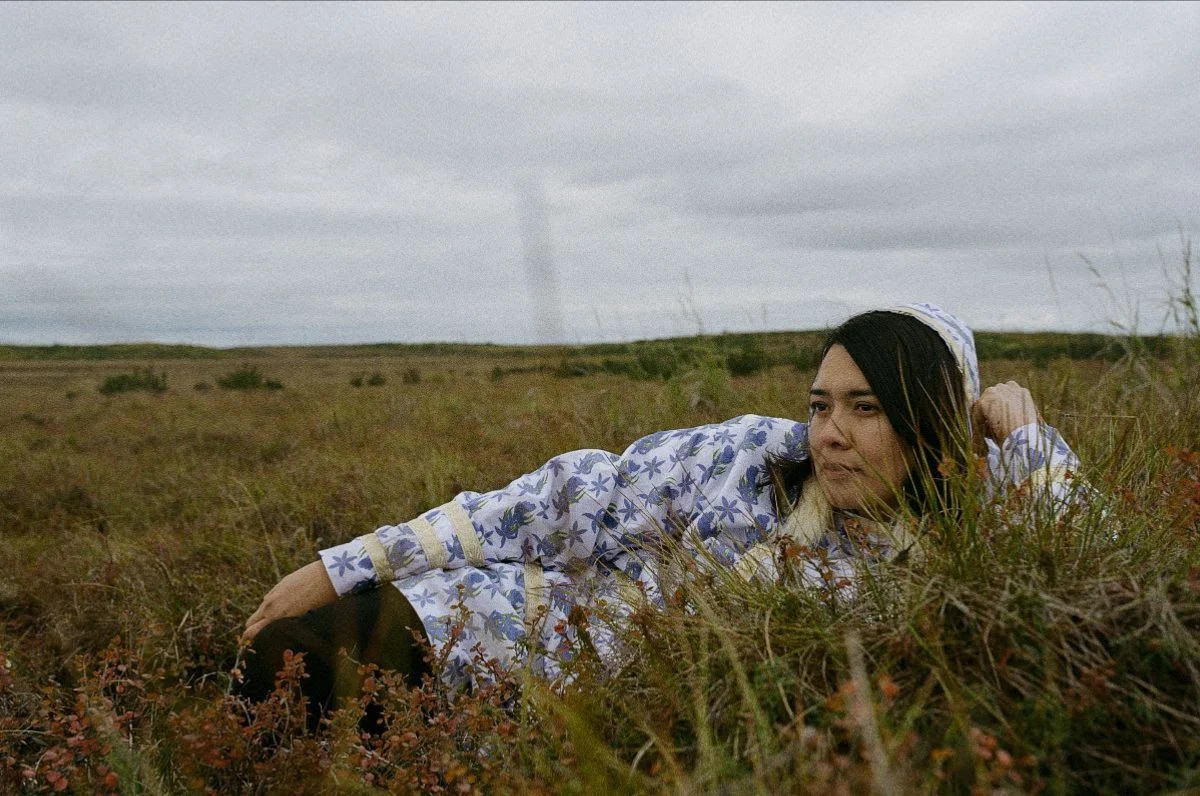
Accompanying the single is a visually stunning music video that further anchors the song in Paul’s cultural and familial roots. Directed by her cousin Priscilla Hensley alongside Evan Benally Atwood, the video is a celebratory display of Indigenous kinship and heritage. It features Paul’s mother, her aunt, and various relatives, creating a multi-generational tableau of resilience. The dancers in the video wear handmade Iñupiat garments, a direct nod to Paul’s ancestral lineage. This visual choice reinforces the song’s message: that healing is not an individual pursuit, but one deeply rooted in community and the reclamation of traditional identities. By centering her family in the video, Paul shifts the focus away from the "superwoman" archetype she once felt forced to inhabit and toward a more authentic, communal expression of Indigenous life.
The release of “Fantasy” also invites a re-evaluation of Paul’s 2023 masterpiece, The Land, the Water, the Sky. That album was widely praised for its ability to weave together themes of queer Indigenous identity, ancestral land rights, and the quiet beauty of the natural world. It was a record that felt grounded in the geography of the Skagit Valley, yet its tour was cut short before many fans had the chance to experience its power live. The diagnosis of MS cast a long shadow over that era of her career, turning a celebratory moment into one of profound uncertainty. The fact that Paul has returned so soon with new music is a testament to the restorative power of her art.
In many ways, Katherine Paul has become a vital figure in the modern indie-rock landscape precisely because she refuses to separate her art from her identity. As a queer Indigenous woman, her presence in a genre that has historically been dominated by white, heteronormative voices is inherently political. However, “Fantasy” suggests that she is moving beyond the burden of representation. She is no longer interested in being a symbol or a spokesperson within systems that drain her; instead, she is focusing on the act of being. The song is an invitation to step outside the frantic pace of modern society and find solace in the fundamental elements of existence.
The journey from losing the ability to walk to releasing a song as potent as “Fantasy” is nothing short of miraculous. It speaks to a rigorous process of rehabilitation—both physical and spiritual. For Paul, the guitar was more than a tool; it was an extension of her nervous system. Relearning the instrument meant retraining her brain and body to communicate again, a process that mirrors the lyrical themes of reconnecting with oneself after a period of total burnout. The music she is making now carries the weight of that experience, possessing a gravity that only comes from having stared down the possibility of permanent silence.
As Black Belt Eagle Scout moves forward into this new chapter, the industry and her fanbase are watching with renewed admiration. The struggles she has navigated over the last three years—the MS diagnosis, the physical limitations, and the rejection of capitalistic pressures—have only deepened the resonance of her work. “Fantasy” is not just a return to form; it is an evolution. It signals an artist who has emerged from a period of darkness with a clearer understanding of her boundaries and a more profound appreciation for her craft.
In a world that constantly demands more—more productivity, more representation, more labor—“Fantasy” is a radical act of slowing down. It is a reminder that the most important work an artist can do is the work of self-preservation. By returning to the trees, to her family, and to the strings of her guitar, KP Paul has found a way to bridge the gap between her physical reality and her creative spirit. The song stands as a beacon for anyone who has felt the crushing weight of expectation and the transformative power of choosing a different path. Black Belt Eagle Scout is back, and her voice is more essential than ever.
