 By Azzam Bilal
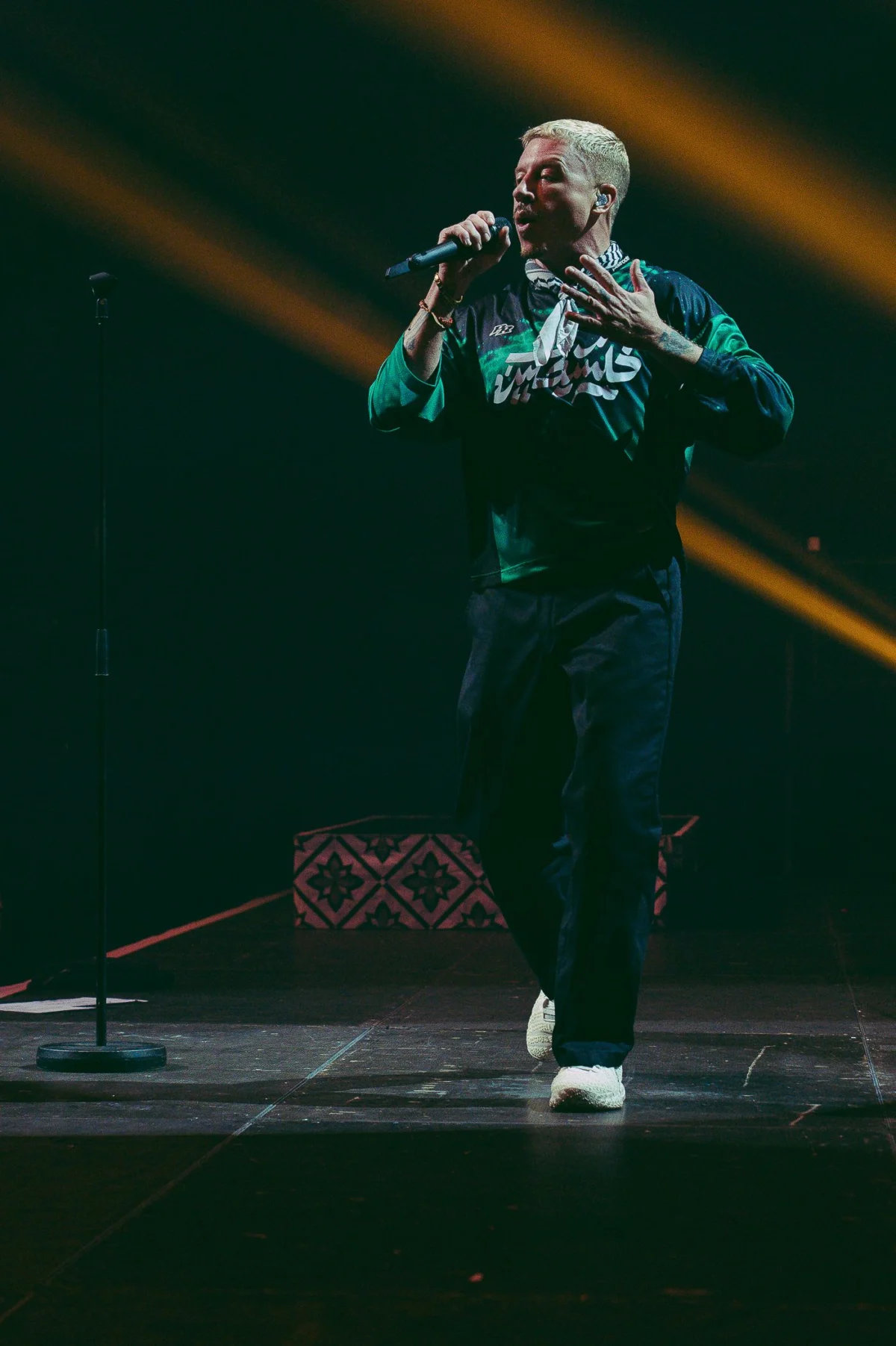
HangupsMusic.com – Seattle, The intersection of music and political activism has long been a volatile space, but few contemporary artists have found themselves at the center of such a stark divide as the Seattle-born rapper Macklemore. After a successful series of benefit performances across Europe, the Grammy-winning artist intended to bring his "Free Palestine Tour" to American soil. However, according to a detailed statement released by the rapper, the transition from international stages to domestic arenas has been met with a significant and coordinated blockade. Macklemore has publicly accused nine of the most prominent sports and entertainment venues in the United States of rescinding offers and blocking his performances specifically due to the pro-Palestinian nature of the events.
The controversy marks a dramatic escalation in the friction between the rapper’s outspoken advocacy and the corporate structures that govern the American live music industry. The conflict began in earnest following Macklemore’s removal as the opening act for Ed Sheeran’s recent tour, a move widely attributed to his public comments regarding the ongoing crisis in Gaza. Undeterred by the loss of a major touring slot, the rapper pivoted toward a self-produced benefit tour, successfully selling out dates in Dublin, London, and Paris. The European leg was characterized by the artist as a series of "nights of joy, love, and resistance," intended to raise funds for humanitarian aid and bring awareness to the plight of Palestinian civilians. However, as the planning shifted toward the United States, the rapper claims he encountered a wall of resistance that he describes as unprecedented in his twenty-year career.
According to Macklemore’s account, his team began scouting for U.S. dates in mid-September. Initially, the process appeared to follow standard industry protocols. Nine major arenas—including some of the most iconic venues in the world—reportedly provided lists of available dates through the end of the year. The list of venues named by the rapper includes a "who’s who" of American entertainment hubs: Madison Square Garden in Manhattan, the Prudential Center in Newark, the Barclays Center in Brooklyn, and the UBS Arena in Long Island. On the West Coast, the list extends to the Intuit Dome, the Kia Forum, and the Crypto.com Arena in Los Angeles, along with the Chase Center in San Francisco and the Climate Pledge Arena in his hometown of Seattle.
The rapper alleges that the tone of these negotiations shifted abruptly once the specific purpose of the tour was disclosed. Macklemore claims that as soon as the venues realized the shows were benefit events for Palestine, the previously available dates were "suddenly off the table." He described a pattern where doors were closed and conversations were terminated, leading to the same result across all nine locations: the shows would not be allowed to proceed. Macklemore’s statement suggests that this was not a matter of scheduling conflicts, but a deliberate effort to suppress a specific political message.
The response from the venues themselves has been largely non-existent, with most representatives declining to comment on the allegations. However, Madison Square Garden (MSG) provided a brief and pointed rebuttal to the rapper’s claims. In a statement that has been characterized by some observers as dismissive, the Garden’s management cited two primary reasons for the lack of a booking. First, they noted that their venues are among the busiest in the world with extremely limited availability. Second, they asserted that Macklemore is "not an arena-level act." This critique of the rapper’s commercial standing serves as a sharp contrast to his historical performance data, which includes multiple Diamond-certified singles and a history of headlining major festivals and arenas globally. The "arena-level" comment has sparked debate within the industry regarding whether the rejection is based on projected ticket sales or political sensitivity.

For Macklemore, the rejection by these corporate-owned spaces is indicative of a broader trend of censorship and intimidation within the entertainment industry. In his social media address, he expressed a profound sense of disillusionment with the business side of music, stating that he is no longer concerned with maintaining professional or personal relationships with those who do not support his humanitarian stance. He framed the situation as a choice between industry opportunities and moral integrity, declaring that he would rather lose every career prospect than remain silent to protect business interests linked to the state of Israel.
The rapper’s rhetoric highlights a growing divide between grassroots activism and the billionaire-controlled entities that own the infrastructure of the music world. He argued that the current climate allows a small group of powerful individuals to decide which causes are deemed "acceptable" and which voices are permitted to reach a mass audience. By naming the specific arenas, Macklemore has effectively challenged the owners of these billion-dollar empires, suggesting that their fear of the words "Free Palestine" stems from a perceived threat to the power structures upon which their fortunes are built.
This standoff occurs against a backdrop of shifting political tides in the United States. Macklemore pointed to the recent electoral success of candidates who have campaigned on platforms critical of U.S. military aid to Israel, such as Abdul El-Sayed. He used these examples to argue that the public sentiment is moving in a direction that corporate interests have yet to acknowledge. The rapper’s message to the arena owners was clear: while they may own the physical buildings, they do not own the audience that fills them. He reminded his followers that the power of these venues is derived from the fans who buy tickets and support the artists, suggesting that a collective shift in consumer behavior could challenge the status quo.
The fallout from this tour cancellation also touches upon the historical consequences faced by artists who take controversial stands. Macklemore acknowledged that he is part of a long lineage of poets, musicians, and activists who have faced professional repercussions for standing in solidarity with Palestinians. He admitted to a sense of regret for not being more vocal in the past, suggesting that "Zionists" had previously attempted to influence his public image and career behind the scenes. By coming forward now, he intends to expose what he calls the "tactics of suppression" used to keep entertainers in line.
Despite the setback with major U.S. arenas, Macklemore has signaled that the "Free Palestine Tour" is far from over. He announced that his team is actively seeking alternative spaces to hold the benefit concerts, hinting that the shows may move to independent venues or even outdoor locations. "We’ll probably just take that shit outside where it belonged in the first place," he wrote, emphasizing a commitment to building "our own stages" rather than asking for permission from traditional power brokers. This move toward independent production mirrors a larger trend in the industry where artists, disillusioned by corporate gatekeeping, leverage their direct-to-fan connections to bypass traditional distribution and performance channels.
The situation remains a focal point for discussions regarding free speech and the limits of corporate influence in the arts. As Macklemore continues to advocate for an end to the conflict in Gaza and raises funds for humanitarian relief, the music industry is left to grapple with the implications of his "blacklist." Whether other artists will follow his lead in challenging venue owners or if the industry will successfully insulate itself from such political friction remains to be seen. For now, the empty dates at the Barclays Center and the Chase Center serve as a silent testament to one of the most significant ideological clashes in recent music history. Macklemore’s resolve to continue the tour independently suggests that while the arenas may be closed, the conversation he has ignited is only getting louder.
