
 By Azzam Bilal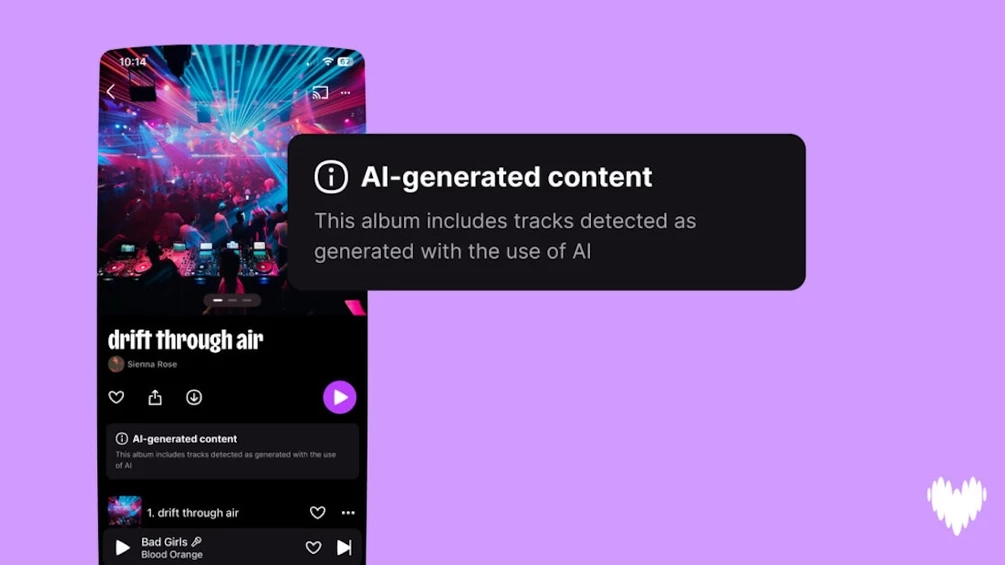
HangupsMusic.com – Paris, the global music landscape has officially crossed a threshold that was once the province of science fiction, as new data suggests that the era of human-dominated content production may be drawing to a close. Deezer, the Paris-headquartered streaming giant, recently released a report that sent shockwaves through the recording industry: AI-generated tracks now constitute more than 50% of all daily uploads to its platform. This milestone represents a seismic shift in how music is created, distributed, and consumed, signaling a future where the distinction between biological and algorithmic creativity becomes increasingly blurred.
According to the latest figures provided by the streaming service, approximately 90,000 AI-generated tracks are being submitted to the platform every single day. This massive influx now accounts for more than half of the total daily upload volume, a stark increase from data recorded as recently as April. At that time, Deezer reported that AI-generated content stood at roughly 75,000 tracks per day, representing 44% of the total. The rapid acceleration over just a few months highlights the exponential growth of generative tools and their accessibility to the general public. For the first time in the history of digital music, the output of machines has overtaken the collective efforts of human songwriters, instrumentalists, and producers on a major global scale.
The implications of this "digital deluge" are profound, touching upon the very economics of the music business. Alexis Lanternier, the CEO of Deezer, addressed the situation with a mixture of technological pragmatism and a commitment to human artistry. Lanternier noted that the company has been positioned at the vanguard of this conflict for nearly two years, fighting against what the industry calls "payment dilution." This phenomenon occurs when a fixed pool of royalty revenue is split among an ever-growing number of tracks; when tens of thousands of machine-made songs flood the system, they effectively siphon off pennies that would otherwise go to human artists.
To combat this, Deezer has implemented a rigorous "artist-centric" model. This policy includes the active removal and demonetization of AI-generated content that does not meet specific quality or creative thresholds. Earlier this year, the company made headlines by announcing it would shun royalty payments on 85% of AI-generated music identified by its internal systems. These proprietary AI detection tools, which were launched across 20 different streaming platforms in June, are designed to distinguish between genuine creative endeavors and "noise" or "spam" tracks intended solely to game the royalty system.
"Now that half of all daily uploads are AI-generated tracks, we are taking additional steps to safeguard the rights of artists and songwriters," Lanternier stated in a recent press release. He emphasized that the platform’s primary mission remains focused on "music that fans actually love," rather than the automated filler that has begun to saturate the digital ecosystem.
However, Deezer is not alone in its struggle to define the boundaries of the modern music library. The entire industry is currently fractured, with various platforms adopting wildly different philosophies regarding the integration of artificial intelligence. On one end of the spectrum is Bandcamp, the artist-favored marketplace that took a hardline stance earlier this year by banning music that is "wholly or substantially" generated by AI. Similarly, TIDAL recently updated its policy to exclude fully AI-generated tracks from its royalty pools, ensuring that its payout structure remains reserved for human creators.
In the middle ground, platforms like Apple Music and Traxsource have leaned into transparency rather than prohibition. Both services have developed sophisticated tagging systems that require uploaders to disclose whether AI was used during the production process. This approach treats AI as a tool—much like a synthesizer or a digital audio workstation—but insists on a "clear label" so that consumers can make informed choices about what they are supporting.
On the opposite end of the spectrum, some industry titans are looking for ways to monetize the trend rather than fight it. Spotify, in collaboration with Universal Music Group (UMG), recently explored a landmark licensing deal that would allow fans to use AI to generate remixes and covers of existing songs. This model seeks to bring AI into the fold of "fan engagement," provided that the original artists and rightsholders grant permission and receive a share of the resulting revenue. This suggests a future where AI is not just a competitor to the artist, but a bridge between the creator and the consumer.
The debate over the "soul" of music is further complicated by the sheer quality of modern generative models. A study released in November 2025 revealed a startling statistic: 97% of listeners were unable to accurately distinguish between human-composed music and high-end AI-generated tracks. This level of sonic mimicry poses a philosophical challenge to the industry. If the average listener cannot tell the difference, and if the music provides the same emotional or functional utility—such as lo-fi beats for studying or ambient sounds for sleep—the economic pressure to favor cheaper, machine-made content becomes almost irresistible for platforms looking to minimize licensing costs.
The rise of AI music is also intrinsically linked to the broader issue of streaming fraud. Many of the 90,000 daily uploads identified by Deezer are categorized as "functional music" or "slop"—content that is generated in bulk to populate search results or to be played by bot farms. By flooding the platform with thousands of tracks, bad actors can accumulate significant royalties through sheer volume, even if each individual track only receives a handful of plays. Deezer’s aggressive demonetization strategy is aimed specifically at these bad-faith operators, who threaten the financial viability of independent human musicians.
As the industry moves forward, the "50% threshold" reached by Deezer serves as a harbinger of a new era. The digital music space is no longer just a library of human culture; it is a hybrid environment where algorithms are both the creators and the curators. The challenge for companies like Deezer will be to maintain a platform that feels authentic and human-centric while navigating the logistical nightmare of policing a million new tracks every few days.
Legal experts suggest that the next battleground will be in the courts, as copyright law struggles to keep pace with technology. Currently, in many jurisdictions, AI-generated content cannot be copyrighted because it lacks "human authorship." This creates a legal paradox where a platform might be filled with music that no one technically owns, yet everyone is trying to profit from.
For the independent artist, the news is a double-edged sword. While the tools to create professional-sounding music have never been more accessible, the competition has never been more overwhelming. Standing out in a crowd of 90,000 new tracks a day requires more than just a good melody; it requires a brand, a personality, and a human connection that—for now—machines cannot fully replicate.
Deezer’s proactive stance in sharing its detection tools with other platforms suggests a move toward an industry-wide standard for "human-first" streaming. Whether this will be enough to stem the tide remains to be seen. As AI models continue to evolve, learning from the very human artists they are beginning to replace, the line between the two will only grow thinner. For now, the music industry remains in a state of high alert, watching as the scales of creativity tip toward the silicon and the circuit board.
