
 By Azzam Bilal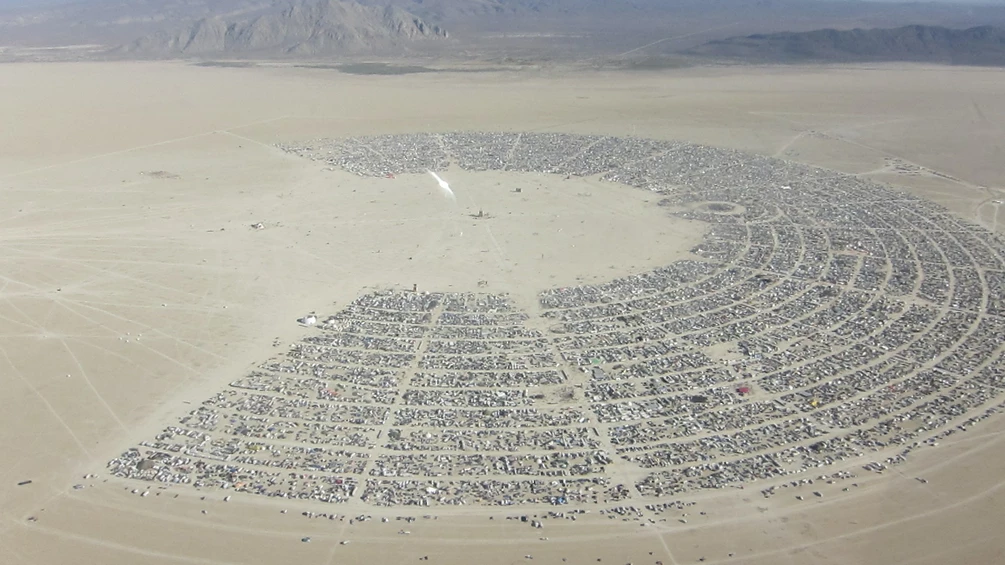
HangupsMusic.com – Black Rock City, Nevada, the sprawling, dust-swept landscape of the Black Rock Desert has once again become the focus of international attention, but this time for reasons far more somber than the usual displays of avant-garde art and radical self-expression. As the 2026 edition of Burning Man draws toward its conclusion, the community is grappling with the news of two separate fatalities within the temporary metropolis known as Black Rock City. These incidents have cast a shadow over the annual gathering, prompting renewed discussions regarding the safety protocols of the event and the inherent risks of hosting tens of thousands of people in one of the most inhospitable environments on the planet.
The first of the two tragedies occurred on Thursday, September 3rd. According to official reports, an unnamed participant in his mid-50s suffered a severe medical emergency while on the festival grounds. Despite the rapid response of on-site medical teams, the man was unable to be stabilized. He was rushed to the festival’s specialized emergency care center—a field hospital designed to handle everything from dehydration to trauma—where he was subsequently pronounced dead. While the specific nature of the medical emergency has not been released to the public, Jerry Allen, the Sheriff and Coroner of Pershing County, stated that early indicators suggest no signs of foul play were involved in the incident.
The sense of loss deepened just two days later. On Saturday, September 5th, at approximately 3:00 PM, 60-year-old Craigh Mann was discovered unresponsive within the confines of his campsite. The discovery sent shockwaves through his camp and the surrounding neighborhood of the radial city. Burning Man organizers quickly issued a formal statement expressing their profound grief. "Our thoughts and deepest condolences are with the participant’s family, friends, campmates, and all those affected by this loss," the statement read. As of this writing, the cause of Mann’s death remains undisclosed, pending an investigation by the coroner’s office.
These back-to-back losses serve as a stark reminder of the physical toll that "the Playa" can take on the human body. Burning Man is not a typical music festival; it is an experiment in community and survival located on an ancient, alkaline lakebed where temperatures frequently soar above 100 degrees Fahrenheit during the day and plummet at night. The air is often thick with fine dust that can cause respiratory distress, and the sheer scale of the event—which now hosts upwards of 80,000 people—makes the logistics of emergency medical care a Herculean task.
The 2026 event is not the first time the festival has been marred by tragedy. In fact, the history of Burning Man is punctuated by incidents that highlight the thin line between radical self-reliance and catastrophe. The previous year, 2025, was particularly fraught with challenges. Attendees that year dealt with extreme weather patterns, including intense dust storms and high winds that caused significant traffic delays and structural damage to camps. Amidst those storms, one attendee was nearly killed after being electrocuted, requiring an emergency airlift from the site. Perhaps most disturbingly, the 2025 event saw the launch of a homicide investigation following the death of 37-year-old Vadim Kruglov. Kruglov was found "lying in a pool of blood" at his campsite, and the investigation into the circumstances of his death remains active and ongoing, leaving a lingering sense of unease within the community.
The recurring nature of these incidents has fueled an ongoing debate about the evolution and future of Burning Man. Earlier this month, the conversation was amplified by an essay penned by John Law, one of the original co-founders of the event. Law, who was instrumental in moving the gathering from San Francisco’s Baker Beach to the Nevada desert in 1990, expressed a scathing critique of what the festival has become. Writing for the San Francisco Standard, Law argued that Burning Man has "lost its soul," describing the modern iteration as "barely recognizable" from the original counterculture gathering he helped create.
Law’s critique touches on a nerve that has been sensitive for years. What began as a lawless, anarchic zone for "The Suicide Club" and "The Cacophony Society" has transformed into a high-priced destination for Silicon Valley executives, social media influencers, and "luxury campers." The introduction of "plug-and-play" camps—where wealthy attendees pay tens of thousands of dollars for pre-built setups, air conditioning, and private chefs—stands in direct opposition to the principle of "Radical Self-Reliance." Critics argue that this gentrification of the Playa has created a stratified society that is less prepared for the rigors of the desert, potentially contributing to the medical and safety issues seen in recent years.
However, the Burning Man Project, the non-profit organization that manages the event, maintains that safety is their highest priority. The infrastructure of Black Rock City includes a sophisticated Emergency Services Department (ESD) comprising hundreds of volunteers and professionals, including doctors, nurses, firefighters, and mental health crisis counselors. The "Rampart" medical tent functions as a fully operational emergency room, capable of stabilizing patients before they are transported via ground ambulance or helicopter to hospitals in Reno, which is over two hours away by road.
Despite these resources, the "10 Principles" of Burning Man—which include Radical Inclusion, Gifting, Decommodification, Radical Self-Reliance, Radical Self-Expression, Communal Effort, Civic Responsibility, Leaving No Trace, Participation, and Immediacy—place a heavy burden of responsibility on the individual. When a participant enters the Black Rock Desert, they sign a waiver acknowledging that they are entering a "hostile environment" where death or serious injury is a possibility. The deaths of Craigh Mann and the unnamed participant on Thursday underscore the reality that even with a robust medical infrastructure, the desert remains an unforgiving host.
As the investigations into the 2026 fatalities continue, the Pershing County Sheriff’s Office is working closely with festival organizers to determine if environmental factors, pre-existing conditions, or other variables played a role. In a city that exists for only nine days a year, the process of documenting and investigating such events is complicated by the temporary nature of the setting and the transient population.
Beyond the immediate grief, these deaths prompt a reflection on the "Leave No Trace" ethos. While the principle usually refers to physical waste and environmental impact, the emotional "trace" left by such tragedies is indelible. The Burning Man community often holds vigils and memorial services at the "Temple," a massive wooden structure dedicated to grief, memory, and release. The Temple is traditionally burned on the final night of the festival, a day after the "Man" itself is torched, providing a space for participants to process their losses. This year, the names of the deceased will undoubtedly be among the thousands of inscriptions left on the Temple walls by those seeking closure.
The transition from 2025’s mud-soaked chaos and homicide investigation to 2026’s medical tragedies suggests a pattern of increasing complexity for the organizers. As the festival grows and the demographics shift, the balance between maintaining the spirit of "radical" freedom and ensuring the safety of a mid-sized city becomes increasingly precarious. The criticism from founders like John Law suggests that the cultural shift might be irreversible, but for the tens of thousands who still make the pilgrimage to the dust every year, the event remains a vital, if dangerous, sanctuary.
For now, the focus remains on the families of Craigh Mann and the unnamed man who lost his life earlier in the week. Their deaths serve as a somber coda to an event that celebrates the vibrancy of life and the power of human connection. As the citizens of Black Rock City prepare to pack up their camps and begin the long "exodus" back to the "default world," they do so with a heavy heart, carrying with them the reminder that even in a place built on the promise of transformation, the fragility of life remains the ultimate reality. The investigations will continue, and the debate over the "soul" of Burning Man will likely intensify, but the silence left by these two participants will be felt long after the last embers of the Temple have cooled.
