
 By admin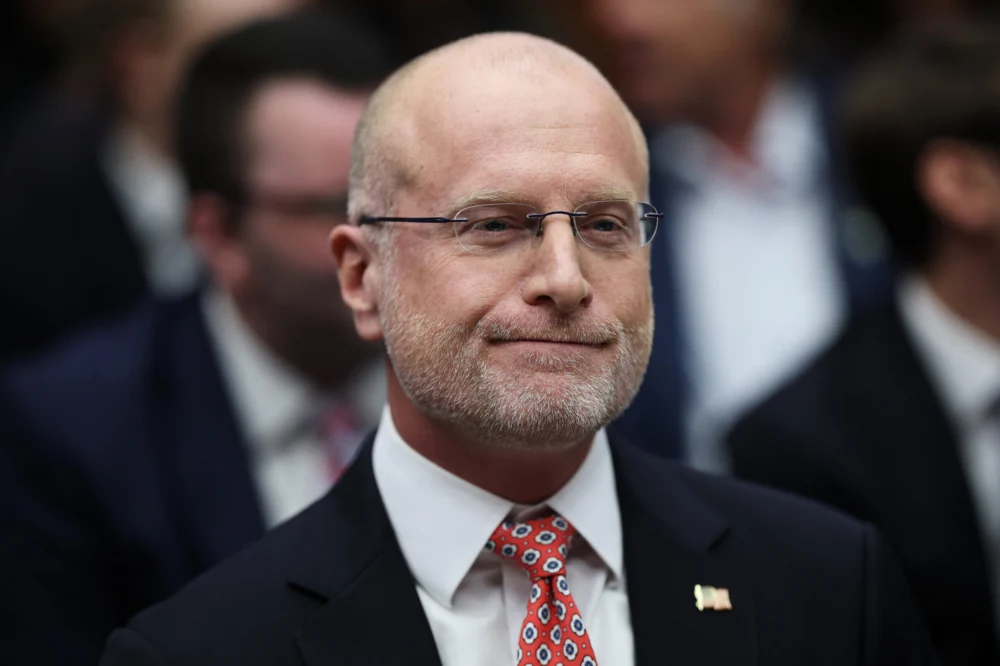
HangupsMusic.com – Washington D.C., The intersection of late-night entertainment, political ambition, and federal broadcast regulations found itself under a harsh spotlight recently, as a planned interview on CBS’s The Late Show with Stephen Colbert ignited a public dispute involving a U.S. Senate hopeful and the Federal Communications Commission (FCC). The incident, which saw network legal counsel advise against airing a segment with Texas Democratic candidate James Talarico, has reignited long-standing debates over the FCC’s "equal time" provision, its enforcement, and the evolving role of television in political discourse. While the segment ultimately found a home on digital platforms, the controversy has drawn scrutiny to the agency’s actions, particularly its chairman’s pronouncements and ongoing investigations into other prominent broadcast programs.
At the heart of the matter lies Section 315 of the Communications Act of 1934, commonly known as the "equal time rule." This provision mandates that if a broadcast station permits a legally qualified candidate for public office to use its facilities, it must afford "equal opportunities" to all other legally qualified candidates for the same office. The original intent behind this regulation was to ensure fairness and prevent broadcasters from using their powerful platforms to unduly influence elections by favoring one candidate over others. In an era when radio and later television were primary sources of information, the rule aimed to level the playing field, ensuring that voters had access to a range of perspectives from those vying for public office.
However, the application of Section 315 has always been complex, marked by a series of exemptions carved out over decades to accommodate the realities of news gathering and public affairs programming. Historically, these exemptions included appearances by candidates on bona fide newscasts, news interviews, news documentaries (if the candidate’s appearance is incidental to the subject matter), and on-the-spot coverage of bona fide news events. These exceptions were crucial, allowing journalists and broadcasters to cover elections without the impractical burden of having to offer identical airtime to every single candidate, regardless of their prominence or the news value of their appearance. For late-night talk shows like The Late Show, their classification as "bona fide news interviews" or programs exempt from the rule has often been a point of contention but generally accepted, recognizing their blend of entertainment and topical commentary.
The recent stir began when Stephen Colbert informed his audience that his network’s legal team had advised against airing his pre-recorded interview with James Talarico, who is seeking a U.S. Senate seat in Texas. Colbert suggested that CBS lawyers feared potential repercussions from the FCC, specifically a mandate to provide equal airtime to Talarico’s political rivals, including fellow Democrat Rep. Jasmine Crockett. This advisory, according to Colbert, was a direct consequence of the FCC’s increasingly stringent interpretation and enforcement of the equal time rule, particularly under its current leadership. He implied that the agency was disproportionately targeting liberal-leaning broadcasters under the guise of enforcing a rule that had historically allowed for greater flexibility in news and public affairs programming.
FCC Chair Brendan Carr, however, offered a starkly different narrative, publicly dismissing the controversy. During a press conference, Carr unequivocally stated there was "zero censorship with the equal time provision," characterizing the entire incident as a calculated maneuver by Talarico. Carr suggested that the candidate, possessing an astute understanding of media dynamics, had orchestrated a "hoax" purely for the purpose of garnering attention, boosting fundraising efforts, and generating online engagement. This portrayal directly contradicted the perception of regulatory overreach, instead painting Talarico as a savvy political operator exploiting the rules for personal gain.
CBS, in its official statement, sought to clarify its position, asserting that it had not "prohibited" Colbert from airing the interview. The network explained that The Late Show was provided "legal guidance" indicating that broadcasting the segment could indeed trigger the equal time rule for Talarico’s competitors. Faced with the prospect of potentially having to offer comparable airtime to multiple other candidates—a process that entails significant logistical, financial, and scheduling challenges—the show opted for an alternative. Rather than incurring the obligations associated with granting equal time options, The Late Show decided to distribute the full interview on its official YouTube channel. This move highlights a critical dimension of the debate: the differing regulatory landscapes between traditional broadcast television and digital-only platforms, where Section 315 generally does not apply. The shift to YouTube allowed the content to be shared with a wide audience without the same regulatory constraints, illustrating how modern media consumption patterns are challenging long-standing broadcast regulations.
The controversy surrounding The Late Show was not an isolated incident but rather unfolded against a backdrop of similar FCC actions that have raised eyebrows across the media industry. Amid his claims of "zero censorship," Chair Carr simultaneously confirmed that the commission had initiated a probe into ABC’s popular daytime panel show, The View, for alleged violations of the very same equal time rules. Reports had surfaced earlier that Carr had launched an investigation into The View after it, too, had hosted James Talarico for an interview. This parallel inquiry bolstered Colbert’s assertion that the FCC was actively scrutinizing programs traditionally considered outside the strict purview of Section 315.
Carr further elaborated on The View probe during an appearance on FOX News Channel’s The Ingraham Angle. He articulated that Disney, the parent company of ABC, has consistently maintained that The View qualifies as "bona fide news" under the statute, thereby exempting it from the equal time provision. However, Carr challenged this assertion, stating, "Disney and The View have not established that that program is, in fact, bona fide news." He declared that the FCC had commenced "enforcement proceedings" to examine the matter, emphasizing the commission’s commitment to "hold broadcasters accountable." This firm stance suggests a more aggressive interpretation of what constitutes "bona fide news" and a willingness to challenge the traditional classifications of various television programs.
The broader implications of these developments extend beyond individual shows and candidates. Critics argue that the FCC’s recent actions, particularly under Chair Carr, represent a targeted campaign that could have a "chilling effect" on broadcasters. The threat of investigations, legal challenges, and the potential imposition of equal time obligations—which can be costly and disruptive—might lead networks to self-censor, shying away from interviewing political candidates, especially those from less dominant parties or with less conventional platforms, to avoid regulatory headaches. This could inadvertently stifle political discourse on television, limiting the range of voices and perspectives available to the public.
Furthermore, the incidents underscore the challenges of applying decades-old broadcast regulations to a rapidly evolving media landscape. The rise of digital platforms like YouTube, social media, and streaming services means that much of political communication now occurs outside the traditional broadcast ecosystem. While the equal time rule was designed for a scarcity of airwaves, today’s digital abundance offers myriad avenues for candidates to reach voters. The question then becomes whether the FCC’s current focus on traditional broadcasters adequately addresses the realities of contemporary political campaigning or if it inadvertently creates an uneven playing field, where traditional media face stricter scrutiny than their digital counterparts.
Ultimately, the dispute involving The Late Show, James Talarico, and the FCC is more than just a fleeting media kerfuffle. It’s a significant indicator of ongoing tensions between entertainment and news, political campaigning and regulatory oversight, and the enduring relevance of broadcast rules in the digital age. As the FCC continues its probes and broadcasters navigate these complex legal waters, the future of political engagement on television, and the interpretation of fairness in public discourse, hangs in a delicate balance.
