
 By Azzam Bilal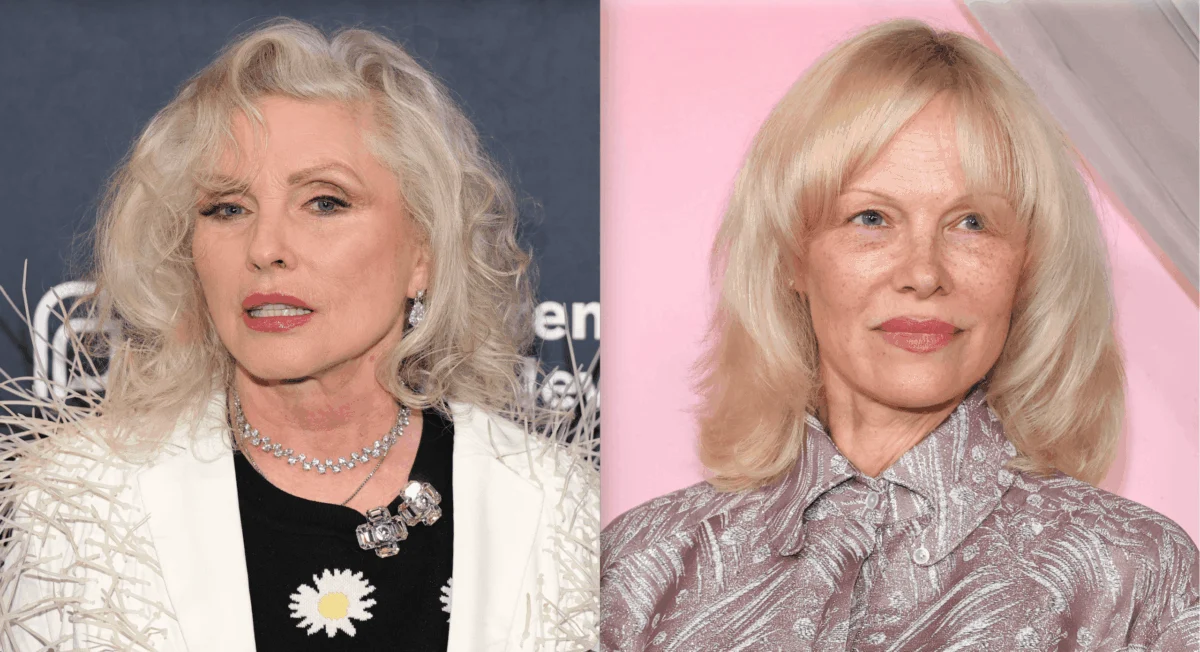
HangupsMusic.com – New York, Debbie Harry has always occupied a unique space in the cultural zeitgeist, existing simultaneously as a pioneer of the New York punk scene and a versatile actress capable of navigating the disparate worlds of cult body horror and mainstream camp. After a decade-long hiatus from feature-length cinema, the legendary Blondie frontwoman is set to make a highly anticipated return to the silver screen. Her latest project, titled Maitreya, places her at the center of a satirical family dynamic alongside fellow pop-culture icon Pamela Anderson, signaling a major cinematic comeback for one of music’s most enduring figures.
The announcement of Maitreya has sparked significant interest within both the film and music industries, not only for its high-profile casting but also for the creative team steering the production. Directed by Jonathan Krisel—best known as the co-creator and frequent director of the surrealist sketch comedy series Portlandia—the film promises a blend of sharp social commentary and character-driven humor. The screenplay is penned by Samuel D. Hunter, the acclaimed playwright whose recent work includes the screenplay for the Academy Award-winning film The Whale. This combination of Krisel’s satirical edge and Hunter’s penchant for deep, often melancholic character studies suggests that Maitreya will be far more than a standard comedy.
According to initial reports from Deadline, the narrative of Maitreya centers on the eponymous character played by Pamela Anderson. Maitreya is depicted as a burgeoning superstar within the lucrative and often eccentric world of New Age healing. On the verge of a career-defining trip to a spiritual conference in India, her plans are complicated by a call from her estranged sister, Monica. The news is grim: their father is on his deathbed. However, in a move that highlights the character’s self-absorption and commitment to her own "theories," Maitreya decides that rather than staying behind to mourn, she will bring her entire family with her to India. This includes her mother, Barbara, portrayed by Debbie Harry. The film aims to explore the friction between genuine grief and the performative nature of modern spirituality, as Maitreya attempts to use her family as a living laboratory for her next book while ostensibly trying to "heal" them.
For Debbie Harry, the role of Barbara marks her first feature film credit in over ten years. While she is globally recognized for her work with Blondie—the band she co-founded with Chris Stein in 1974—Harry’s relationship with the camera has been a lifelong affair. Her acting career began in 1975, just as Blondie was beginning to find its footing in the Bowery’s underground clubs. Over the subsequent decades, Harry curated a filmography that reflects the same eclectic and daring spirit found in her music. She did not merely settle for "rock star" cameos; instead, she sought out roles that challenged her public persona.
One of her most celebrated performances remains her turn in David Cronenberg’s 1983 masterpiece Videodrome. In the film, Harry played Nicki Brand, a provocative radio host whose fascination with pain and sensory overload leads her into a nightmarish world of techno-surrealism. It was a role that solidified her status as a serious actress capable of handling complex, darker material. Following this, she famously pivoted to the world of John Waters, playing the villainous, big-haired Velma Von Tussle in the 1988 classic Hairspray. Her ability to transition from Cronenberg’s body horror to Waters’ high-camp satire demonstrated a range that few of her musical peers could match.
In the 1990s, Harry continued to take on interesting independent projects, perhaps most notably in James Mangold’s 1995 directorial debut, Heavy. In this understated drama, she played a world-weary waitress in a small-town diner, delivering a performance that was stripped of her usual glamor. Critics praised the role for its vulnerability and realism, further proving that Harry’s cinematic instincts were as sharp as her melodic ones. Despite these successes, her appearances in major films became more infrequent after the turn of the millennium, making her casting in Maitreya a significant event for cinephiles and music fans alike.

The pairing of Debbie Harry and Pamela Anderson is particularly inspired. Both women are survivors of the intense media scrutiny that comes with being a blonde bombshell in different eras. Anderson has recently undergone a career renaissance of her own, following the success of her memoir and documentary, as well as a critically acclaimed stint on Broadway and a lead role in Gia Coppola’s The Last Showgirl. Seeing these two cultural icons play mother and daughter in a satire about the New Age industry offers a meta-commentary on fame, aging, and the commodification of self-improvement.
While Harry’s acting career is seeing a revival, her musical legacy with Blondie remains as influential as ever. The band’s impact on the evolution of rock, disco, and hip-hop has been well-documented, but recent years have seen a renewed effort to preserve their historical importance. In 2022, the band released the comprehensive box set Against the Odds: 1974–1982. This collection served as a definitive archive of their formative years, featuring remastered versions of their first six studio albums alongside a treasure trove of demos and alternate takes. The project allowed both old fans and a new generation of listeners to appreciate the technical precision and experimental bravery that defined the band’s rise from the CBGB stage to international stardom.
Blondie’s cultural stature was further cemented when their 1978 breakthrough album, Parallel Lines, was officially inducted into the Library of Congress’ National Recording Registry. This honor is reserved for recordings that are "culturally, historically, or aesthetically significant," ensuring that the sounds of hits like "Heart of Glass" and "One Way or Another" are preserved for posterity as part of the American historical record. The album’s inclusion alongside the works of other legends like The Notorious B.I.G. and Green Day highlights the enduring relevance of the sound Harry and Stein pioneered—a sound that successfully merged the grit of punk with the polish of pop.
As Harry prepares for the release of Maitreya, she continues to represent a bridge between the avant-garde past and the contemporary entertainment landscape. The film’s setting in the world of New Age healing provides a fertile ground for the kind of sharp-witted performance Harry is known for. The "New Age" movement, with its emphasis on "manifestation," "energy work," and the often-expensive pursuit of enlightenment, is a subculture ripe for the kind of scrutiny Jonathan Krisel and Samuel D. Hunter are likely to provide. By placing Harry in the role of the mother to a New Age guru, the film sets the stage for a clash between the grounded, perhaps skeptical, perspective of an older generation and the opportunistic spiritualism of the modern era.
Production details for Maitreya are being closely guarded, but the project is expected to be a highlight of upcoming film festivals. The intrigue surrounding Harry’s return is compounded by the fact that she has spent the last decade focusing largely on live performances and her 2019 memoir, Face It. Her return to the screen suggests that she found something uniquely compelling in Hunter’s script. For a woman who has spent fifty years being watched, photographed, and analyzed, the role of Barbara may offer a new way to explore the complexities of family and the absurdities of the modern search for meaning.
In the broader context of Harry’s career, Maitreya is another chapter in a story defined by reinvention. Whether she is fronting a band at the height of the New Wave movement, acting in a cult classic, or being honored by the Library of Congress, Harry has maintained an air of cool detachment and artistic integrity. As she joins Pamela Anderson for this new venture, the world will once again be watching to see how the original queen of punk navigates the world of high-concept comedy. For fans of Blondie and lovers of independent cinema, the return of Debbie Harry is not just a piece of casting news; it is a reminder of the enduring power of a true original.
