
 By Azzam Bilal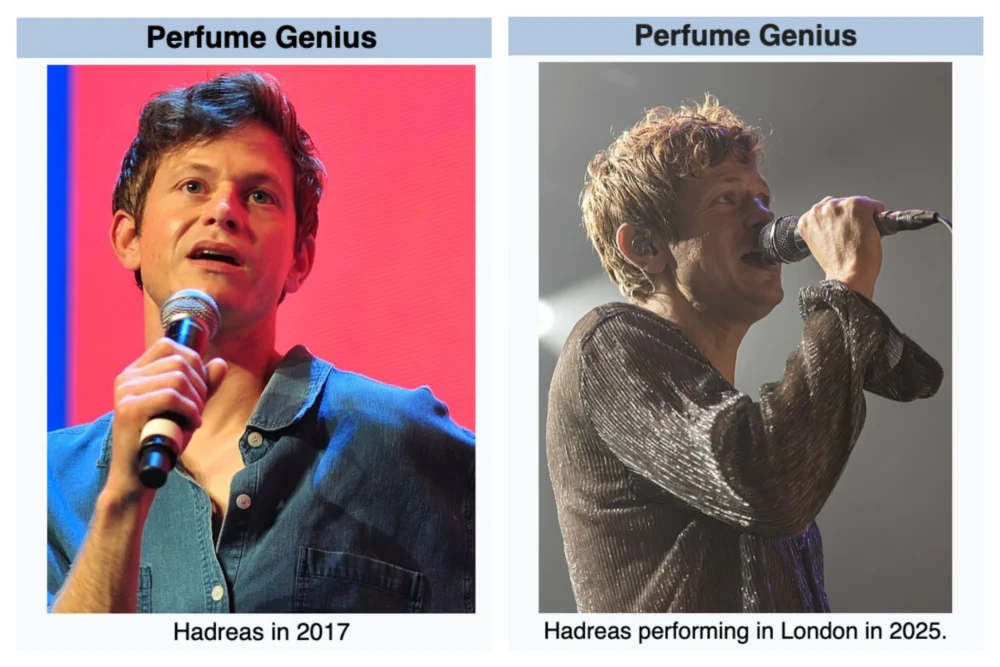
HangupsMusic.com – LOS ANGELES, The digital age has afforded contemporary recording artists an unprecedented level of control over their public personas. Through Instagram, TikTok, and X, a musician can curate every pixel of their aesthetic, ensuring that their visual brand aligns perfectly with their latest sonic output. However, there remains one bastion of the internet that remains stubbornly resistant to the polished machinery of celebrity PR: Wikipedia. For years, a quiet frustration has been brewing within the music industry regarding the often-unflattering, outdated, or downright "haunted" photographs that serve as the primary visual introduction for artists on the world’s most-visited encyclopedia. This tension recently boiled over into the public eye, highlighting a fascinating conflict between the rigid, open-source bureaucracy of Wikipedia and the image-conscious world of modern pop.
The most recent flare-up began on a Wednesday in mid-February when Mike Hadreas, the critically acclaimed avant-pop architect known as Perfume Genius, took to X to voice a grievance that had apparently been simmering for nearly a decade. In a post that resonated with both fans and fellow artists, Hadreas issued a "desperate plea" to his followers, asking if anyone possessed the technical know-how to update his Wikipedia profile picture. The image in question was a relic from 2017, an era that felt like a lifetime ago in the context of Hadreas’s evolving artistry. He described the photo as having "haunted" him for years, later jokingly referring to the pale, stylized aesthetic of the old portrait as a "corpse in red lipstick." The post even managed to sweep in his frequent collaborator, the producer and guitarist Blake Mills, who Hadreas noted was also a victim of the platform’s penchant for visual stagnation.
Hadreas’s frustration is far from an isolated incident. While fans might assume that a high-profile artist could simply send a new headshot to a Wikipedia representative, the reality of the platform’s "free knowledge" mission makes such updates a labyrinthine task. Wikipedia is governed by a strict set of copyright and licensing protocols that prioritize "free" content—meaning images that are in the public domain or licensed under Creative Commons—over the high-resolution, copyrighted promotional photography typically used by record labels. This creates a recurring phenomenon where an artist’s Wikipedia page is often populated by grainy, amateur concert photos taken by fans, simply because those are the only images available that meet the site’s legal requirements for open redistribution.
The struggle for visual sovereignty is perhaps most visible in the ongoing saga of Swedish pop star Zara Larsson. Larsson has reportedly been engaged in what can only be described as a "cold war" with the Wikipedia editorial community. Unlike Hadreas, who sought a one-time fix, Larsson has found herself in a repetitive cycle of editing and reversion. In a recent TikTok video, the "Lush Life" singer addressed a specific "rogue" editor who repeatedly swaps out her preferred photos for ones she finds less desirable. With a mix of humor and genuine resolve, Larsson vowed to continue the fight, stating she would never stop attempting to keep a "nice" photo on her page.
The reason Larsson faces more difficulty than Hadreas lies in the technical structure of Wikipedia’s security. Because Larsson is a high-profile figure whose page is a frequent target for vandalism or promotional "edit wars," her entry is often placed under "extended confirmed protection." This is a restrictive tier of security that prevents new or anonymous users from making changes. To edit a page under this protection, a user must have a registered account that is at least 30 days old and has a minimum of 500 successful edits. This effectively locks out the artist themselves or their social media managers, unless they are willing to dive deep into the culture of "Wiki-gnomes" and dedicated editors who treat the site’s guidelines as a form of digital law.
To understand why these photos are so difficult to change, one must look at the philosophy of the Wikimedia Commons, the central repository for the site’s media. Wikipedia’s "Replaceability" rule is the primary hurdle. If a "free" image of a living person can theoretically be created—such as a fan taking a photo at a public concert—the site will almost never allow the use of a copyrighted promotional photo under "fair use" guidelines. For an artist, this means that even if they own the most beautiful, professionally shot portrait in the world, Wikipedia will reject it in favor of a mediocre, low-light cell phone photo if the latter is legally "free" to share.
For artists, managers, or dedicated "stans" who wish to navigate this system, there are several established pathways, though each requires a specific adherence to licensing jargon. The most common method involves the use of Creative Commons licenses. If an artist or photographer posts a photo to a social media platform like Instagram or X, they must explicitly state in the caption that the image is being released under a specific license, such as the Creative Commons Attribution-ShareAlike 4.0 International license (CC BY-SA 4.0). This license allows the public to share and adapt the image, provided they credit the original creator. Alternatively, an artist can release a photo into the public domain using the Creative Commons Zero (CC0) dedication, which effectively waives all copyright interest.
For those who prefer a more formal route, the Wikimedia volunteer community maintains a system for photo submissions via email. By contacting the Volunteer Response Team, a rights holder can submit a high-resolution image along with a signed declaration of consent. This process, while slow, ensures that the image is vetted by administrators and less likely to be removed in a future edit war.
The most direct, yet technically demanding, method is through the Wikimedia Commons itself. This involves creating an account, uploading the file, and manually editing the "Infobox musical artist" template on the Wikipedia entry. This is where the "Samaritan" work of the community comes into play. As Hadreas discovered, his plea on X prompted a knowledgeable follower to step in and perform the digital surgery required to remove the 2017 photo and replace it with more current imagery.
However, even a successful update is no guarantee of permanence. The Wikipedia community is decentralized and highly vigilant. If an editor suspects that a new photo was uploaded without the proper authorization from the copyright holder, the image will be flagged for deletion within days. Furthermore, the "Talk" pages—the behind-the-scenes forums for every Wikipedia entry—are often home to heated debates over which photo "best represents" the subject. Some editors argue for chronological accuracy, while others prioritize image quality, and still others insist on using photos that show the artist in their most "natural" state, often at odds with the artist’s own desired aesthetic.
This clash represents a broader cultural shift in how we perceive digital identity. For the editors of Wikipedia, the site is a neutral historical record, not a promotional tool. For the artists, the Wikipedia page is the first thing that appears in a Google search, making it an essential component of their public-facing brand. When these two philosophies collide, the result is a fascinating tug-of-war over the pixels that define a celebrity’s legacy.
As the music industry continues to grapple with the permanence of the internet, the "Wikipedia photo" has become a surprising symbol of the limits of celebrity power. Whether it is Perfume Genius seeking an escape from his 2017 self or Zara Larsson fighting a persistent editor, the battle for the infobox is a reminder that in the world of open-source information, the subject of the article is rarely the one in control of the frame. For now, the best advice for any musician cringing at their digital reflection is to keep a high-resolution camera and a Creative Commons license handy, because on Wikipedia, the only way to change the narrative is to play by the community’s very specific, and often very stubborn, rules.
