
 By admin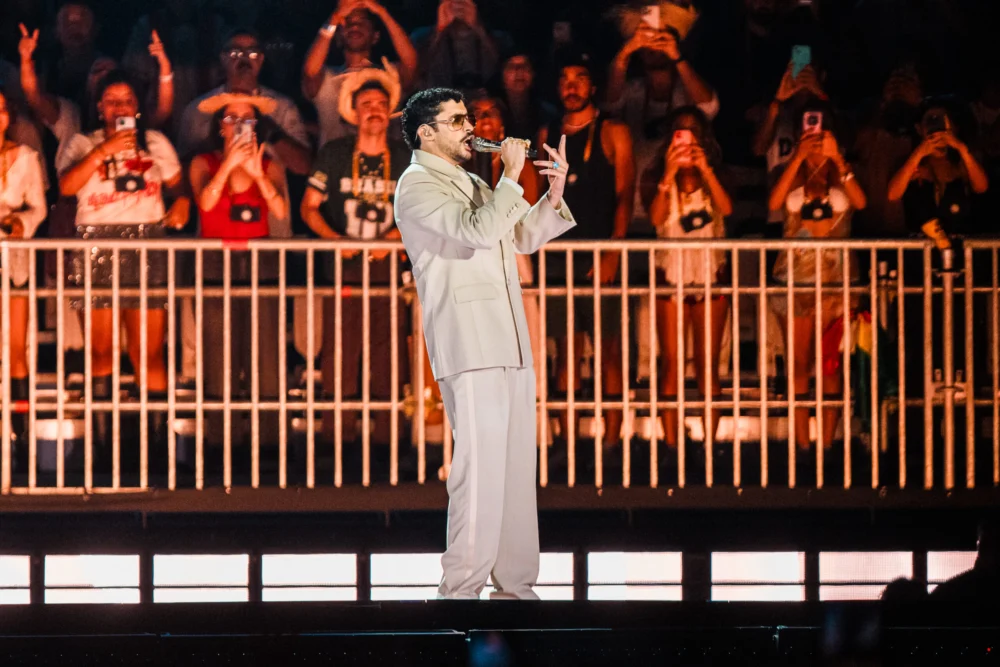
HangupsMusic.com – São Paulo, Brazil – The pulsating energy of Bad Bunny’s Debí Tirar Más Fotos world tour usually electrifies stadiums, but a recent stop in São Paulo, Brazil, was infused with a profound sense of reverence and melancholy. As thousands gathered at Allianz Parque, the atmosphere shifted when the global superstar paused his dynamic set to deliver a heartfelt eulogy for one of Latin music’s most revered figures: the legendary salsa trombonist, composer, and bandleader Willie Colón. The sad news of Colón’s passing at the age of 75 on Saturday morning had cast a shadow over the music world, and Bad Bunny, known for his deep respect for his cultural roots, ensured that his legacy was honored on a global stage.
Willie Colón, often hailed as "El Malo" (The Bad One) and "El Idolo" (The Idol), was a towering figure in the salsa movement that swept through New York City and the world from the 1960s onwards. Born in the Bronx to Puerto Rican parents, Colón was a prodigious talent who, by his late teens, was already revolutionizing the genre. His early work with Fania Records, particularly his iconic collaborations with singer Héctor Lavoe, defined an era. Together, they forged a sound that was raw, innovative, and deeply reflective of the Nuyorican experience – a fusion of traditional Afro-Cuban rhythms, jazz influences, and urban grit. Albums like El Malo, The Hustler, and Guisando (Doing a Job) not only delivered chart-topping hits but also infused salsa with a theatricality and narrative depth previously unseen. Colón’s trombone became a distinctive voice, often mimicking human wails or gritty street sounds, earning him a reputation as an innovator and a musical provocateur. His instrumental prowess was matched by his keen ear for arrangement and his insightful songwriting, which often tackled themes of social commentary, identity, and the struggles of immigrant life, resonating profoundly with a generation.
The influence of Colón’s pioneering spirit stretched far beyond the confines of New York, shaping the soundscape of the Caribbean and Latin America. Artists across genres looked to his work for inspiration, drawn by his fearless experimentation and his commitment to authentic storytelling. It was this pervasive influence that Bad Bunny, a proud son of Puerto Rico, acknowledged during his São Paulo concert. “This music is very special. It’s the influence of all of us who grew up listening to salsa in the Caribbean. Today, one of the great legends who contributed to this beautiful genre passed away,” Bad Bunny declared, his voice imbued with respect, before dedicating his performance to the fallen icon. He then led into his track "NUEVAYoL," a song that not only references Colón but serves as a broader homage to the Nuyorican cultural titans who paved the way for artists like himself.
Bad Bunny’s connection to salsa, while perhaps unexpected to some who primarily associate him with trap and reggaeton, is deeply ingrained in his artistic DNA. Growing up in Vega Baja, Puerto Rico, salsa was an omnipresent soundtrack, an essential part of the cultural fabric that shaped his early musical consciousness. While his career has seen him push the boundaries of urban Latin music, he has consistently demonstrated a profound reverence for the genres and artists that preceded him. His work often contains subtle (and sometimes not-so-subtle) nods to boleros, merengue, and, crucially, salsa, demonstrating a commitment to preserving and recontextualizing Latin music’s rich history for a new global audience. This makes his tribute to Willie Colón particularly poignant, showcasing not just an artist mourning a legend, but a successor acknowledging the foundational pillar upon which his own musical edifice stands. It underscores the continuous lineage of Latin music, where innovation often springs from a deep appreciation of tradition.
The track "NUEVAYoL," featured on Bad Bunny’s critically acclaimed and genre-defying LP Debí Tirar Más Fotos, is a prime example of this intergenerational dialogue. The album itself marked a significant artistic evolution for Benito Antonio Martínez Ocasio, venturing into more experimental soundscapes while still maintaining his signature lyrical prowess and cultural commentary. "NUEVAYoL" opens with the evocative line, "Willie Colón, me dicen ‘El Malo’," directly invoking Colón’s iconic moniker and the title of his groundbreaking 1967 debut album. El Malo not only established Colón’s "bad boy" persona but also showcased his innovative approach to salsa, blending traditional rhythms with a grittier, more rebellious edge that resonated with the urban youth of the time. By referencing this, Bad Bunny not only pays tribute to Colón’s legacy but also playfully aligns himself with that same spirit of disruption and unconventional artistry.
Beyond the direct lyrical reference, "NUEVAYoL" functions as a comprehensive sonic and thematic homage to Nuyorican culture. It expertly weaves a tapestry of sounds that celebrate the vibrant Puerto Rican diaspora in New York. The track features a prominent sample from Andy Montañez Rodríguez’s rendition of El Gran Combo de Puerto Rico’s classic "Un Verano en Nueva York." This particular song is a quintessential anthem, synonymous with summer in the city and a powerful symbol of Puerto Rican pride and identity within the diaspora. By incorporating this sample, Bad Bunny creates a sonic bridge, connecting the golden era of salsa with contemporary dembow rhythms. The juxtaposition of Montañez’s soulful vocals with a booming dembow beat is a masterclass in genre fusion, illustrating Bad Bunny’s ability to honor tradition while simultaneously propelling Latin music into new, uncharted territories. It’s a testament to the enduring power of these Nuyorican icons, whose narratives of migration, cultural pride, and resilience continue to inspire new generations.
The relationship between Bad Bunny and Willie Colón was not without its complexities, adding another layer of significance to this tribute. In his later years, Colón was known for expressing increasingly right-wing political views, and his social media presence on platforms like Instagram and X occasionally featured criticisms of Bad Bunny and other contemporary artists. This ideological divergence between a progressive icon like Bad Bunny and an older legend with differing political stances could have created a chasm. However, upon the release of "NUEVAYoL" and the inclusion of his name-check, Colón himself responded positively in a social media video. "When I heard it, I was really surprised. The push it gave to salsa and to Boricuas, it’s something we all needed," Colón stated, acknowledging the cultural significance of the gesture despite any personal or political differences. This moment underscores the unifying power of music, demonstrating how artistic respect and shared cultural heritage can transcend even the most pronounced ideological divides. It speaks to a universal truth in music: the art itself, and its impact, can often rise above the personal beliefs of its creator, particularly when one artist recognizes the profound influence another has had on their craft and culture.
Back in São Paulo, the tribute reached its emotional peak as Bad Bunny, flanked by his live band, Los Sobrinos, delivered his final remarks before launching into "NUEVAYoL." "From me and Los Sobrinos, we wish Willie Colón rests in peace," he articulated, adding a collective sentiment of mourning and respect from his entire musical family. "Much strength to his family," he concluded, extending compassion to those closest to the legendary figure. The air was thick with a mixture of sadness and pride, as the audience absorbed the gravity of the moment. As the familiar rhythms of "NUEVAYoL" began to play, infused with a renewed sense of purpose, it became more than just a song; it was a living eulogy, a vibrant affirmation of Colón’s indelible mark on music. The performance was a testament to how an artist like Bad Bunny, operating at the vanguard of global pop culture, remains deeply rooted in the traditions that shaped him, ensuring that the legacy of giants like Willie Colón continues to resonate with new generations and across international borders.
This poignant moment in São Paulo was more than just a celebrity’s acknowledgment of a passing legend; it was a powerful illustration of the continuous, evolving narrative of Latin music. It highlighted Bad Bunny’s role not merely as a trendsetter but as a cultural custodian, one who understands the importance of honoring the architects of his sound. Willie Colón’s pioneering spirit, his innovative compositions, and his profound impact on Nuyorican identity will continue to echo through the corridors of music history. Through tributes like Bad Bunny’s, his rhythm endures, proving that while artists may pass, their music, and the influence they wield, remains immortal, constantly finding new life in the hands of those they inspired. From the vibrant streets of the Bronx and San Juan to a massive stadium in Brazil, the heartbeat of salsa, invigorated by its modern torchbearers, continues to throb with unwavering vitality.
