
 By admin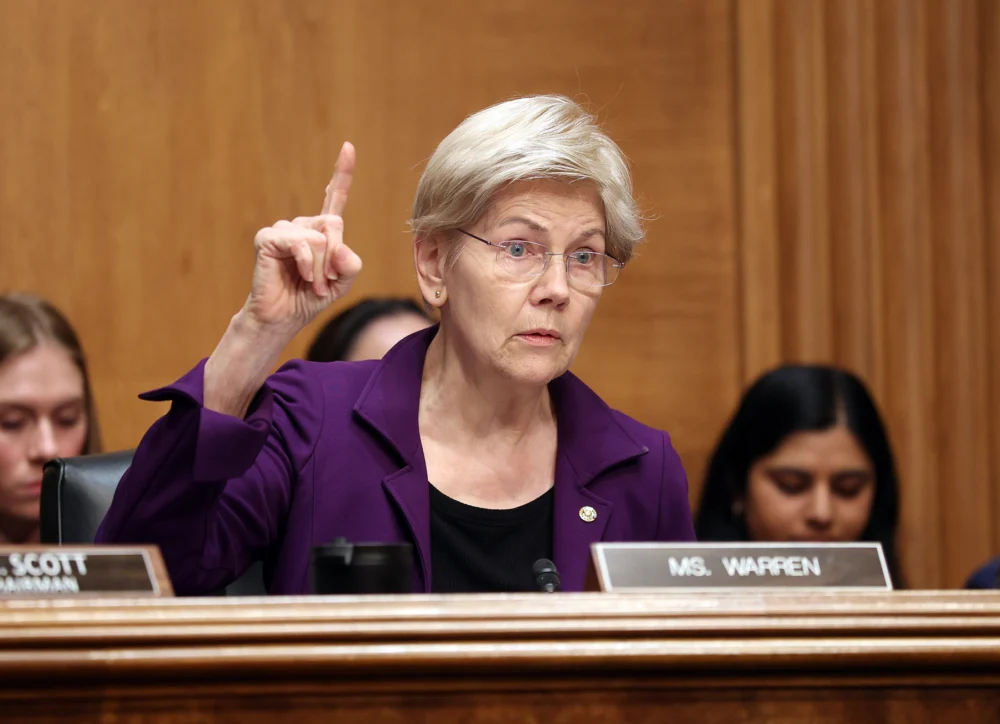
HangupsMusic.com – Washington, D.C. – A profound and increasingly urgent national conversation surrounding housing affordability and the burgeoning role of institutional investors in the residential market has reached a critical juncture in Washington. Spearheaded by Massachusetts Senator Elizabeth Warren, a new legislative push seeks to curtail the influence of corporate entities in homeownership, finding an unexpected, albeit tenuous, alignment with former President Donald Trump. This rare bipartisan overlap highlights the widespread public frustration with a housing landscape increasingly out of reach for many Americans.
The catalysts for this renewed legislative urgency were multifaceted, but a single viral moment captured the public’s imagination and underscored the pervasive anxiety. During a recent winter storm that blanketed the East Coast, a local NBC 4 reporter ventured into New York City’s Washington Heights, seeking typical man-on-the-street reactions to the frigid conditions. What the reporter found in Caj Thomasson was anything but typical. Instead of discussing snow day delights or the biting cold, Thomasson pivoted sharply to a more pressing societal ill: housing inequality. "There’s still people out in doorways looking for shelter," he declared, "and I think a lot of people think this is why we shouldn’t allow hedge funds to own residential property." The reporter, visibly surprised, attempted to steer the conversation toward childhood nostalgia. Thomasson’s reply, delivered with a calm yet pointed resolve, again redirected to the core issue: "Yeah, it was much, much more snow, colder winters. And again, private equity didn’t own so much of the housing stock in America."
This unscripted moment, shared widely across social media, resonated deeply across a nation grappling with escalating housing costs and a palpable sense of economic insecurity. It struck a chord with millions who felt their dreams of homeownership or even stable rental living were being systematically undermined by forces beyond their control. Among those moved by Thomasson’s articulate frustration was Senator Elizabeth Warren, a prominent advocate for consumer protection and economic fairness. She promptly amplified the clip, using it as a springboard to announce significant legislative action. "Democrats dropped a bill TODAY to stop private equity’s housing takeover. Let’s get this done," Warren declared, signalling a concerted effort to address the crisis.
The proposed legislation, dubbed the "American Homeownership Act," was introduced by Senator Warren and a coalition of more than a dozen Democratic senators. Its central aim is to dismantle the financial incentives and regulatory loopholes that have made residential properties increasingly attractive to large investment firms. In an interview, Senator Warren articulated the bill’s foundational principles and, remarkably, suggested that its passage might even garner support from former President Donald Trump, marking an unusual moment of ideological confluence. "It was a funny video, but also, to me, a very touching video," Warren reflected, noting her personal outreach to Thomasson. "It’s cold, it’s snowing, and he’s telling it like it is. That man brought home that America has housing, but when corporate landlords are in charge of it, those homes won’t be there for the people who need them."
The statistics paint a stark picture of the landscape Thomasson and Warren are confronting. While the overall percentage of rental stock owned by large institutional investors might seem modest at just over three percent nationally, according to research from the Brookings Institute, this ownership is not evenly distributed. In many major metropolitan areas, these "corporate" landlords command a far more significant presence, often owning upwards of 20 percent of a city’s single-family rental stock. Hotspots like Atlanta, Phoenix, Charlotte, and Indianapolis bear the brunt of this concentrated ownership, witnessing rapid shifts in their housing markets.
Unlike many policy debates that emerge only after a crisis has fully entrenched itself, Washington lawmakers appear to be recognizing the gravity of this issue relatively early. "Right now, U.S. taxpayers subsidize private equity to buy up the homes in your neighborhood," Warren explained. "In other words, it is more profitable for some Wall Street billionaire investor to buy the house next door than a young family trying to move in." This perverse incentive structure, Warren contends, allows major corporations to exploit tax benefits originally designed to assist small "mom-and-pop" investors or individual landlords. Compounding the issue, many of these corporate purchases are facilitated by mortgages backed by federally funded entities like Fannie Mae and Freddie Mac.
The consequences of this trend are far-reaching. "When those investors buy up a big enough chunk of housing, they consolidate and then drive up rents for all the renters," Warren added. "So the consequence of what Wall Street is doing is simultaneously to make homeownership harder and renting more expensive." The American Homeownership Act seeks to reverse this trajectory by revoking these advantageous tax breaks for corporate investors and redirecting federal funds toward initiatives aimed at expanding the national stock of genuinely affordable housing. The rise of investment firms acquiring vast quantities of residential properties specifically to convert them into perpetual rental assets is a relatively recent phenomenon. "Nobody did this," Warren emphasized. "[It] became attractive as private equity has mowed through one industry after another."
The senator stressed the urgent need to establish clear boundaries. "We need to draw a line here," she asserted. "They take away Americans’ homes. It’s not only what that means for families who were hoping to have a place they could live in forever. It also undermines the economic stability of what remains of America’s middle class." Beyond tax reform, the proposed legislation includes provisions that would bar corporate landlords from accessing federally backed mortgages or purchasing foreclosed homes sold by federal lenders (Fannie Mae, Freddie Mac) or agencies like the Department of Housing and Urban Development. Furthermore, the bill aims to subject corporate landlords to more stringent antitrust scrutiny, defining corporate ownership exceeding 30 percent of a local housing market as "presumptively illegal."
"This bill takes away those tax breaks so that Wall Street is not being subsidized to turn us into a nation of renters," Warren reiterated. "The groups that get hit particularly hard by private equity are buyers that are smacked in the head when they discover that the home they’re making an offer on has just been snapped up by a billionaire investor who can make an all-cash offer." This scenario, all too common for aspiring homeowners, creates an uneven playing field that heavily favors well-capitalized corporations over individual families.
In a remarkable turn of events, President Donald Trump inadvertently bolstered the Democrats’ legislative efforts by endorsing strikingly similar policies during a recent State of the Union address. Earlier in January, Trump had signed an executive order prohibiting federal lenders like Fannie Mae and Freddie Mac from "approving, insuring, guaranteeing, securitizing, or facilitating sales of single-family homes to institutional investors." His order also initiated federal reviews of large-scale home purchases by private investment firms. During his address to Congress, Trump went further, imploring lawmakers to "make that ban permanent, because homes for people – really, that’s what we want. We want homes for people, not for corporations."
Despite this unusual convergence of policy aims, the path to legislative success remains complex. Ironically, it is now some Republicans in Congress who express skepticism regarding the former president’s call for an investor ban. Representative Troy Downing (R-Mont.), for instance, conveyed reservations, telling Politico earlier this month, "I don’t think banning institutional investors is a good idea." He, along with other interviewed lawmakers, remained hesitant, hedging their support pending the specific "language" to be included in any potential legislation. This stance underscores the traditional Republican inclination towards free-market principles and concerns about government intervention in private investment, even when faced with populist appeals from their own party leader.
Senator Warren confirmed that Democrats are "in the middle of negotiations" regarding the advancement of the American Homeownership Act, suggesting that discussions are actively underway to bridge partisan divides or at least secure sufficient support. Reinforcing the grassroots momentum behind the bill, Warren’s office recently released a video capturing a conversation between herself and Caj Thomasson. "I’ve gotten feedback from all over the country, overwhelmingly positive," Thomasson shared with the senator. "I will say I’ve gotten surprisingly very little hate about this. To me, that tells me that my statements on air were not actually that controversial." Warren concurred, encapsulating the sentiment of many Americans: "Sometimes government can do really good things. We just kind of have to do what seems sensible under the circumstances."
The unfolding debate over the American Homeownership Act represents a pivotal moment in the nation’s struggle for economic equity. As housing costs continue to outpace wage growth, the question of who controls the residential market has become a defining issue of our time. The unexpected alignment between figures as ideologically disparate as Senator Warren and former President Trump signals a growing consensus that the current trajectory is unsustainable, demanding a reevaluation of fundamental principles governing homeownership and community stability. Whether this rare legislative convergence can overcome entrenched political divisions and powerful economic interests remains to be seen, but the public discourse has undeniably shifted, giving voice to millions who simply want a place to call home.
