
 By Azzam Bilal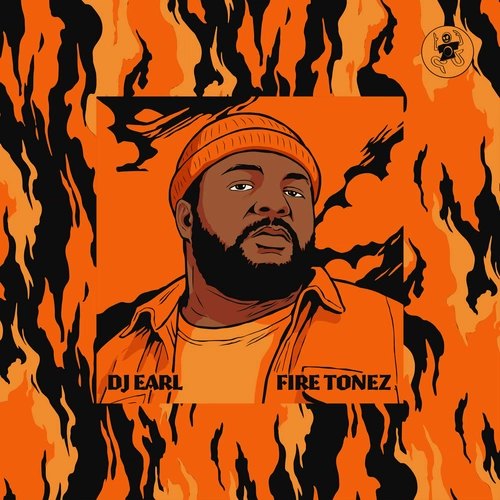
HangupsMusic.com – Chicago, the sprawling urban landscape that birthed house music and later refined the frenetic, syncopated rhythms of footwork, continues to be a primary laboratory for electronic innovation. At the heart of this ongoing sonic evolution stands DJ Earl, a producer whose career serves as a bridge between the foundational era of the genre and its increasingly experimental future. With the release of his latest EP, Fire Tonez, Earl reaffirms his status as a cornerstone of the Moveltraxx roster, a label that has been instrumental in documenting the transition of Chicago’s underground sounds from local dance circles to international festival stages.
To understand the significance of Fire Tonez, one must first understand the historical weight of the partnership between DJ Earl and Moveltraxx. This relationship is not merely a professional contract but a fifteen-year odyssey that mirrors the growth of footwork itself. Earl first appeared on the label’s radar a decade and a half ago, contributing to their inaugural footwork-only compilation. At that time, the genre was still largely a hyper-local phenomenon, defined by 160 BPM tracks designed specifically for the high-speed footwork battles occurring in community centers and warehouses across Chicago’s South and West Sides.
Over the years, DJ Earl has evolved from a young protégé within the legendary Teklife crew into a visionary artist capable of bending the rigid structures of juke and footwork into new, unexpected shapes. His 2020 LP, the first full-length album ever released by Moveltraxx, signaled a shift in his production style, moving toward a more polished, atmospheric sound while retaining the raw energy required for the dance floor. Fire Tonez represents the next logical step in this progression, offering a masterclass in how to balance the aggressive, mechanical requirements of bass music with the soulful, melodic sensibilities of classic R&B.
The EP opens with "Waterpark," a track that immediately signals Earl’s intent to push the boundaries of "juke-rap." This subgenre, which fuses the rapid-fire percussion of juke with the vocal delivery and swagger of hip-hop, is notoriously difficult to execute without losing the essence of either style. However, Earl navigates this territory with surgical precision. The track is anchored by a sub-bass so immense it feels physical, a production trait that Earl shares with fellow label contemporary DJ Chad. In "Waterpark," the low-end frequencies don’t just provide a foundation; they drive the narrative of the song, bleeding into the mid-range and creating a sense of claustrophobic, high-pressure energy that is characteristic of the modern Chicago sound.
What makes "Waterpark" particularly compelling is its restraint. While many footwork tracks rely on a chaotic barrage of samples to maintain momentum, Earl allows the bass and the vocal flow to breathe. This creates a sense of space that is often missing from the genre’s more maximalist iterations. It is a track designed for a sound system that can handle extreme excursions into the low-end, echoing the bass-heavy sets that have become a hallmark of the Moveltraxx aesthetic.
The centerpiece of the EP, however, is the titular track "Fire." Here, Earl demonstrates his uncanny ability to repurpose the history of Black American music through the lens of futurist electronic production. The track centers on a sample from Chaka Khan’s 1984 classic "Through the Fire," a choice that connects Earl’s work to the long-standing tradition of soul and R&B sampling in Chicago house and juke. Sampling Chaka Khan is a bold move—her voice is iconic, and her melodies are deeply embedded in the cultural consciousness. Yet, Earl doesn’t simply loop a recognizable hook; he deconstructs the source material, weaving it into a tapestry of swaying guitar melodies and widely-spaced claps.
In "Fire," the contrast between the "soul and the steel" is most apparent. The soulful elements—the warmth of the guitar and the emotive resonance of the vocal sample—are pitted against the "steel" of rushing 808 drum patterns. The 808s in this track are relentless, providing the high-speed heartbeat that defines the footwork tempo, yet they never feel at odds with the melodic components. Instead, they create a tension that Earl resolves through clever arrangement. It is in this middle ground, the space where the human element of soul music meets the machine-led intensity of the drum machine, that Earl’s artistry truly shines. He manages to make a track that feels both nostalgic and profoundly modern, a feat that requires a deep understanding of both musical history and technical engineering.
The production on Fire Tonez also highlights the broader direction in which the Moveltraxx label is heading. For fifteen years, the label has acted as a curator of the "Chicago-to-the-world" pipeline. By fostering artists like DJ Earl, they have allowed the genre to grow without losing its soul. The EP serves as a blueprint for this mission, showcasing a sound that is sophisticated enough for home listening but rugged enough for the most demanding club environments.
Furthermore, the EP invites a comparison to the work of other innovators in the scene. The mention of DJ Chad in the context of Earl’s bass production is significant. It suggests a shared language among the label’s artists—a focus on the physical impact of sound. In the world of footwork, the "bass bleed" isn’t a technical flaw; it’s a desired effect, a way to immerse the listener (or the dancer) in a totalizing sonic environment. Earl’s mastery of these frequencies ensures that Fire Tonez remains grounded in the physical reality of the club, even as it explores more ethereal, melodic heights.
Beyond the technical aspects of the tracks, there is a cultural weight to DJ Earl’s continued output. As one of the most prominent members of the Teklife era to continue evolving his sound, he carries the legacy of the late DJ Rashad and the pioneers who turned footwork into a global movement. Fire Tonez is a testament to the resilience of the Chicago scene. It proves that even after decades of development, the genre is not stagnant. There are still new ways to chop a sample, new ways to layer a sub-kick, and new ways to make a 160 BPM rhythm feel fresh and urgent.
The EP’s title is fitting, as there is a literal and metaphorical warmth to the record. The "tonez" Earl explores are not just musical notes; they are emotional states. From the icy, deep-water pressure of "Waterpark" to the burning, soulful yearning of "Fire," Earl takes the listener on a journey through the elemental forces that drive his creativity. He reminds us that footwork is not just about speed; it is about the feeling of the city, the heat of the dance floor, and the enduring power of the groove.
As Moveltraxx continues to expand its influence, DJ Earl remains its most vital ambassador. Fire Tonez is more than just a collection of tracks; it is a celebration of a fifteen-year partnership that has helped redefine the boundaries of electronic music. For those who have followed Earl since his early days, the EP is a rewarding look at an artist in his prime. For newcomers, it is a perfect entry point into a sound that is uniquely Chicago, yet belongs to the world. In the balance of soul and steel, DJ Earl has found a formula that is uniquely his own, ensuring that his fire will continue to burn brightly for years to come.
