 By Rose Miami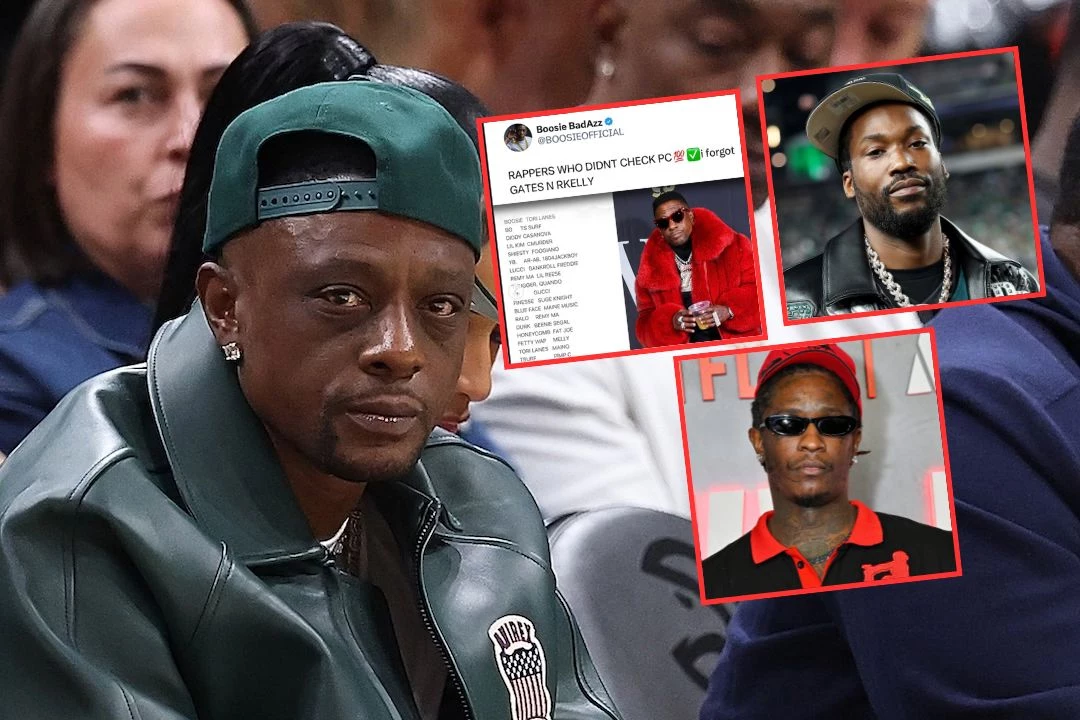
HangupsMusic.com – Baton Rouge, LA – A recent wave of controversy has swept through the hip-hop community, centered around a contentious list compiled by rapper Boosie BadAzz. The veteran artist, known for his outspoken nature, took to Instagram Live on Thursday, March 12, to voice his opinions on rappers who have reportedly sought protective custody during their incarcerations. This sparked a lively debate, drawing sharp responses from prominent figures like Meek Mill and Young Thug, and quickly became a trending topic across social media platforms.
Boosie’s initial commentary arose from a discussion surrounding Kodak Black, whom Boosie claimed had been placed in protective custody while incarcerated. This assertion served as a springboard for Boosie to compile and share a list of over a dozen rappers who, according to his research, had navigated the prison system without resorting to protective custody. The roster included notable names such as T.I., YoungBoy Never Broke Again, Diddy, and Pooh Shiesty, among others. Boosie’s intention appeared to be a validation of a perceived "gangster" ethos, suggesting that true adherence to street code meant facing general population without special protection.
The publication of this list did not go unnoticed. Meek Mill, a prominent voice in the hip-hop landscape and a rapper who has himself experienced incarceration, took to X (formerly Twitter) to address his apparent omission from Boosie’s compilation. Mill, who hails from Philadelphia, emphatically stated his own resilience within correctional facilities, asserting, "I’m skinny, I walked every yard in every jail I was in and held weight in every jail I was in." His statement served as a direct challenge to the implied notion that his experience might have differed, and it highlighted his pride in his ability to navigate prison environments without seeking preferential treatment.
Following the public exchange, Boosie later issued a partial apology to Meek Mill for overlooking him on the list, while simultaneously reaffirming his assertion regarding Kodak Black’s protective custody status. This nuanced retraction underscored Boosie’s commitment to his original premise, even as he acknowledged a potential oversight in his data.

The discourse further intensified with the involvement of Atlanta’s own Young Thug. Addressing Boosie’s list and the underlying philosophy, Thug offered a different perspective. He suggested that opting for protective custody could, in certain circumstances, be a pragmatic decision aimed at avoiding further legal entanglements within the prison system. Thug posited that the complexities of prison life might necessitate strategic choices to prevent the accumulation of additional charges, which could prolong an individual’s sentence.
Boosie, however, remained steadfast in his viewpoint. He countered Thug’s rationale by emphasizing what he perceived as the fundamental tenets of a "gangster" identity. For Boosie, the commitment to such an identity extended to the confines of prison, where he believed individuals should uphold their principles and avoid measures like protective custody. He articulated a clear distinction between genuine adherence to a street code and the perceived compromises associated with seeking specialized protection.
Young Thug, in turn, clarified his position, acknowledging Boosie’s perspective on the ideal adherence to a gangster persona. However, he then elaborated on his personal experience, asserting that in his specific case, protective custody was indeed the most advisable course of action. Thug claimed that he felt law enforcement authorities were actively attempting to fabricate charges against him during his incarceration. This statement strongly suggests that his remarks were influenced by his high-profile involvement in the YSL RICO case.
The YSL RICO case saw Young Thug, whose legal name is Jeffery Williams, accept a blind plea deal in October 2024. This resolution concluded a protracted legal battle involving multiple racketeering, drug, and weapons charges. The plea deal resulted in a sentence of five years, which was effectively commuted to time served, coupled with a fifteen-year probationary period. His assertion about seeking protective custody due to alleged police machinations points to a complex interplay between the realities of prison life, legal strategies, and the pursuit of self-preservation within a system that he felt was actively working against him.
The ongoing dialogue initiated by Boosie BadAzz’s protective custody list has illuminated diverse perspectives on navigating the challenges of incarceration within the hip-hop community. It has raised questions about the definition of authenticity, the strategic choices individuals make under duress, and the often-unseen complexities of the correctional system. While Boosie champions an unyielding adherence to a perceived code of honor, figures like Meek Mill and Young Thug offer nuanced viewpoints shaped by their individual experiences and legal circumstances. The conversation, though sparked by a seemingly simple list, delves into deeper societal and personal issues, reminding the public that the lives and decisions of these prominent artists extend far beyond the recording studio and into the stark realities of the justice system.
