
 By Azzam Bilal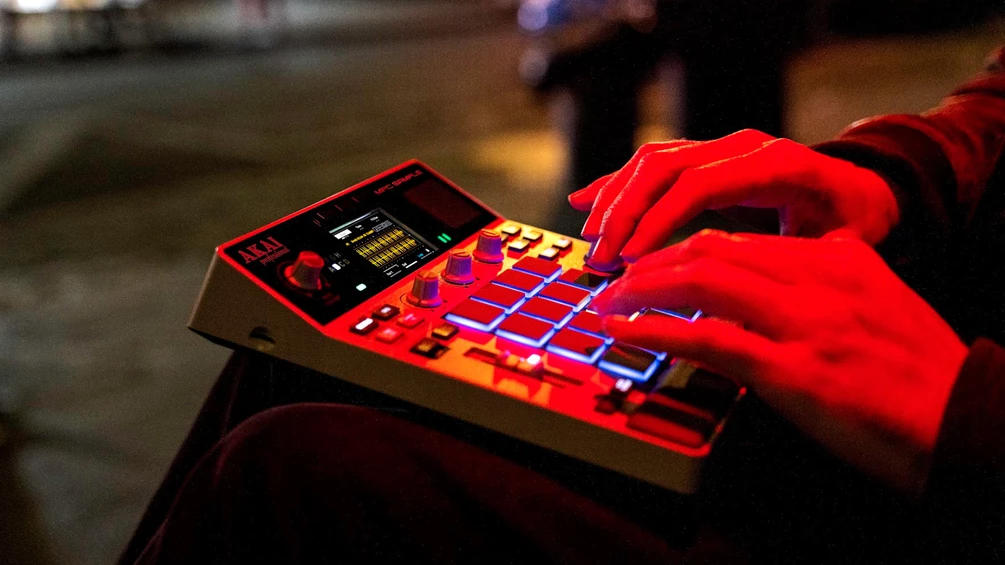
HangupsMusic.com – CUMBERLAND, RI, Akai Professional has officially pulled back the curtain on its latest innovation in the world of beat-making and sound design: the MPC Sample. This new entry into the legendary MPC lineup represents a significant shift toward hyper-portability without sacrificing the tactile, hands-on workflow that has defined hip-hop, house, and electronic music production for over four decades. As the music industry continues to lean into the "DAWless" movement—where creators seek to distance themselves from computer screens and mouse clicks—the MPC Sample arrives as a dedicated solution for those who demand professional-grade sampling capabilities in a form factor that fits into a backpack.
The MPC Sample is not merely a miniaturized version of its predecessors; it is a meticulously engineered standalone unit inspired by the foundational MPC60, the machine that arguably started it all under the guidance of Roger Linn. However, while it honors the past, the MPC Sample is firmly rooted in modern technology. It is powered by a rechargeable lithium-ion battery, liberating the producer from the constraints of the studio desk. Whether an artist is capturing environmental sounds in a bustling city, sketching out rhythmic patterns on a long-distance train, or refining a sequence in a bedroom, the device is designed to be ready the moment a creative spark occurs. To further enhance this "anywhere, anytime" philosophy, Akai has integrated a built-in speaker and an internal microphone, allowing for immediate sound capture and monitoring without the immediate need for external cables or headphones.
At the heart of the MPC Sample experience are the iconic MPC pads. For this iteration, Akai has included 16 RGB-backlit, velocity-sensitive pads that are not only durable but highly expressive. A standout feature for a device at this price point is the inclusion of polyphonic aftertouch. This technology allows producers to modulate parameters—such as filter cutoffs, pitch bends, or volume—simply by varying the pressure applied to the pads after the initial strike. This adds a layer of performance nuance that was previously reserved for high-end synthesizers and flagship production centers. Complementing the pads is a 2.4-inch full-color display, providing a crisp visual interface for navigating menus, editing waveforms, and managing project files.
The internal architecture of the MPC Sample is equally impressive. The unit comes equipped with four dedicated effects engines, offering a library of over 60 different effect types. Among these is FlexBeat, a powerful rhythmic manipulation tool that allows users to create complex stutter effects, tape stops, and beat-repeats with ease. This inclusion suggests that Akai is targeting a generation of producers who value rhythmic complexity and "glitch" aesthetics. To control these sounds in real-time, the hardware features three precision control knobs and a legacy MPC parameter fader. The fader, a nod to the ergonomics of classic units, provides a tactile way to sweep through filters or adjust mix levels during a live performance or recording session.
Sampling, the core DNA of the MPC brand, has been streamlined through the new Instant Sample Chop Mode. This feature is a significant boon for both novices and seasoned professionals, as it utilizes intelligent algorithms to automatically detect transients and divide long samples into playable, mapped sections across the pads. When combined with the device’s real-time Timestretch and Repitch capabilities, the MPC Sample becomes a formidable tool for manipulating audio. Producers can alter the tempo of a sample to match their project without changing its pitch, or conversely, shift the key of a melodic loop while keeping the timing intact. These features ensure that the "MPC workflow"—often described as the most intuitive way to interact with audio—remains at the forefront of the user experience.
Andy Mac, the Brand Director at Akai Professional, emphasized the inclusive nature of this release. According to Mac, the MPC Sample is intended to be the most accessible standalone sampler the company has ever produced. He noted that for decades, the MPC series has served as the bedrock of modern music production, shaping entire genres from the ground up. With the MPC Sample, Akai aims to lower the barrier to entry, providing the same professional-grade tools used by platinum-selling producers to a wider audience. The goal is to ensure that anyone, regardless of their prior experience with music theory or digital audio workstations, can pick up the unit and begin creating high-quality beats immediately.
The announcement of the MPC Sample follows the earlier release of the MPC XL, which Akai marketed as the most powerful MPC in history. The contrast between the two units highlights Akai’s strategy of covering both ends of the market spectrum. While the MPC XL boasts a Gen 2 8-core processor and a massive 16GB of RAM for heavy-duty studio multitasking, the MPC Sample focuses on efficiency, portability, and the essential elements of the MPC experience. It serves as a perfect companion piece for those who already own larger studio setups but need a mobile "sketchpad," or as a primary device for the emerging artist who values a minimalist and mobile-first approach.
The ergonomics of the MPC Sample are tailored for the modern creator. Its compact footprint does not feel cramped, thanks to the intelligent layout of the knobs and the responsive nature of the 2.4-inch screen. The inclusion of the internal microphone is particularly noteworthy for field recording enthusiasts. Instead of needing to carry a separate handheld recorder and then transfer files via SD card, a producer can simply hold the MPC Sample up to a sound source, hit record, and immediately begin chopping and processing that audio. This immediacy is what often separates a finished track from a forgotten idea.
Financially, Akai has positioned the MPC Sample to be highly competitive within the portable sampler market. With a retail price of £349 in the UK, €399 in Europe, and $399 in the United States, it sits in a "sweet spot" that challenges other popular portable devices. At this price, it offers a standalone, battery-powered workflow that many of its competitors struggle to match without requiring a connection to a smartphone or tablet. The value proposition is further bolstered by the depth of the included software and effects, which provide a "complete box" solution for music creation.
The legacy of the MPC is built on its ability to turn the act of sampling into a musical instrument in its own right. From the early days of boom-bap hip-hop to the intricate soundscapes of modern IDM, the MPC has been a constant. With the MPC Sample, Akai Professional is betting on the idea that the future of music production is not just in the studio, but in the world at large. By shrinking the hardware while expanding the feature set—particularly with poly aftertouch and advanced chopping modes—they have created a device that feels like a natural evolution of the brand.
As the device begins to reach the hands of creators worldwide, the industry will be watching to see how the MPC Sample influences the next wave of music. Its accessibility may lead to a surge in new producers who were previously intimidated by the complexity of standalone hardware. Meanwhile, the professional community will likely embrace it as a versatile tool for live sets and on-the-go inspiration. The MPC Sample is more than just a new product; it is a statement of intent from Akai Professional, affirming that the soul of the MPC remains as relevant today as it was in the 1980s, regardless of where the music is being made. Detailed technical specifications and overview videos are currently available on the official Akai Professional website, providing a deeper look into the internal routing and performance capabilities of this compact powerhouse. With the MPC Sample now available for purchase, the door to the MPC ecosystem is indeed wider than ever before.
