
 By admin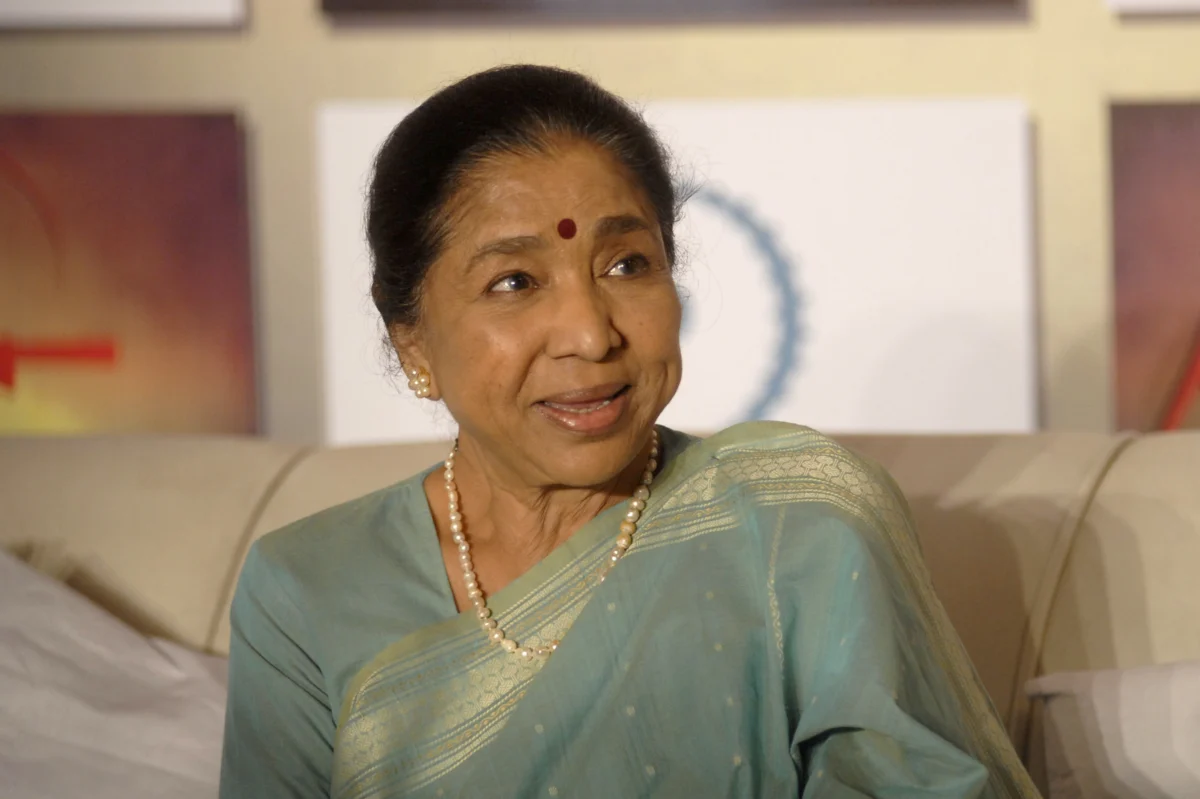
HangupsMusic.com – Mumbai, India – The world of music mourns the loss of an unparalleled legend, Asha Bhosle, who passed away on Sunday at the age of 92. Revered globally for a career that spanned an astonishing eight decades and saw her lend her voice to countless Bollywood films, Bhosle’s impact transcended geographical and cultural boundaries. The iconic singer, a true pioneer whose vocal artistry shaped generations of Indian cinema, succumbed to multiple organ failure at a Mumbai hospital. Her son, Anand Bhosle, confirmed the somber news, stating that her final rites would be observed on Monday, marking the end of an extraordinary era in musical history.
Tributes immediately poured in from across India and beyond, reflecting the profound influence Bhosle wielded. Indian Prime Minister Narendra Modi expressed the nation’s grief, remarking on social media, "Her extraordinary musical journey, spanning decades, enriched our cultural heritage and touched countless hearts across the world. Be it her soulful melodies or vibrant compositions, her voice carried timeless brilliance." This sentiment resonated deeply with millions who had grown up listening to her inimitable voice, which effortlessly conveyed every nuance of human emotion, from playful flirtation to profound sorrow.
Born on September 8, 1933, in Sangli, then part of the princely state of Bombay Presidency (now Maharashtra), Asha Bhosle hailed from one of India’s most illustrious musical families. Her father, Dinanath Mangeshkar, was a renowned classical singer and theatre artist, whose untimely death when Asha was just nine years old plunged the family into hardship. This tragedy forced Asha and her elder sister, Lata Mangeshkar, to begin working at a tender age to support their family. Their journey into the nascent world of Indian cinema’s playback singing would redefine the landscape of film music for decades to come.
Playback singing, a unique phenomenon in Indian cinema, involves vocalists recording songs for actors to lip-sync on screen. This highly specialized art form requires immense versatility, as singers must embody various characters, emotions, and musical styles. Asha Bhosle quickly distinguished herself within this demanding field. While her elder sister Lata Mangeshkar carved a niche for her pristine, often classical-inflected voice suited for romantic heroines, Asha developed a more versatile, often vivacious and sensuous vocal style. She became the voice for rebellious, cabaret, and comedic characters, injecting a modern, edgy quality that Bollywood desperately needed as it evolved through the mid-20th century. Her ability to infuse each song with a distinct personality made her the go-to singer for a vast array of actresses, from the glamorous Helen to the feisty Zeenat Aman.
Over a career that reportedly saw her record over 12,000 songs, a feat recognized by the Guinness World Records, Bhosle showcased an astonishing range. She sang in over twenty Indian languages, including Hindi, Marathi, Bengali, Gujarati, Punjabi, Tamil, Malayalam, and Telugu, demonstrating her linguistic prowess alongside her musical genius. Her repertoire spanned every conceivable genre: classical, folk, ghazals, pop, devotional music, and, of course, the vibrant film songs for which she became a household name. This unparalleled adaptability allowed her to remain relevant and beloved through successive generations of composers and musical trends.
A significant turning point in Bhosle’s career, both professionally and personally, was her collaboration with the legendary music director R.D. Burman. Their creative partnership blossomed into a deep personal bond, leading to their marriage. Together, they forged an iconic sound that revolutionized Bollywood music in the 1970s and 80s. Burman, known for his experimental and often Western-influenced compositions, found his perfect muse in Asha. Her agile voice could navigate his complex melodies, jazz-inflected rhythms, and innovative arrangements with effortless flair.
Their collaborations produced an astonishing string of hits that became anthems for a generation. Songs like "Dum Maro Dum" from the 1971 film Hare Rama Hare Krishna, featuring a psychedelic beat and a rebellious undertone, became a cultural touchstone. Its raw energy and Asha’s captivating delivery made it an instant classic, cementing her image as a voice of modernity. Similarly, "Piya Tu Ab To Aja" from the 1971 film Caravan, with its iconic "Monica… oh my darling" interlude, established her as the queen of cabaret numbers, showcasing her playful, seductive vocal prowess. Beyond these, their partnership yielded countless gems such as "Chura Liya Hai Tumne," "Mehbooba Mehbooba," and "Dil Cheez Kya Hai," each a testament to their unparalleled synergy. Burman’s innovative soundscapes, combined with Bhosle’s boundless vocal expression, pushed the boundaries of Indian popular music, leaving an indelible mark that continues to inspire.
While her domestic fame was monumental, Asha Bhosle’s artistry resonated far beyond India’s borders, earning her a unique place in global music. A two-time Grammy nominee, her collaborations with Western artists brought her distinct vocal texture to diverse audiences. She teamed up with Boy George for the track "Bow Down Mister," a fusion that blended spiritual themes with a cross-cultural soundscape. Her voice also graced "The Way You Dream" with Michael Stipe of R.E.M., a track featured on the 1 Giant Leap project, a testament to her appeal to musicians seeking authentic, world-class talent.
Perhaps one of her most notable international projects came with the virtual band Gorillaz. She lent her voice to "The Shadowy Light" on their album The Mountain, showcasing her enduring relevance and ability to seamlessly integrate her traditional Indian vocal techniques into contemporary Western electronic music. Damon Albarn, the mastermind behind Gorillaz, had long expressed admiration for Indian music, and Bhosle’s inclusion was a significant nod to her legendary status. These collaborations not only introduced her to new listeners but also served as a bridge, demonstrating the universal appeal and timeless quality of her musical contributions.
Her influence on Western pop culture was perhaps most explicitly celebrated by the British band Cornershop, whose 1997 hit "Brimful of Asha" became an ode to her enduring legacy. The song’s lyrics, "Everybody needs a bosom for a pillow / Mine’s on the 45," famously referenced her prolific output and comforting presence through her music. Tjinder Singh of Cornershop paid a heartfelt tribute upon her passing, stating on social media, "The world and all-India grieve today. We don’t know whether a candle has gone out or has been lit, such was the stature of Asha Bhosle." This poignant reflection encapsulated the profound impact she had on artists and listeners globally, transcending language and genre.
Bhosle’s illustrious career was adorned with numerous accolades, both national and international. She was honored with the Dadasaheb Phalke Award in 2000, India’s highest honor in cinema, and the Padma Vibhushan, the country’s second-highest civilian award, in 2008. Her legacy is not merely in the sheer volume of her recordings but in the quality, versatility, and emotional depth she brought to each performance. Her voice was an instrument of incredible power and subtlety, capable of commanding attention with its sheer force or captivating with its delicate vulnerability.
Asha Bhosle’s passing comes just two years after that of her beloved elder sister, Lata Mangeshkar, who also passed away at 92 in 2022. The Mangeshkar sisters, often seen as two pillars of Indian music, collectively shaped the soundtrack of a nation for over half a century. While Lata was revered as the "Nightingale of India" and the "Queen of Melody," Asha earned her own distinct moniker, often referred to as the "Queen of Pop" or the "Versatility Queen." Their departures mark the end of an extraordinary era, leaving a void that will be keenly felt across the global music landscape.
Yet, the melodies of Asha Bhosle are immortal. Her voice, vibrant and timeless, will continue to resonate through the countless films, albums, and collaborations she leaves behind. She was more than just a singer; she was a cultural phenomenon, a trailblazer who broke barriers, a global ambassador for Indian music, and an artist whose passion for her craft burned brightly until her very last days. Her legacy is etched not just in the annals of music history but in the hearts of billions who found joy, solace, and inspiration in her extraordinary gift.
