
 By Azzam Bilal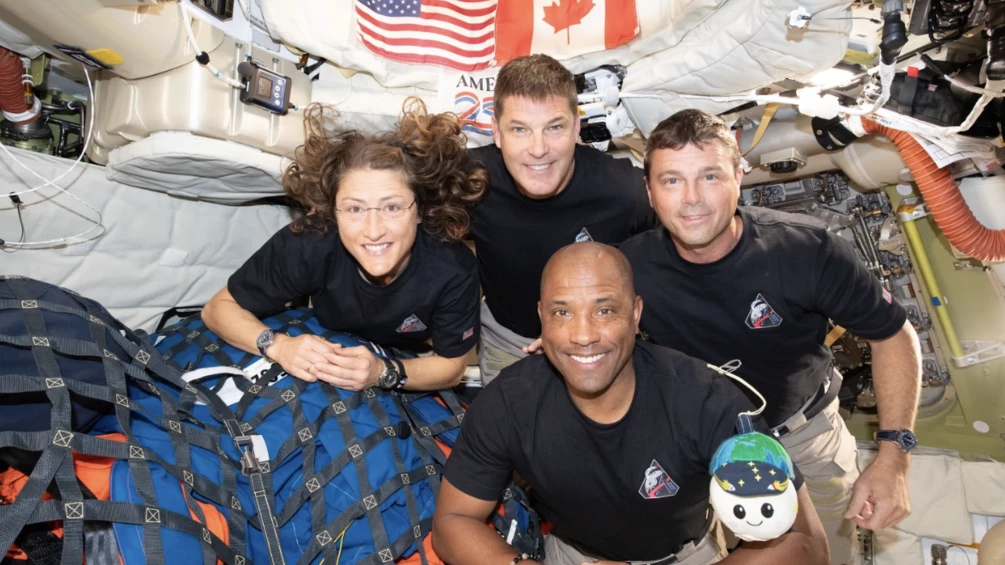
HangupsMusic.com – Houston, the silence of the vacuum has once again been punctuated by the rhythmic pulse of human culture as NASA reveals the official "wake-up" playlist for the crew of the Artemis II mission. As four astronauts hurtle toward the moon in the most significant lunar expedition in over half a century, their journey is being scored by a diverse array of artists ranging from the glam-rock brilliance of David Bowie to the modern pop-country sensibilities of Chappell Roan. This blend of sonic landscapes serves as more than just background noise; it is a vital link to Earth, a morale booster, and a continuation of a storied tradition that dates back to the early days of the Apollo program.
The Artemis II mission, which officially commenced on April 1st, represents a pivotal moment in human history. It is the first time since the conclusion of the Apollo era in 1972 that a crewed spacecraft has ventured into deep space with the intention of orbiting the moon. The ten-day voyage is designed to test the capabilities of the Orion spacecraft and the Space Launch System (SLS) rocket, ensuring that all systems are flight-ready for the eventual return of humans to the lunar surface. While the mission is a feat of engineering and physics, the reveal of the crew’s daily soundtrack highlights the human element of space exploration—the need for rhythm, familiarity, and inspiration when floating 238,000 miles away from home.
On the fourth day of the mission, NASA piqued the public’s interest by announcing that the crew had started their day with Chappell Roan’s breakout hit, "Pink Pony Club." The selection of the high-energy, queer-coded anthem signaled a shift in the typical "astronaut aesthetic," reflecting a modern, inclusive, and vibrant crew. Following the viral response to Roan’s inclusion, NASA released the comprehensive list of tracks that have been waking the astronauts as they navigate the void.
The playlist is a masterclass in eclectic curation, bridging the gap between decades and genres. Among the most iconic inclusions is "Under Pressure," the 1981 collaboration between Queen and David Bowie. The track’s thumping bassline and soaring vocals are perhaps the most literal interpretation of the astronauts’ environment, capturing the literal and metaphorical pressures of a high-stakes space mission. Following this classic is "Green Light," a soulful and energetic collaboration between John Legend and André 3000. The track’s themes of momentum and permission resonate deeply with a mission that has been decades in the making.
Adding a layer of contemporary grit to the celestial journey is "Tokyo Drifting" by Glass Animals and Denzel Curry. The inclusion of Curry, a titan of the modern rap scene, sparked significant conversation on social media. Upon hearing that his music was being beamed into the cosmos, Curry took to X (formerly Twitter) to express his excitement, exclaiming, "To infinity and beyond muthafucka." Curry’s enthusiastic response also included a claim that he was the "First Rapper Played in Space." While his enthusiasm was celebrated by fans, historians and space enthusiasts were quick to point out that the title technically belongs elsewhere. In 2024, NASA famously broadcast Missy Elliott’s 1997 classic "The Rain (Supa Dupa Fly)" toward Venus, marking the first time a hip-hop track was officially transmitted into deep space. Nevertheless, Curry’s presence on the Artemis II playlist marks a significant moment for the genre’s integration into the official culture of space flight.
The tradition of the "wake-up call" is one of NASA’s most enduring and beloved customs. It began during the Gemini and Apollo missions of the 1960s as a way for ground control to rouse the astronauts after their sleep periods. In the early days, these calls were often chosen by the flight controllers in Houston, frequently featuring humorous selections or songs that poked fun at the crew’s situation. Over time, the tradition evolved, with the astronauts’ families often selecting songs to provide a sense of comfort and connection to home. For Artemis II, the crew—consisting of Commander Reid Wiseman, Pilot Victor Glover, Mission Specialist Christina Koch, and Mission Specialist Jeremy Hansen—took a more active role in selecting the songs that would define their historic journey.
Psychologically, music plays a crucial role in long-duration spaceflight. The isolation of the Orion capsule, combined with the immense responsibility of the mission, can take a toll on the human psyche. Music provides a sense of temporal structure, helping the crew distinguish "morning" from "night" in an environment where the sun rises and sets every 90 minutes as they orbit the Earth or move through the dark expanse toward the moon. The upbeat nature of tracks like "Pink Pony Club" and "Green Light" is designed to stimulate the brain and prepare the crew for the rigorous technical tasks required for the mission’s success.
The Artemis II mission itself is a marvel of modern science. While the Apollo missions were largely focused on the "Space Race" and the geopolitical prestige of reaching the moon first, Artemis is focused on sustainability and long-term exploration. The crew is tasked with conducting a lunar flyby, taking them around the "far side" of the moon—a region that remains largely mysterious and has never been seen in person by the vast majority of the human population. The data gathered during this 10-day trip will lay the groundwork for Artemis III, which aims to land the first woman and the first person of color on the lunar surface.
NASA’s relationship with music has deepened significantly in recent years, moving beyond simple playlists into the realm of artistic collaboration and data interpretation. The agency has been a pioneer in "sonification"—the process of turning astronomical data into sound. By assigning different pitches and tones to light and gravitational waves captured by telescopes like James Webb and Chandra, NASA has allowed the public to "hear" the sound of black holes, nebulae, and distant galaxies. This intersection of science and art has opened new ways for the public to engage with the mysteries of the universe.
Furthermore, NASA has collaborated with ambient and electronic artists to create immersive experiences. Recently, the agency worked with producer Jon Hopkins on a project that involved sending music to the moon to be "forever held" in digital archives. The agency even launched its own streaming service, NASA+, providing a dedicated platform for space-related content, including documentaries that often feature sweeping, cinematic scores.
The Artemis II playlist is a reflection of this broader cultural engagement. By including artists like Chappell Roan and Denzel Curry alongside legends like David Bowie, NASA is signaling that space exploration is a human endeavor that belongs to everyone, regardless of their musical tastes or cultural background. The songs act as a bridge between the sterile, high-tech environment of the Orion spacecraft and the vibrant, messy, and beautiful world the astronauts left behind.
As the crew continues their journey back to Earth, the world remains tuned in—not just to the telemetry data and the grainy video feeds, but to the soundtrack of the mission. Each song selected is a testament to the enduring power of human creativity. Whether it is the soaring harmonies of Queen or the rapid-fire verses of Denzel Curry, these sounds are now part of the permanent record of human exploration.
The Artemis II mission is more than just a flight; it is a cultural event that has captured the imagination of a new generation. By sharing their morning routine and their musical preferences, the crew has humanized the daunting task of space travel. As they prepare for their reentry into Earth’s atmosphere, the echoes of "Under Pressure" and "Pink Pony Club" serve as a reminder that even in the vast, cold emptiness of space, the human spirit—and its need for a good beat—remains unbreakable. The success of this mission will be measured in scientific data and lunar photographs, but for many, it will also be remembered by the songs that woke the world up to the possibilities of the stars.
