 By Rose Miami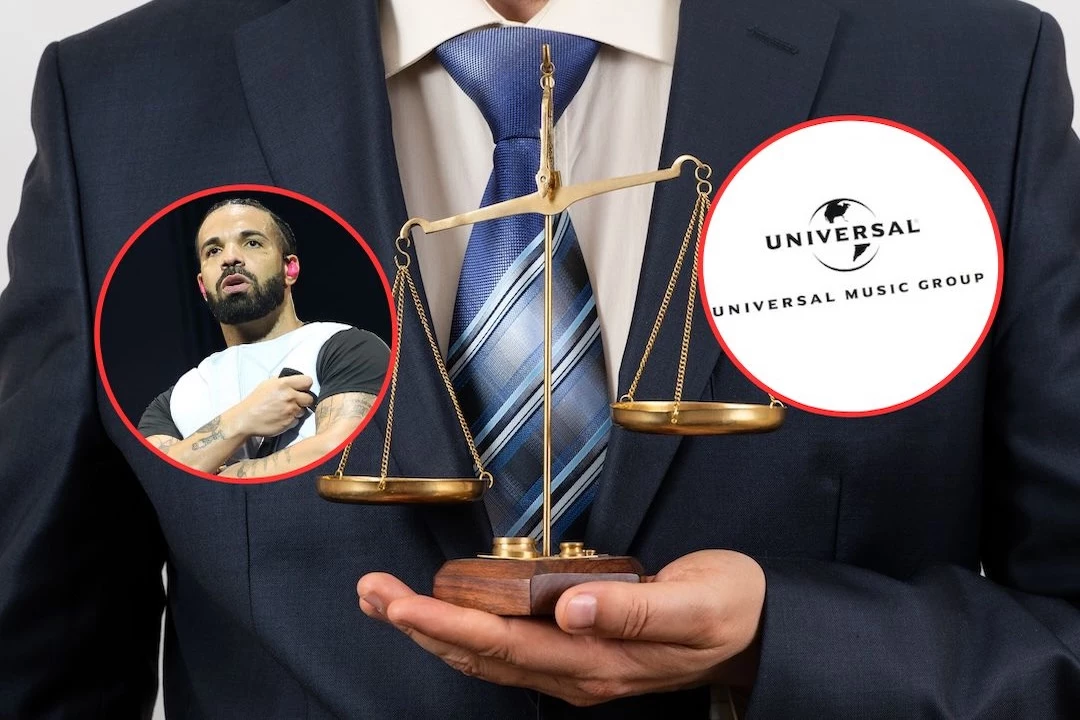
HangupsMusic.com – The high-stakes legal confrontation between rap titans Drake and Kendrick Lamar, fueled by Lamar’s explosive diss track "Not Like Us," has drawn the attention of esteemed legal minds at Yale Law School. In a significant development, scholars from the prestigious institution have submitted an amicus brief in support of Universal Music Group (UMG), arguing that Drake’s own actions and the nature of rap battles fundamentally undermine his defamation claims. The brief, filed on April 3rd and obtained by HangupsMusic.com, offers a compelling analogy to illustrate their stance: a boxing match.
The Yale scholars posit that Drake, by initiating a public lyrical confrontation and seemingly inviting specific criticisms, effectively consented to the potential fallout, much like a boxer consenting to the risks inherent in stepping into the ring. "Suppose a self-assured boxer challenges the world champion to a prize fight, is knocked out on live television, and, with bruised ego and body, files a lawsuit for battery," the brief states. "That lawsuit would fail at the outset for a simple but important reason: the challenger consented to the fight, and consent is a classic defense to an intentional tort. Defamation is also an intentional tort, and defamation claims are likewise foreclosed by consent."
Central to their argument is Drake’s own "Taylor Made Freestyle," released prior to Lamar’s "Not Like Us." The Yale scholars highlight a specific lyric within Drake’s track where he seemingly prompts Lamar to address allegations concerning his alleged predilection for underage individuals. "Drake directly and clearly invited Lamar to publish a song accusing him of liking young girls," the brief asserts. "In ‘Taylor Made Freestyle,’ Drake invited Lamar to ‘talk about [Drake] likin’ young girls,’ raising the issue of pedophilia for the first time." According to their interpretation, Lamar’s subsequent track, "Not Like Us," which contains the allegedly defamatory statements at the heart of Drake’s lawsuit, was a direct response to this invitation. "Lamar accepted his direct invitation, publishing ‘Not Like Us,’ which contains the allegedly defamatory statements at the heart of this lawsuit," the scholars explain.

The brief further suggests that the public discourse surrounding the rap battle played a significant role in shaping perceptions, and that Drake’s legal recourse is an attempt to rectify a loss in the court of public opinion. "Lamar won in the court of public opinion," the scholars contend. "Having lost in that forum, Drake turned to another." This perspective frames Drake’s legal challenge not as a pursuit of factual accuracy, but as an effort to reclaim a narrative that has been decisively influenced by the cultural impact of Lamar’s lyrics.
This intervention by Yale scholars arrives on the heels of UMG’s own response to Drake’s appeal, filed on March 27th. UMG similarly argued that reinstating Drake’s defamation lawsuit would pose a significant threat to the established artistic conventions of hip-hop. The music conglomerate characterized Lamar’s accusations, including the potent label of "pedophile," as integral elements of a genre "built on exaggeration, insult and wordplay." UMG’s defense hinges on the idea that such lyrical content, when presented within the context of a rap battle, should be understood as artistic expression rather than factual assertion.
Drake’s original lawsuit was not directly against Kendrick Lamar, but rather against UMG for their role in distributing "Not Like Us." Drake’s legal team contended that the release of the song, which prominently features the accusation of pedophilia, led to widespread belief in the allegation, causing irreparable damage to his reputation. However, a judge dismissed the suit in October 2025, ruling that Lamar’s lyrics constituted "nonactionable opinion," thereby not meeting the legal threshold for defamation as they were not presented as verifiable facts. Drake’s subsequent appeal seeks to overturn this dismissal.
The appellate court is expected to hear arguments in this complex case in the coming months, with a definitive ruling anticipated sometime next year. The involvement of prominent legal scholars from Yale Law School adds a significant layer of intellectual weight to the ongoing debate, highlighting the intricate interplay between artistic expression, public perception, and legal accountability within the realm of popular music. The outcome of this appeal could have far-reaching implications for how diss tracks and lyrical warfare are legally scrutinized in the future, potentially setting new precedents for the boundaries of defamation in the context of artistic feuds. The legal fraternity will be closely watching as this battle, extending beyond the mic and into the courtroom, reaches its next critical juncture.
