
 By Azzam Bilal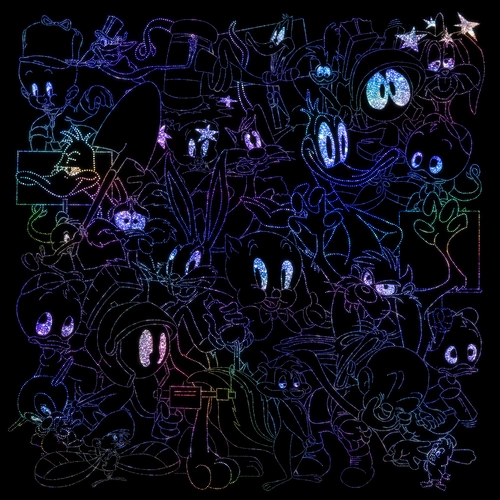
HangupsMusic.com – Detroit, the historic epicenter of industrial-grade techno and soulful electronic innovation, continues to serve as a vital laboratory for artists who refuse to be bound by the rigid constraints of the past. Among the newest wave of producers emerging from the Motor City is Young Muscle, an artist whose latest offering, the Looney Choon EP, serves as a testament to the vibrant, often unpredictable intersection of American bass music and traditional dance floor mechanics. Released via Sorry Records, a label that has rapidly ascended to the forefront of the experimental American dance scene, the EP represents a pivotal moment where high-fidelity production meets a refreshing, almost absurdist sense of levity.
The American electronic music landscape has undergone a significant transformation over the last decade. While the European scene often dominates the conversation regarding techno and house, a homegrown movement led by labels like Sorry Records has been quietly reclaiming the narrative. These imprints prioritize a "forward-thinking" approach, one that values hybridity over purity. Young Muscle sits comfortably at the heart of this movement. His signature sound is a calculated collision of styles: it possesses the driving, rhythmic urgency of "step-y" techno while borrowing the weight and textural complexity of modern bass music. The Looney Choon EP is the clearest distillation of this aesthetic to date, offering a sonic journey that is as technically impressive as it is conceptually playful.
The title track, "Looney Choon," immediately sets the tone for the project. It opens with a rhythmic structure that leans heavily into the "speed garage" revival that has been sweeping through global club culture. However, Young Muscle avoids the trap of mere nostalgia. The track’s "slinky" groove is underpinned by a modern low-end pressure that feels distinctly American. As the percussion builds, the listener is introduced to a main melody that feels like a hallucination. The production team behind the project has described the experience as "stumbling into a rave in the Acme universe," and the comparison is apt. There is a frenetic, slapstick energy to the synth work, utilizing bright, elastic tones that evoke the imagery of classic Saturday morning cartoons. This juxtaposition—the heavy, physical weight of the garage-inflected beat against the whimsical, cartoonish lead—creates a unique tension that keeps the listener off-balance. It is a track designed for the peak hours of a club set, yet it refuses to take itself with the grim-faced seriousness that often plagues the techno genre.
The EP’s second major offering, "Smooth Brain," pushes this duality even further, resulting in what can only be described as a "mindmelting" listening experience. Here, Young Muscle dives deeper into the world of dubstep and riddim, but he strips these genres down to their barest, most skeletal forms. The track is built upon a barren rhythmic foundation, characterized by "ice cold" sub-bass frequencies that vibrate with a sinister, subterranean intensity. In the hands of a more conventional producer, "Smooth Brain" might have remained a dark, minimalist tool. However, Young Muscle intervenes with a series of sonic choices that are both daring and bizarre.
The introduction of compressed horn lines and percussive whistles transforms the track into a "technicolor cartoon." These elements occupy a strange middle ground between a haunting horror movie soundtrack and the charmingly unpolished sound of a middle-school band practice. This contrast is the defining characteristic of Young Muscle’s work. He possesses the technical prowess to engineer "bespoke" bass music—tracks that are meticulously crafted for high-end sound systems—yet he maintains a creative philosophy that embraces the "silly." In an era where many electronic artists are preoccupied with maintaining an aura of cool, detached professionalism, Young Muscle’s willingness to embrace the absurd is a breath of fresh air.
To understand the significance of the Looney Choon EP, one must look at the broader context of Sorry Records. The label has become a beacon for a specific type of American electronic music that is difficult to categorize. It isn’t quite EDM, nor is it traditional underground techno. Instead, it is a space for artists who grew up on a diet of internet-era genre-blurring. By tapping Young Muscle for this release, Sorry Records has solidified its reputation as a curator of the "new American sound"—a sound that is as much about the physical impact of the bass as it is about the intellectual curiosity of the sound design.
Young Muscle’s Detroit roots are also a crucial factor in the EP’s identity. While the "Motor City" label often brings to mind the pioneers of the 1980s and 90s, the city’s contemporary scene is defined by its adaptability. Young Muscle carries forward the Detroit tradition of using machines to create something soulful and human, but he does so through a lens of post-modern irony. His "techy" bass music isn’t just about the gears and the grit; it’s about the joy of manipulation. The "step-y" nature of his rhythms reflects a city that is always in motion, even when that motion is redirected toward the surreal.
The production quality of the EP also deserves a deep dive. "Bespoke" is an adjective often used to describe high-end tailoring, and it fits Young Muscle’s approach to synthesis perfectly. Every whistle, horn, and sub-kick feels intentionally placed and uniquely textured. There is no reliance on overused sample packs or generic presets here. Instead, the listener is treated to a soundscape that feels custom-built. The "Smooth Brain" horn lines, despite their "middle-school" aesthetic, are processed with a precision that ensures they cut through the mix without losing their character. This level of detail is what separates Young Muscle from the plethora of bedroom producers operating in the same space. He understands the mechanics of the dance floor—the way a sub-bass needs to hit to move a crowd—but he also understands the importance of "ear candy," those small, unexpected details that keep a track interesting upon repeated listens.
Furthermore, the EP challenges the listener’s expectations of what "bass music" can be. For many, the term conjures images of aggressive, mid-range growls or the meditative depths of deep dubstep. Young Muscle suggests a third path: a genre that is rhythmically complex, sonically heavy, yet tonally lighthearted. It is music that invites the listener to dance, but also to laugh. It acknowledges that the club environment can be a place of intense physical release, but it can also be a place of play.
As the electronic music community continues to grapple with its own identity in a post-pandemic world, releases like the Looney Choon EP provide a roadmap for the future. They suggest that the way forward lies in a refusal to be pigeonholed. By blending the "sinister and the silly," Young Muscle has created a work that feels authentically of its time. It reflects a world that is often chaotic and dark, yet remains filled with moments of inexplicable absurdity.
In conclusion, Young Muscle’s Looney Choon EP on Sorry Records is more than just a collection of club tracks. It is a bold statement of intent from a producer who is clearly coming into his own. By marrying the structural integrity of Detroit techno with the playful experimentation of modern bass music, Young Muscle has delivered a project that is both a technical masterclass and a joyous romp through a distorted, animated reality. As Sorry Records continues to champion this forward-thinking American sound, Young Muscle stands as a prime example of why the Motor City remains one of the most exciting hubs for electronic music in the world. Whether you are drawn to the "speed garage slink" of the title track or the "mindmelting" depths of "Smooth Brain," one thing is certain: Young Muscle is an artist who knows exactly how to command a room, even if he’s doing it with a wink and a whistle.
