
 By Azzam Bilal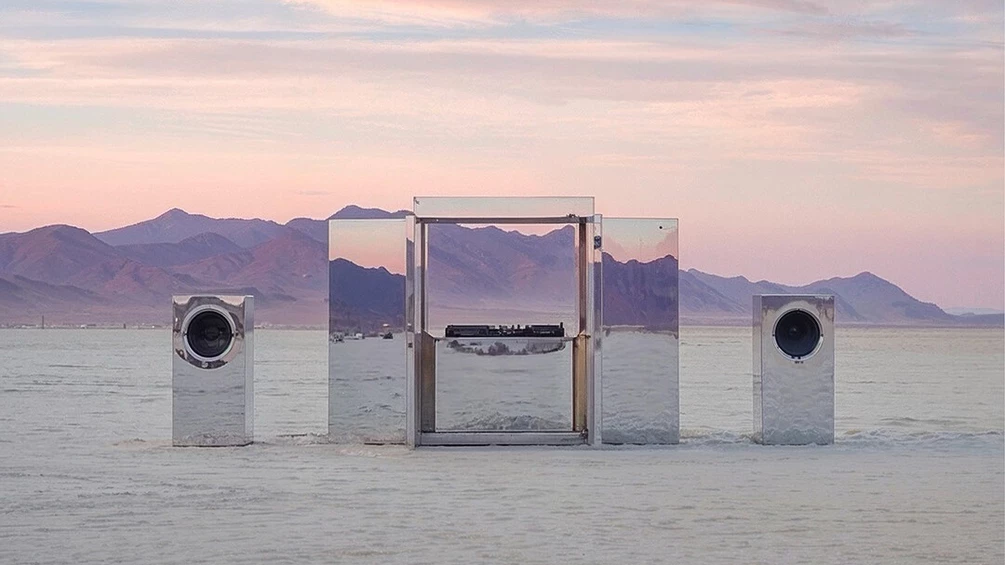
HangupsMusic.com – In the rapidly evolving landscape of electronic music performance, the visual identity of a stage is often as critical as the sonic output. While the industry has spent decades pushing for larger-than-life LED screens, blinding strobe arrays, and pyrotechnic displays, a new design philosophy is emerging—one that favors subtlety, integration, and the art of disappearance. Leading this shift is Diorama, a European tech-creative studio that has recently unveiled a groundbreaking DJ booth designed to harmonize perfectly with its environment. By utilizing a fully mirrored, modular exterior, the structure challenges the traditional notion of the DJ booth as a centerpiece, instead allowing it to vanish into the aesthetics of its surroundings.
The concept of "invisibility" in design is not merely a gimmick but a sophisticated response to the growing demand for immersive event experiences. In many modern venues, from brutalist industrial warehouses to high-end luxury lounges, a bulky, static DJ console can often disrupt the intended atmosphere. Diorama’s solution is a chameleon-like object that prioritizes the architectural integrity of the space. By reflecting the floor, the walls, and the audience, the booth effectively removes itself from the visual foreground, ensuring that the focus remains on the music and the collective energy of the room.
Diorama, known for its multidisciplinary approach to technology and art, conceived this project as more than just furniture for a performer. It is an exploration of geometry and light. The studio’s design is fundamentally modular, allowing for a high degree of customization depending on the specific needs of a venue or an artist. This flexibility means the structure can be reconfigured into various shapes and sizes, transitioning from a standard rectangular console to more complex, angular formations. This adaptability is key in an era where pop-up events and non-traditional venues are becoming the norm. Whether tucked into a corner of a botanical garden or positioned in the center of a high-tech gallery, the booth adapts its form to fit the scale and flow of the site.
The modular nature of the piece also expands its utility beyond the realm of nightlife. While its primary function is to house the sophisticated hardware required for a modern DJ set—including decks, mixers, and cable management systems—its aesthetic neutrality allows it to serve as a standalone architectural ornament. When not in use by a performer, the mirrored surfaces act as a sculptural installation, reflecting the ambient light and changing scenery of its location. This dual-purpose design makes it an attractive option for multi-functional spaces that host exhibitions, corporate events, or private gatherings where a permanent, clunky stage would be undesirable.
From a technical perspective, the construction of a mirrored performance station presents unique challenges. For a DJ booth to be functional, it must be sturdy enough to withstand the vibrations of a high-decibel sound system while remaining portable enough for touring or temporary installations. Diorama has addressed these concerns by utilizing lightweight yet durable materials that provide the necessary stability for sensitive equipment like turntables. Furthermore, the mirrored panels are treated to handle the rigors of a club environment, ensuring that the reflective quality remains pristine even after repeated setups and breakdowns.
One of the most compelling aspects of the mirrored design is its interaction with lighting. In a typical club setting, lighting designers work to highlight the DJ as the focal point of the night. However, when the booth itself is a mirror, it becomes a dynamic participant in the light show. It catches the beams from moving heads, the glow of neon signage, and the flickering of visuals, scattering them back into the crowd. This creates a feedback loop of light and reflection that blurs the lines between the performer, the stage, and the audience. It transforms the DJ booth from a passive platform into an active element of the visual storytelling.
The psychological impact of this design on the audience is equally noteworthy. By reflecting the crowd back at themselves, the booth fosters a sense of unity and shared experience. In a traditional setup, there is a clear boundary between the "stage" and the "dancefloor." The mirrored booth breaks this barrier. As dancers look toward the music, they see their own movements and the faces of those around them reflected in the very structure providing the soundtrack. This reinforces the idea that the audience is as much a part of the performance as the DJ, a sentiment that has long been a cornerstone of underground dance music culture.
Diorama’s creation also speaks to a broader trend in the design world: the move toward "quiet" technology. As our lives become increasingly saturated with screens and digital noise, there is a growing appreciation for objects that perform their functions without demanding constant attention. The mirrored booth is a piece of high-tech equipment that refuses to look like one. It hides its complexity behind a simple, elegant facade. This minimalist approach allows the artistry of the DJ to take center stage, unencumbered by the visual clutter of wires and bulky casing.
Furthermore, the adaptability of the booth’s configuration allows for different heights and widths, catering to the ergonomic needs of various performers. Whether a DJ prefers a compact setup for an intimate vinyl set or a sprawling workspace for a complex live hybrid performance, Diorama’s modular system can be adjusted to provide the necessary real estate. This focus on the performer’s needs, combined with an uncompromising aesthetic vision, sets the project apart from standard off-the-shelf event furniture.
The studio’s decision to label the structure as an "architectural ornament" suggests a future where the equipment used in the music industry is integrated more deeply into the world of fine art and interior design. We are seeing a blurring of boundaries where a nightclub might be curated like a museum, and a museum might host an event with the energy of a nightclub. In both scenarios, Diorama’s mirrored booth feels at home. It is a piece of equipment that respects the space it occupies, rather than competing with it.
As the global events industry continues to recover and innovate, the demand for unique, high-concept stage designs is at an all-time high. Promoters and venue owners are constantly seeking ways to differentiate their offerings and provide attendees with something they haven’t seen before. The "disappearing" DJ booth offers a perfect solution—it provides a "wow" factor through its very subtlety. It is a conversation piece that, paradoxically, encourages you to look past it and experience the environment as a whole.
In conclusion, Diorama has successfully bridged the gap between functional performance gear and avant-garde art. Their mirrored, modular DJ booth is a testament to the power of thoughtful design in the electronic music space. By creating a structure that can disappear into its surroundings, they have given performers and event organizers a new tool for creating truly immersive, aesthetically cohesive experiences. As this design begins to appear in venues across Europe and beyond, it will likely inspire a new wave of invisible architecture in the world of live entertainment, where the best design is the one you almost don’t notice. The future of the stage may not be about who can shine the brightest, but who can reflect the world most beautifully.
