
 By Azzam Bilal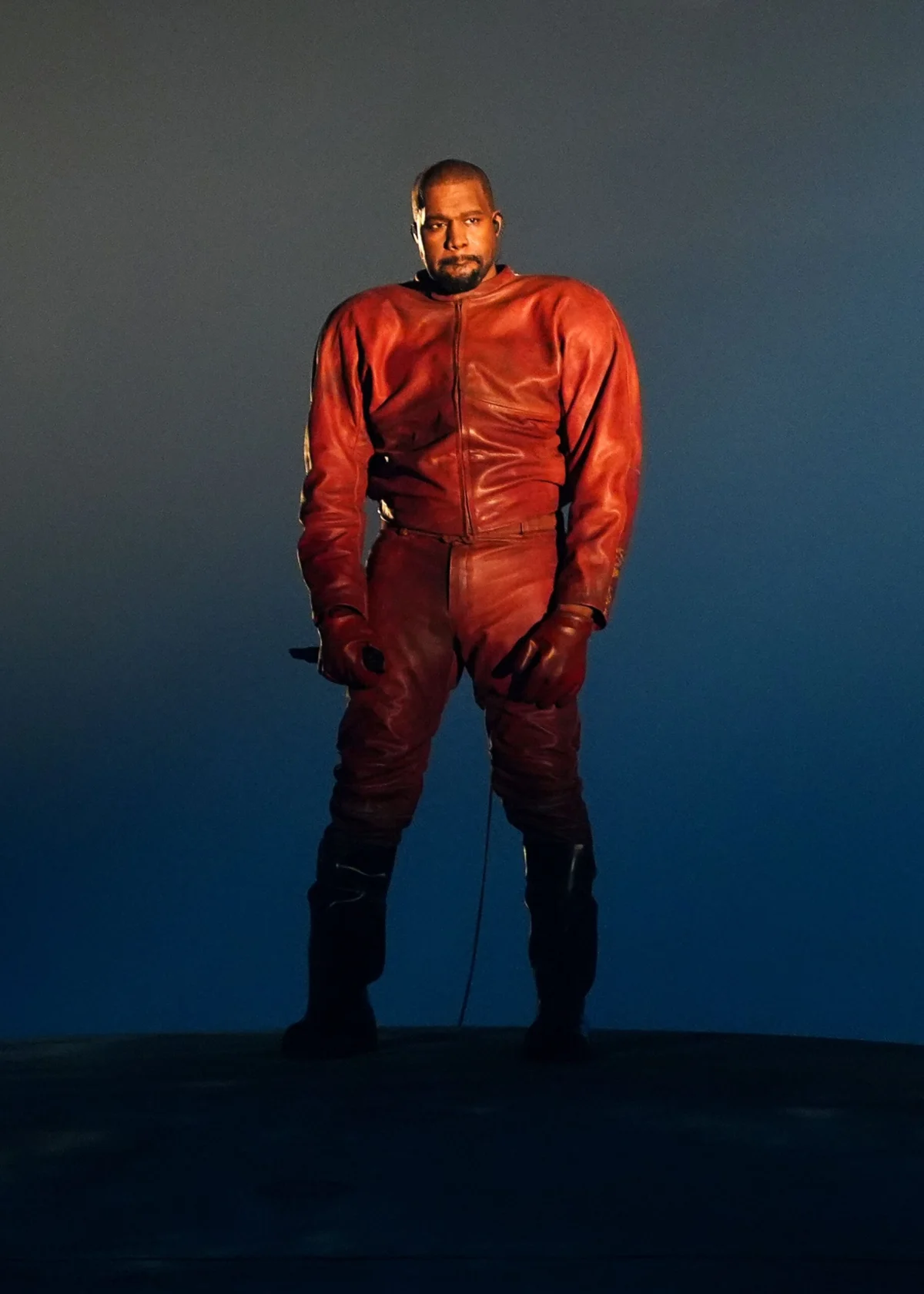
HangupsMusic.com – Chicago, the skyline of the Windy City has long served as a silent witness to the mercurial rise, fall, and reinvention of its most famous musical export. Last night, that relationship came full circle as the artist formerly known as Kanye West, now legally Ye, stepped onto the hallowed turf of Soldier Field for his first hometown performance since 2021. For a man whose recent years have been defined more by headlines of controversy than by the resonance of his rhythm, the evening was positioned as a high-stakes reclamation of his roots. It was a night where the echoes of the past met the uncertainty of the future, all set against a backdrop of local adulation and international scrutiny.
The path leading to this Soldier Field appearance has been anything but smooth. Ye arrived in Chicago carrying the heavy baggage of a career in flux. In recent months, his global footprint has shrunk significantly; a string of international show cancellations left fans in Europe and Asia wondering if they would ever see the rapper again. Most notably, a formal ban from entering the United Kingdom and a series of scrubbed dates in cities like London, Marseille, Prague, and Chorzów, Poland, served as a stark reminder of the consequences of his history of antisemitic remarks. Domestically, his return to the stage has been a slow, calculated crawl, beginning with a massive show at Los Angeles’ SoFi Stadium in April and followed by sporadic appearances in Southern hubs like Tampa, San Antonio, and New Orleans.
Adding to the tension was the looming cloud of his latest creative endeavor, the album Bully. While any new Ye project typically generates excitement, Bully has been mired in a modern kind of scandal: allegations that the project heavily utilized artificial intelligence to replicate his vocals and creative input. This lawsuit-adjacent controversy has sparked a heated debate among fans and critics alike regarding the authenticity of his current output. However, for the thousands of Chicagoans who packed the stadium, the technicalities of the studio seemed to fade in the face of the live experience.
The performance began with a symbolic nod to the city that raised him. Opening with "Homecoming," the 2007 anthem that serves as a love letter to Chicago, Ye immediately established an emotional rapport with the audience. The energy in the stadium was electric, a mixture of nostalgic fervor and the raw intensity that has always characterized his live sets. The early portion of the show was a masterclass in his mid-career dominance, weaving through the gospel-infused "Father Stretch My Hands, Pt. 1" and the defiant "Can’t Tell Me Nothing."
As the night progressed, it became clear that this was not just a solo retrospective but a celebration of the collective history of G.O.O.D. Music and the collaborators who helped build the Ye empire. One of the most significant moments of the evening arrived when Big Sean joined Ye on stage. The history between the two is well-documented and often turbulent; Ye famously signed Sean to his label in 2007, only for the two to have a public falling-out years later, punctuated by Ye’s infamous "Drink Champs" comments. Seeing them together to perform the 2012 hit "Clique" felt like a public olive branch. Big Sean also took a moment in the spotlight to perform his solo smash "IDFWU," before the duo was joined by the veteran 2 Chainz for a thunderous rendition of "Mercy."
The guest list continued to expand, reflecting the various eras of Ye’s influence. 2 Chainz returned for "Birthday Song," and later in the set, the Atlanta trap pioneer Future emerged to inject a dose of high-octane energy. The chemistry between Ye and Future was palpable as they tore through "Keep it Burnin" and the club staple "Fuck Up Some Commas." These collaborations served to remind the audience of Ye’s enduring role as a curator and a kingmaker in the hip-hop landscape, even as his personal brand remains under fire.
However, the deepest emotional resonance was reserved for the local legends. The Chicago crowd erupted in a way that felt uniquely personal when Twista took the stage. As one of the foundational figures of the Chicago rap scene and a key collaborator during Ye’s "chipmunk soul" production era, Twista represents the DNA of Ye’s early success. The pair performed "Overnight Celebrity," a track from Twista’s 2004 seminal album Kamikaze, and the timeless "Slow Jamz" from The College Dropout. These performances weren’t just musical numbers; they were a bridge to an era of Chicago music that defined a generation, reminding the city of the creative spark that first made Ye a global phenomenon.
The setlist for the night was staggering in its breadth, spanning 46 tracks and touching on nearly every facet of his discography. From the industrial aggression of Yeezus—represented by "Black Skinhead" and "On Sight"—to the maximalist pop of My Beautiful Dark Twisted Fantasy and the experimental textures of Donda, the show was an exhaustive survey of a complicated legacy. Notable throughout the night was the presence of Andre Troutman, who joined Ye for several tracks including "Say You Will," "Heartless," "All the Love," and the high-energy "Stronger." Troutman’s contributions added a layer of vocal depth and musicality that complemented Ye’s often erratic but undeniably compelling stage presence.
As the concert moved toward its conclusion, the focus shifted back to the hits that made Ye a household name. The final stretch was a relentless barrage of anthems: "All Falls Down," "Jesus Walks," and "Through the Wire" served as a reminder of his origins as the "Louis Vuitton Don," while "Gold Digger," "All of the Lights," and "Flashing Lights" demonstrated his ability to command a stadium with sheer pop force.
The production value of the evening mirrored the themes of his recent "Vultures" era—minimalist yet massive, often utilizing fog, stark lighting, and vast open spaces on the stage to create an atmosphere of isolation and power. This visual language seemed to reflect Ye’s current state: a man standing alone at the center of a storm, yet still capable of drawing thousands into his orbit.
The night ended, as many of his greatest shows do, with "Runaway." The haunting, repetitive piano note echoed through Soldier Field, a signal for the audience to engage in the nine-minute epic that has become his definitive statement on his own flaws and genius. In the context of 2026, the song felt more poignant than ever. As he stood on the stage in his hometown, the lyrics about the difficulty of being "this way" rang out with a newfound weight.
While the Chicago show was an undeniable success in terms of scale and spectacle, it leaves behind a complex set of questions. Does a triumphant homecoming negate the controversies that have seen him banned from entire countries? Can the brilliance of a 46-song setlist overshadow the allegations of AI-assisted songwriting? For the fans in attendance, the answer seemed to be a resounding yes, at least for one night. They didn’t come to Soldier Field to litigate his past; they came to witness the return of a local hero who, despite everything, still knows how to orchestrate a moment of pure musical catharsis.
As the lights dimmed over Soldier Field and the crowds filtered out into the Chicago night, the city felt like it had reclaimed a piece of its cultural history. Ye’s future remains as unpredictable as ever, with legal battles and international restrictions still looming on the horizon. But for a few hours in the heart of the Windy City, the music was the only thing that mattered, proving that even in the face of self-inflicted exile, there is still no place like home.
