
 By Rose Miami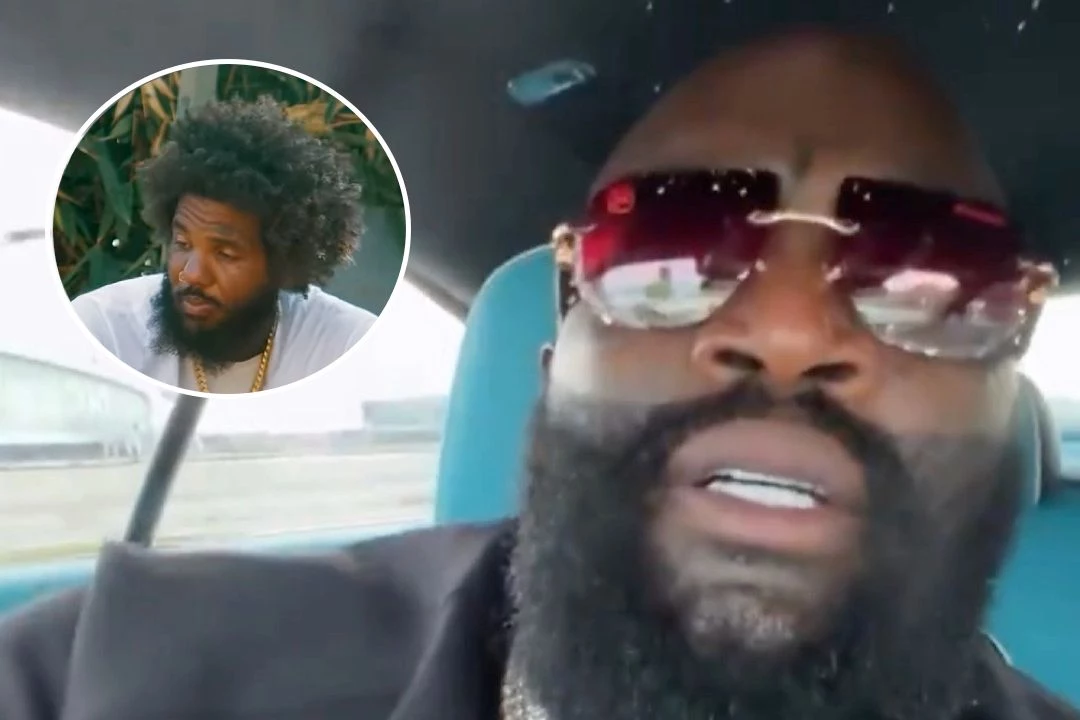
HangupsMusic.com – In the often-unpredictable landscape of hip-hop, where album sales can spark heated exchanges and public scrutiny, Rick Ross has stepped into the fray, leveraging the first-week performance of The Game’s latest project to address criticism of his own commercial output. Ross, known for his flamboyant persona and astute business acumen, took to social media to highlight the stark contrast between his album’s performance and that of his fellow West Coast rapper, particularly in light of the star-studded features on The Game’s offering.
The catalyst for Ross’s commentary was the release of The Game’s highly anticipated album, The Documentary III. Despite boasting an impressive roster of guest appearances, including titans like Kanye West and Drake, along with other notable artists such as PARTYNEXTDOOR, Snoop Dogg, E-40, and the late Drakeo the Ruler, the album landed at a respectable, yet not stratospheric, No. 68 on the Billboard 200 chart, moving approximately 14,806 units in its opening week. This figure, while indicative of a dedicated fanbase, fell short of the expectations that often accompany a project featuring such prominent collaborators.
In contrast, Rick Ross’s own album, Set In Stone, released in July, achieved a higher chart position, debuting at No. 39 on the Billboard 200 with 19,214 units sold in its first week. Ross, ever the showman, seized this data point not just to defend his own sales figures, but to engage in a subtle, yet pointed, comparison. He framed his album’s performance as a success when juxtaposed with The Documentary III‘s numbers, particularly referencing what he termed a "stimulus package" of features on The Game’s album.
"That was a project that was released last week. The Documentary III," Ross stated in a video shared on Instagram, his voice carrying a mix of observation and subtle vindication. He meticulously listed the high-profile artists who contributed to The Game’s album, emphasizing the caliber of talent involved. "Two Kanye features, Drake, Party downstairs, Snoop Dogg, E-40, Marsha Ambrosius, Drakeo The Ruler—may he rest in peace. I was a huge fan. But more importantly, the point I want you to know is, Set In Stone, which is out right now, did more numbers than Documentary III with what they call a stimulus package."
The mention of "Party downstairs" was a thinly veiled jab at PARTYNEXTDOOR, suggesting a dismissal of his impact or a deliberate misnaming to diminish the perceived strength of the collaborative effort. This particular detail underscored the competitive nature of the hip-hop industry, where even perceived slights can fuel ongoing rivalries.

However, Ross, despite his competitive stance, also extended a conciliatory gesture towards The Game. In a move that showcased a nuanced understanding of the pressures within the music industry, he offered words of encouragement. "Listen, keep hustling," Ross advised. "That’s what it’s all about. The Game as an artist, continue to make music my ni*a. The west coast needs you, you feel me? And for all the other artists, don’t let that sht dictate how you move, what you create. And you keep going." This dual approach—highlighting sales figures while simultaneously offering support—demonstrates a complex interplay of personal ambition and camaraderie within the rap community.
The context of this exchange is also crucial. Rick Ross himself had recently faced public commentary regarding the sales of Set In Stone. Notably, fellow rapper 50 Cent had publicly scrutinized Ross’s album sales, adding a layer of personal motivation for Ross to address the broader discourse surrounding commercial success in hip-hop. By pointing to The Game’s sales, Ross not only deflected some of the attention from his own numbers but also broadened the conversation to encompass the challenges faced by established artists in the current music market.
The music industry’s reliance on first-week sales as a primary metric of success has long been a subject of debate. In an era dominated by streaming, where album units are calculated through a complex formula that includes streams, the traditional notion of album sales has evolved significantly. Yet, for many artists and fans, the raw numbers still hold a certain gravitas, often fueling public perception and contributing to the narrative surrounding an artist’s career trajectory.
The inclusion of Drake and Kanye West on The Documentary III was particularly significant. Both artists command immense commercial power and have a track record of driving sales and streams for any project they are involved in. The fact that, even with their contributions, the album’s sales didn’t reach the heights some might have anticipated, speaks to the multifaceted nature of album performance. Factors such as marketing, promotional strategies, fan engagement, and the overall reception of the music itself all play critical roles.
Rick Ross’s commentary serves as a reminder that the hip-hop game is not just about creating music, but also about navigating the business and public relations aspects of the industry. His ability to pivot from personal defense to a broader observation about artistic perseverance reflects his understanding of these dynamics. By using The Game’s sales figures as a talking point, Ross has effectively injected himself into a larger conversation about the perceived value and success of hip-hop albums in the modern era, while also subtly reinforcing his own position in the hierarchy of the genre. The debate over album sales, it seems, is far from over, and Rick Ross has ensured his voice is prominently heard within it.
