
 By Azzam Bilal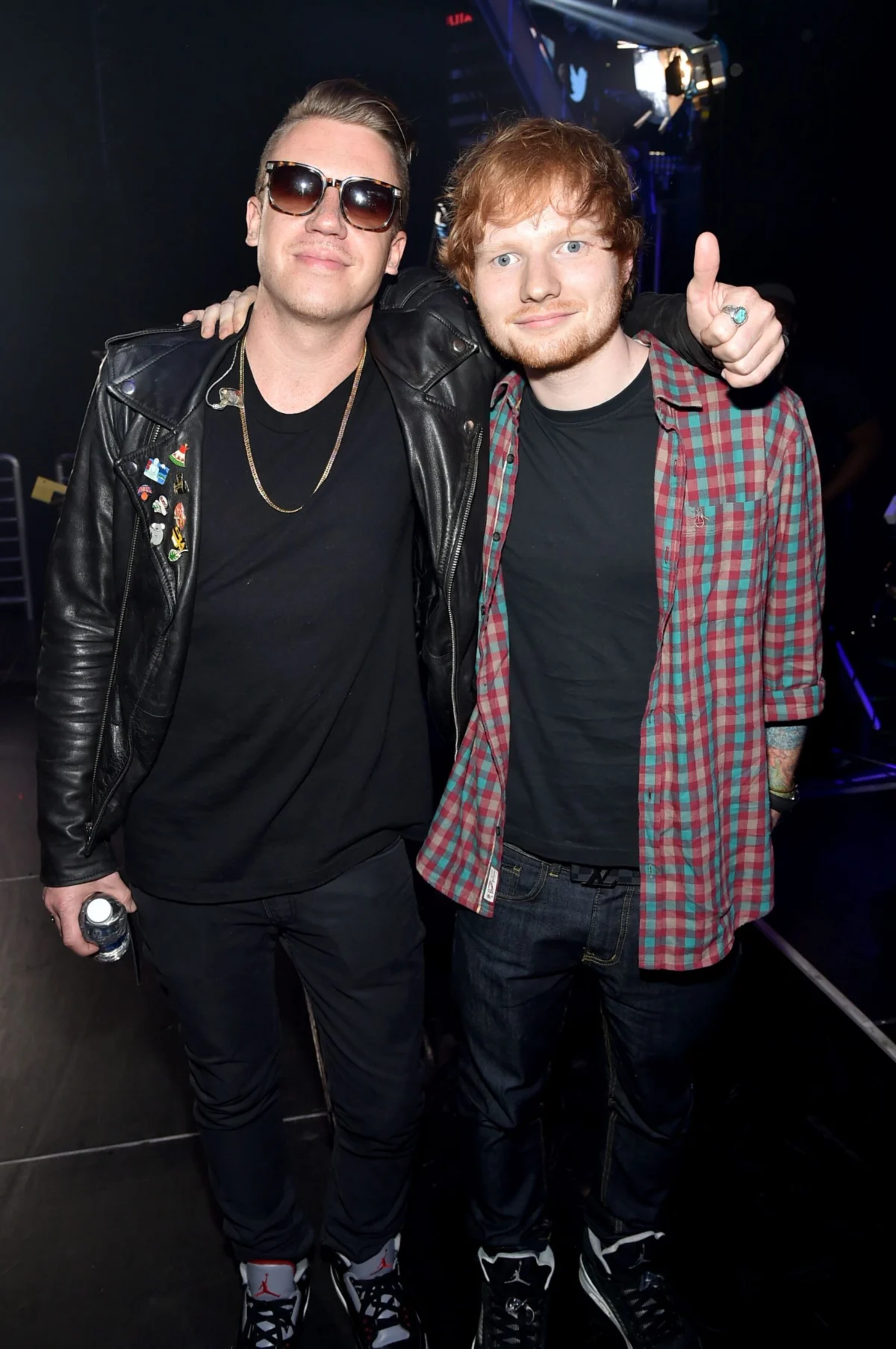
HangupsMusic.com – The intersection of pop culture and geopolitical activism has reached a boiling point following the sudden removal of Grammy-winning rapper Macklemore from the U.S. leg of Ed Sheeran’s high-profile "Loop" tour. What began as a disagreement over onstage rhetoric has rapidly evolved into a multi-million dollar philanthropic standoff, involving one of the NFL’s most powerful owners and a wave of high-profile artist withdrawals that threaten the stability of the tour itself. The situation underscores the deepening divide within the entertainment industry regarding the conflict in Gaza and the limits of political expression on the global stage.
The controversy ignited last week when Macklemore, whose real name is Ben Haggerty, revealed to his followers that he had been unceremoniously dropped as the opening act for Sheeran’s upcoming stadium dates. According to the rapper, the decision was a direct consequence of his vocal advocacy for a "Free Palestine," a sentiment he has expressed both through his music—most notably in the protest track "Hind’s Hall"—and in spontaneous speeches during live performances. In a move that signaled he would not be silenced by the loss of a major touring contract, Macklemore announced a significant financial pivot: he has pledged to donate $1 million, representing his entire projected net earnings from the tour, to a coalition of humanitarian organizations providing aid to Palestinians.
In a poignant statement shared via Instagram, Macklemore sought to refocus the public’s attention away from the industry drama and back toward the humanitarian crisis. "I want to bring the conversation back to where it belongs: to the Palestinian people who are still being killed, still living under military occupation, and still fighting for their freedom," he wrote. The rapper’s donation is slated to be distributed among six specific entities: HEAL Palestine, Gaza Soup Kitchen, American Near East Refugee Aid (ANERA), Medical Aid for Palestinians (MAP), and the UNRWA U.S.A. National Committee. By naming these organizations, Macklemore has effectively challenged the industry’s status quo, moving beyond symbolic gestures toward direct material support for those on the ground.
However, the financial narrative took an even more complex turn when Macklemore directly challenged Robert Kraft, the billionaire owner of the New England Patriots and Gillette Stadium, to match his $1 million contribution. The rapper’s invitation was not merely a call for charity but a pointed critique of Kraft’s alleged role in his removal from the tour. Macklemore has publicly accused Kraft of using his considerable leverage as a venue owner to pressure Ed Sheeran and tour promoters into cancelling his appearances. The rapper claimed that Kraft threatened to pull the "Loop" tour from Gillette Stadium entirely unless Macklemore was removed, further alleging that Kraft encouraged other stadium owners across the country to follow suit.
Kraft, a prominent figure in both the sports and business worlds, did not shy away from the confrontation. In a statement provided to NBC News, Kraft confirmed his involvement in the decision-making process that led to Macklemore’s ousting. He cited the rapper’s recent conduct, particularly during performances in New Jersey, as the catalyst for the intervention. Kraft argued that Macklemore’s rhetoric crossed a line from political speech into what he characterized as "antisemitic rhetoric and imagery." According to Kraft, the decision was made to protect the Jewish community from content that was "deeply hurtful and offensive," asserting that Macklemore’s presence at Gillette Stadium on September 25th and 26th would have been untenable.
Despite the sharp ideological divide, the financial stakes of the conflict have continued to climb. In a follow-up response, Kraft revealed a surprising development in the timeline. He claimed that even before Macklemore’s public challenge, Ed Sheeran himself had approached Kraft with a proposal. According to Kraft, Sheeran requested that the stadium owner commit $2 million to match a separate donation intended to combat the humanitarian crisis in the region. Kraft’s statement suggested a desire to "build bridges," noting that Sheeran plans to coordinate with other venue owners to expand this aid initiative. This revelation has created a confusing but massive potential influx of funding, with nearly $4 million in pledged or requested aid now tied to the fallout of the tour’s lineup change.
Ed Sheeran, for his part, has found himself in an increasingly difficult position, attempting to balance his professional obligations with the ethical demands of his peers and fans. In a personal statement, Sheeran attempted to distance himself from the decision to fire Macklemore, placing the responsibility squarely on the shoulders of the tour’s promoters. "I am not complicit," Sheeran wrote, asserting that while he holds personal views on the "devastating conflict," he often chooses to keep them private. He insisted that his silence should not be interpreted as a lack of concern, though this defense has done little to stem the tide of internal dissent within his touring party.
The impact of Macklemore’s removal has resonated far beyond the front office. In an unprecedented display of solidarity, several other scheduled performers have resigned from the "Loop" tour in protest. Finneas, the Oscar-winning producer and brother of Billie Eilish, announced his departure, followed closely by Danish pop group Lukas Graham and singer-songwriter Aaron Rowe. Even Sheeran’s own backing band, the acclaimed Irish group Beoga, has pulled out of the remaining dates. These artists have collectively signaled that the removal of an act for political speech is a boundary they are unwilling to accept, leaving the tour’s future logistics in a state of uncertainty.
The situation has also drawn the attention of international advocacy groups. The Palestinian Campaign for the Academic and Cultural Boycott of Israel (PACBI), a founding member of the Boycott, Divestment and Sanction (BDS) movement, has issued a formal call for Sheeran to cancel the remainder of the tour. They argue that the "censorship" of Macklemore and the involvement of figures like Kraft make the tour a platform for the suppression of Palestinian rights. This puts Sheeran in a precarious "all-or-nothing" scenario, where proceeding with the tour could lead to further boycotts and reputational damage.
Macklemore’s detailed statement also touched on the human cost of the conflict, moving away from the financial and professional ramifications to highlight specific tragedies. He mentioned the death of 15-year-old Muhammad al Zinati, who was reportedly killed in an Israeli strike while attempting to assist an injured aid worker, Sherif Lubbad. By centering these names, Macklemore sought to illustrate his belief that the "risk" he faces—losing a tour slot or facing corporate backlash—is negligible compared to the life-and-death struggles of those in Gaza. "Writing a check is one of the least costly forms of solidarity available to me," he noted, acknowledging his privileged position while urging others to look past the "news cycle."
As the "Loop" tour struggles to find its footing amidst these departures, the broader music industry is watching closely. The conflict has laid bare the tensions between corporate interests, venue ownership, and artist autonomy. While Robert Kraft maintains that his actions were a necessary stand against hate speech, Macklemore’s supporters view it as a clear-cut case of political blacklisting. The massive donations pledged by both sides—though born out of a bitter dispute—represent one of the largest sudden influxes of artist-led humanitarian aid in recent years.
The coming weeks will determine whether Ed Sheeran can successfully "build bridges" as Kraft suggested, or if the "Loop" tour will become a cautionary tale of how geopolitical tensions can unravel even the most successful commercial ventures. For now, the focus remains on the $1 million pledge and the challenge issued to the upper echelons of power in the NFL and the music world. As Macklemore concluded in his statement, the controversy is not about him or the headlines, but about a fundamental belief that "Palestinian lives are worth protecting." Whether the industry agrees on the method of that protection remains a subject of intense and costly debate.
