
 By Rose Miami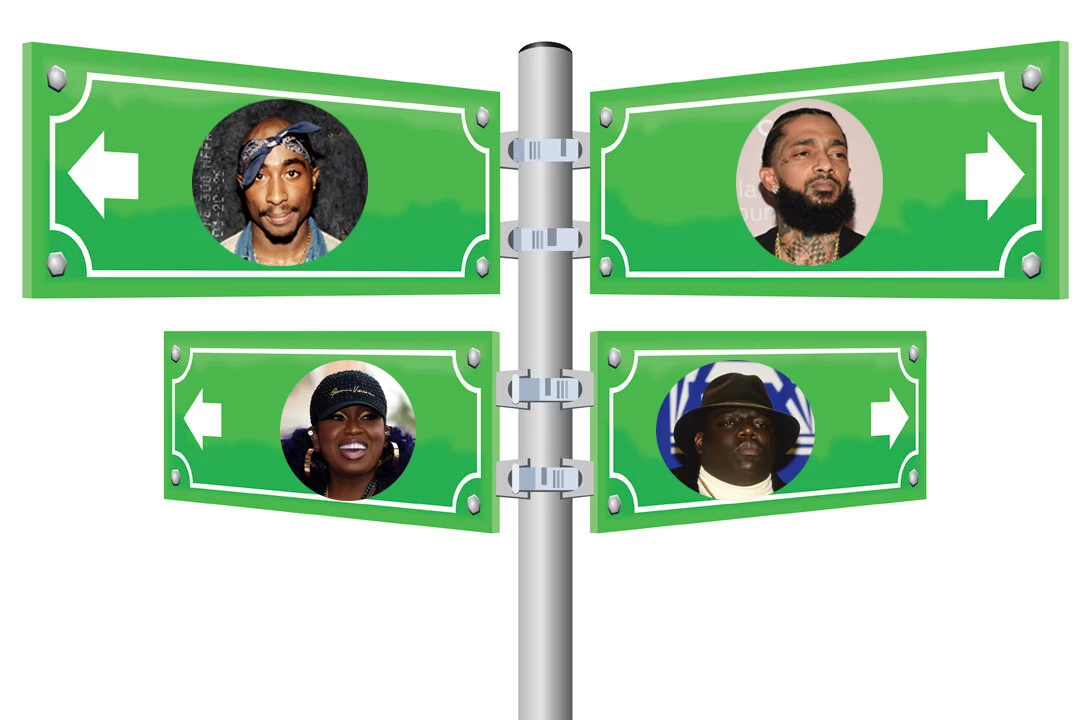
HangupsMusic.com – In an era where hip-hop’s cultural dominion is undeniable, extending from Grammy wins to prestigious museum exhibits, a new and profound form of recognition has taken root in the very fabric of American cities: streets named in honor of its pioneering artists. This burgeoning trend signifies a deep societal acknowledgment of hip-hop’s enduring legacy and its artists’ indelible impact, mirroring the tributes previously reserved for musical giants of other genres.
The genesis of this movement can be traced back to 2009, within the bustling borough of Queens, New York City. The iconic hip-hop trio Run-DMC, hailing from Hollis, Queens, were immortalized when a significant intersection – the corner of 205th Street and Hollis Avenue – was officially designated "Run-DMC JMJ Way." This renaming served not only as a tribute to the group’s unparalleled contributions to music but also as a poignant memorial to their late DJ, Jam Master Jay. This singular act sparked a powerful precedent, establishing street naming as a deeply cherished and resonant method for hometowns to celebrate and commemorate their most celebrated musical sons and daughters.
The tradition of honoring deceased legends through street nomenclature has since flourished. Brooklyn, the birthplace of rap royalty, paid homage to the inimitable Christopher Wallace, universally known as The Notorious B.I.G. In 2019, a pivotal corner of Fulton Street and St. James Place was transformed into "Christopher Wallace Way," a permanent marker of his colossal influence on the genre. This wave of dedications gained further momentum in the lead-up to and in celebration of Hip Hop 50, the landmark anniversary of the genre’s inception. Most recently, the vibrant city of Oakland, California, recognized the profound impact of Tupac Shakur by christening a street "Tupac Shakur Way" in November 2023. This dedication arrived precisely 27 years after his untimely passing, offering a tangible symbol of his enduring spirit.
At the Oakland ceremony, Tupac’s sister, Sekyiwa "Set" Shakur, eloquently articulated the significance of the honor. "It’s a moment that I know my brother would be proud of," she shared, emphasizing Tupac’s deep connection to the Oakland community. "Establishing love and peace in the Oakland community especially mattered to him. Being able to represent safety to his people mattered to him… Let his spirit live on the rest of these years in these streets and in your hearts." Her words underscored the personal and communal resonance of such tributes, transcending mere street signs to become beacons of remembrance and inspiration.
Behind many of these historic street dedications stands the tireless advocacy of LeRoy McCarthy and his company, HeteroDoxX Inc. McCarthy’s persistent vision began in 2013 with an initial, albeit unsuccessful, proposal to co-name St. James Place and Fulton Street as Christopher Wallace Way. However, his unwavering dedication over the ensuing years has been instrumental in securing street namings for a pantheon of hip-hop titans, including Tupac Shakur, the legendary Wu-Tang Clan, Biggie Smalls, and the late Phife Dawg of A Tribe Called Quest, among many others.
McCarthy views these street namings as a crucial step in elevating hip-hop’s status within American culture. "It’s a great look in America for hip-hop art and culture to have the same respect as other American music creations: blues, country, jazz, rock & roll, etc. have received over the decades, including a Hip Hop Resolution in the U.S. Senate," he stated in an interview with XXL. "I am proud that my company HeteroDoxX Inc. initiated for this momentum to happen, in NYC, at Capitol Hill, and across America, starting in 2013 with Christopher ‘Notorious B.I.G.’ Wallace Way in Brooklyn, N.Y., through to the 2023 dedication of Tupac Shakur Way in Oakland, Calif." His efforts highlight a broader cultural reckoning, recognizing hip-hop not just as a musical genre but as a vital and foundational element of American artistic heritage.
The profound connection rappers often have with their hometowns, frequently expressed through their lyrics and community engagement, makes receiving their own street name one of the highest possible forms of recognition. It is a physical manifestation of their rootedness and the lasting impact they have had on the places they call home. This growing list of honorees serves as a testament to hip-hop’s enduring power and its artists’ transformative influence on society and urban landscapes.
Beyond the foundational figures like Run-DMC, The Notorious B.I.G., and Tupac Shakur, the movement continues to expand, embracing a diverse array of influential artists. Cities across the nation are increasingly recognizing the contributions of artists such as the late DMX, a voice of raw honesty and undeniable power. The lyrical prowess and entrepreneurial spirit of Rick Ross have also been celebrated with street dedications, acknowledging his significant impact on modern hip-hop and business. Furthermore, the innovative artistry of Missy Elliott, a trailblazer who consistently pushed creative boundaries, is now immortalized in urban geography. The indelible mark left by Big Pun, a titan of lyrical dexterity, and the community-focused legacy of Nipsey Hussle, a symbol of hope and resilience, are also being etched into the streetscape, ensuring their stories and influences continue to resonate for generations to come. This evolving landscape of urban tributes solidifies hip-hop’s place in history, transforming city streets into vibrant chronicles of its rich and storied past.
