
 By Azzam Bilal
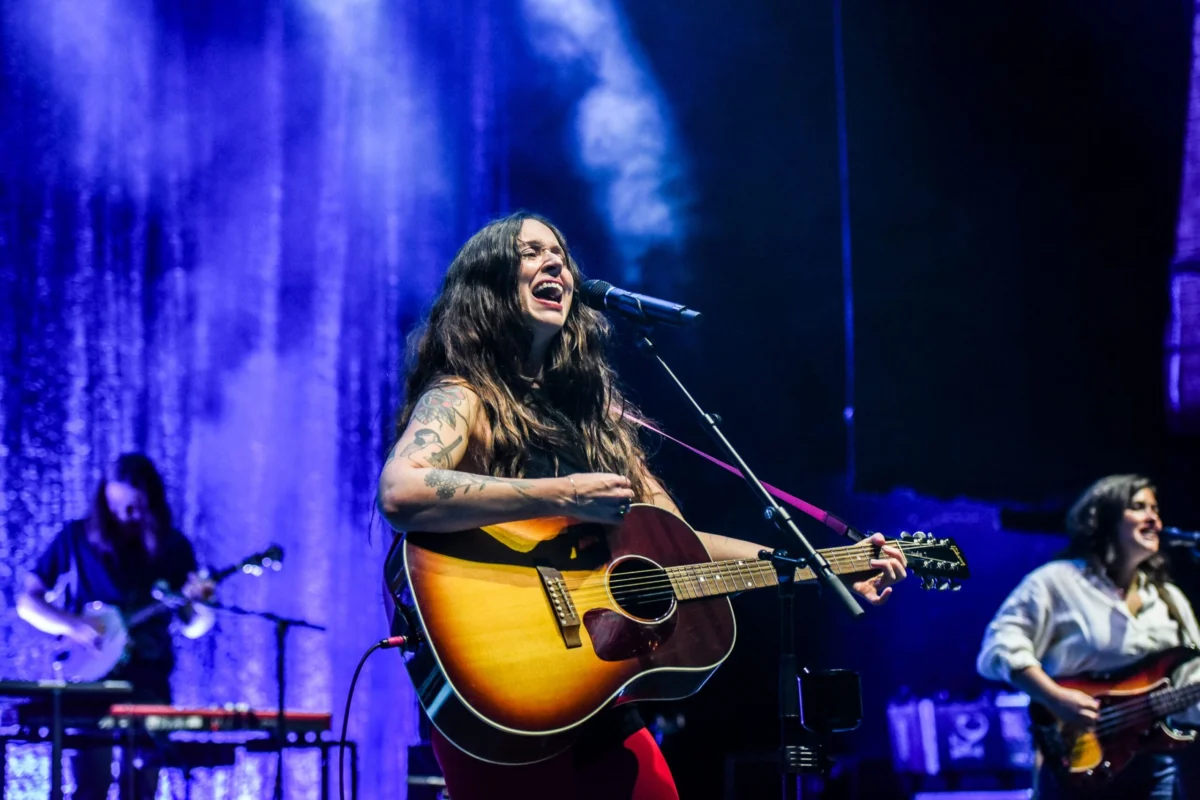
HangupsMusic.com – In an era where the boundary between artist and audience is increasingly porous, Katie Crutchfield, the creative force behind the critically acclaimed project Waxahatchee, is stepping into the role of educator. Following a landmark year defined by the success of her latest album, Tigers Blood, Crutchfield has announced a comprehensive songwriting workshop scheduled for January. The program, hosted by the online educational platform School of Song, marks a significant moment for the indie-rock veteran as she seeks to deconstruct her creative process for a global audience of aspiring musicians and fans alike.
The upcoming workshop is structured as a deep dive into the mechanics of songwriting, a craft Crutchfield has refined over nearly two decades of recording and touring. Comprising four distinct classes and three interactive Q&A sessions, the course aims to provide a transparent look at how a modern masterpiece is built from the ground up. Priced at $200, the enrollment offers a rare opportunity to engage with an artist who has become a foundational figure in the contemporary Americana and indie-folk landscapes.
Crutchfield’s decision to lead this workshop is not merely a professional endeavor but a personal challenge. In a recent post on her Substack, she candidly shared that the project serves a dual purpose. First and foremost, it is an exercise in overcoming a long-standing personal hurdle: a fear of public speaking. Despite her commanding presence as a performer, Crutchfield admitted that she rarely speaks extensively on stage during her concerts. By placing herself in a virtual classroom setting, she hopes to face this anxiety head-on, viewing the workshop as a catalyst for personal growth.
Furthermore, the timing of the course aligns with the early stages of her next creative cycle. Crutchfield revealed that she is currently in the foundational phases of writing the follow-up to Tigers Blood. This overlap between teaching and creating is intentional. She described her own songwriting method as a "seasoned, old process" that occasionally requires a "dusting off." By articulating her techniques to others, she hopes to "knock something loose" within her own creative mind, potentially sparking the inspiration needed for her forthcoming record.
The curriculum promised for the School of Song workshop is intellectually rigorous, focusing on the symbiotic relationship between melody and language. One of the core tenets of the course involves discovering lyrics within the pre-existing structure of a melody. Crutchfield plans to demonstrate how a melodic idea—the rise and fall of a note or the specific cadence of a hum—can suggest the very sounds and rhythms that the lyrics should follow. This "listening to cues" approach is presented as a solution for unlocking stubborn lines that refuse to resolve themselves through traditional brainstorming.
Another intriguing aspect of the workshop is the exploration of two distinct songwriting paradigms: the "Perfectly Descriptive" and the "Perfectly Poetic." According to the course description, Crutchfield will guide students through the decision-making process of whether to ground a song in a lived experience or emotional state—utilizing vivid, tangible imagery—or to abandon "perfect sense" in favor of something purely abstract and phonetic. This tension between narrative clarity and poetic ambiguity has long been a hallmark of Waxahatchee’s discography, particularly on albums like Saint Cloud and Tigers Blood.
The announcement places Crutchfield in a lineage of esteemed songwriters who have utilized the School of Song platform to foster a new generation of talent. Previous instructors have included Phil Elverum of Mount Eerie and Adrianne Lenker of Big Thief, both of whom are known for their idiosyncratic and deeply personal approaches to composition. By joining this "pedagogic tradition," as some have called it, Crutchfield is contributing to a broader movement where the "secrets" of the industry are being replaced by a communal exchange of ideas.

The rise of such workshops reflects a shift in the music industry’s economy and culture. As traditional revenue streams like physical sales and streaming royalties remain volatile, artists are finding innovative ways to monetize their expertise while building stronger, more educational bonds with their community. For the student, the value lies not just in the technical advice, but in the demystification of the "genius" trope. Seeing an artist of Crutchfield’s caliber admit to having a "dusty" process or a fear of speaking makes the act of creation feel more accessible and human.
Waxahatchee’s trajectory over the last few years has been nothing short of meteoric. After the breakout success of 2020’s Saint Cloud, which saw Crutchfield pivoting toward a rootsier, more countrified sound, she solidified her status as a premier American songwriter with 2024’s Tigers Blood. The latter was praised for its sharp lyrical wit and its ability to capture the complexities of sobriety, relationships, and the passage of time. Her ability to weave together the mundane and the profound has earned her a reputation as a "songwriter’s songwriter," making this workshop a highly anticipated event for those who study the genre.
The workshop is also a testament to the power of digital platforms in the post-pandemic era. School of Song has carved out a niche by offering high-level instruction that transcends the limitations of a standard YouTube tutorial. The live nature of the classes, conducted via Zoom, allows for real-time interaction, making the three Q&A sessions a vital component of the experience. Participants are encouraged to bring their own work to the table, applying Crutchfield’s theories to their personal projects under the guidance of a woman who has navigated the highs and lows of the independent music scene for years.
In her Substack reflection, Crutchfield expressed a genuine excitement about the prospect of learning alongside her students. "I’m excited to share things, excited to learn things," she wrote, highlighting a humility that is often missing from the upper echelons of the music world. This spirit of mutual discovery is likely what will define the January sessions. Instead of a top-down lecture, the workshop is being framed as a laboratory where both the instructor and the pupils are poking around the machinery of the song to see how it ticks.
As the January start date approaches, the music community is watching closely. For fans, it is a chance to see behind the curtain of the songs they love. For aspiring writers, it is a masterclass in the nuance of the English language and the physics of a good hook. And for Katie Crutchfield, it is a bridge to her next chapter—a way to clear the cobwebs and prepare the soil for whatever stories her next album will tell.
In a landscape often dominated by the ephemeral and the algorithmic, the focus on the "Perfectly Descriptive" and the "Perfectly Poetic" feels like a radical return to the fundamentals of art. By emphasizing the importance of "lived experience" and the "rhythms that lyrics follow," Crutchfield is advocating for a type of songwriting that is intentional, disciplined, and deeply felt. Whether she is helping a student fix a broken stanza or finding the courage to speak more freely to her audience, the impact of this workshop is poised to resonate far beyond the four classes scheduled for the new year.
Enrollment remains open for those looking to start their year with a renewed sense of creative purpose. As the world continues to grapple with the noise of "bad music," as some critics playfully suggest, initiatives like this serve as a vital counterweight, ensuring that the craft of the song remains in capable, thoughtful hands. For Waxahatchee, this is more than just a side project; it is a vital part of the artistic ecosystem that keeps the music—and the musician—evolving.
