
 By admin
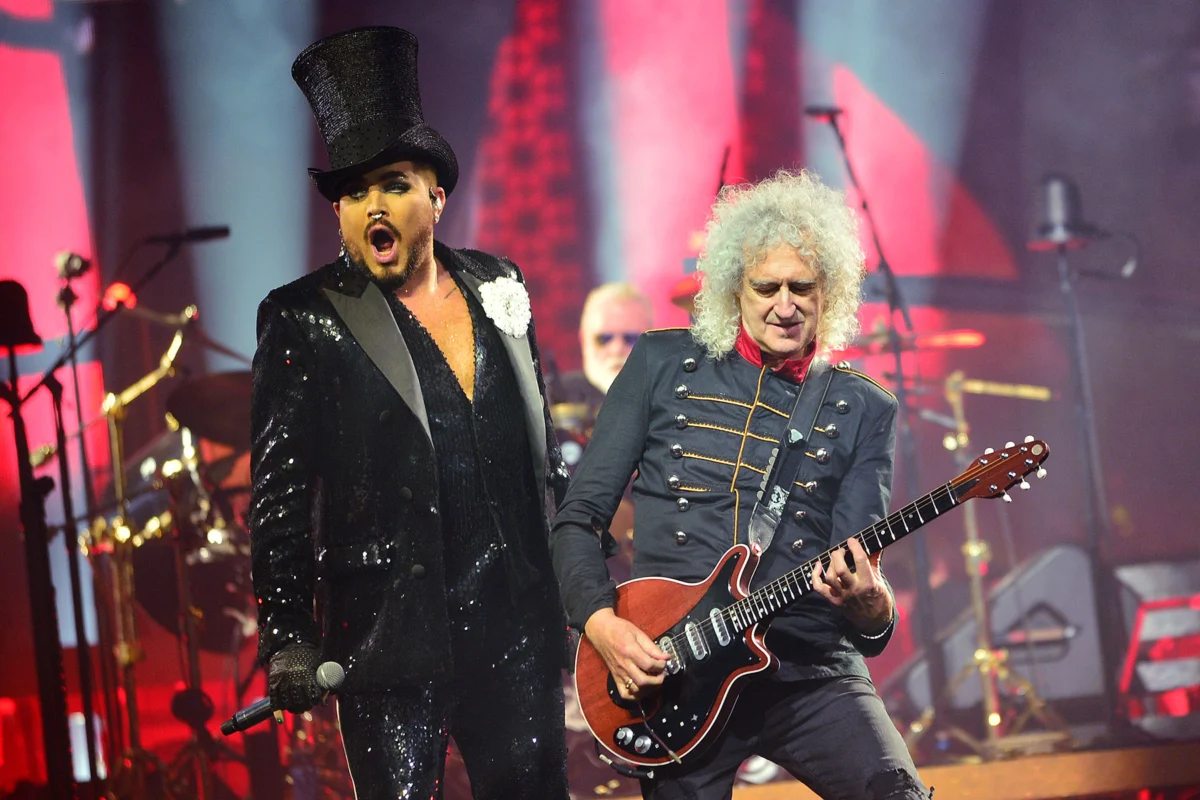
HangupsMusic.com – Legendary Queen guitarist Brian May has unequivocally announced his retirement from touring, signaling a definitive end to the band’s global road adventures. Following the conclusion of Queen + Adam Lambert’s highly successful Rhapsody world tour in February 2024, May revealed in a candid interview with The Times that the gruelling demands of life on the road have become an untenable sacrifice, prompting him to prioritize his personal life, family, and lifelong intellectual passions. This declaration marks a significant moment for one of rock’s most enduring figures, drawing a line under five decades of relentless performance and travel.
May’s decision, he stated, was solidified approximately 18 months prior, crystallizing after a particularly poignant incident during a U.S. leg of a tour. The passing of a close family friend underscored the harsh realities of a touring musician’s life: the inability to simply "nip home" for critical moments. "I love to play, I love to travel, but the trade-off is sacrificing your freedom," May confided, articulating the profound personal cost behind the glamour of stadium shows. At 76, the guitarist, celebrated for his iconic Red Special guitar and groundbreaking compositions, feels that "50 years is enough" of this particular lifestyle. His future, he asserts, lies beyond the confines of hotel rooms and tour buses, dedicated instead to his wife, actress Anita Dobson, his cherished grandchildren, and a wealth of astrophysical research that has long been a parallel passion.
May’s profound connection to astrophysics is not a recent hobby but a deeply ingrained academic pursuit. He initially abandoned his PhD studies at Imperial College London in the early 1970s to dedicate himself fully to Queen’s burgeoning career. Over three decades later, in 2007, he famously completed his doctorate, submitting his thesis on zodiacal dust. Since then, he has co-authored scientific papers, served as a Chancellor of Liverpool John Moores University, and collaborated with NASA. For a man who seamlessly blends rock stardom with scientific inquiry, the pull of the cosmos and the quiet dedication of research offers a stark contrast to the relentless energy required for global tours. This dual identity makes his choice to step away from the touring circuit particularly understandable; it is not merely retirement, but a reallocation of finite time and energy towards other deeply held commitments. The freedom to pursue these intellectual and personal endeavors, unconstrained by a rigorous tour schedule, is clearly a driving force behind his decision.
The Rhapsody world tour, which culminated at Japan’s Tokyo Dome on February 14, 2024, now stands as the final chapter in Queen’s touring history with Adam Lambert. Since joining forces with Queen’s founding members, May and drummer Roger Taylor, in 2011, Lambert has breathed new life into the band’s legendary catalogue, captivating audiences worldwide with his phenomenal vocal range and stage presence. This collaboration, initially met with skepticism by some purists, swiftly became a triumphant revitalization, proving that Queen’s music could continue to thrive on the biggest stages. The tour’s immense success, spanning continents and earning critical acclaim, ensures that this final touring era concludes on a high note, cementing Lambert’s place in the band’s storied legacy.
While the curtain falls on Queen’s touring days, May is far from contemplating a complete withdrawal from music or performance. He envisions "something fairly revolutionary" for the band’s future, an "immersive experience" that could transcend traditional concert formats. Inspired by his visit to the Sphere in Las Vegas, a groundbreaking venue renowned for its immersive visual and auditory capabilities, May confessed to sketching out an entire Queen show designed for such a space. This ambition suggests a desire to innovate, to present Queen’s iconic music in ways previously unimaginable, harnessing cutting-edge technology to create communal musical experiences that "conquer time and space."
However, May’s progressive vision is tempered by a significant ethical dilemma regarding artificial intelligence. He acknowledges that fully realizing such immersive spectacles often necessitates the integration of AI, a technology about which he harbors "serious misgivings." His concern extends beyond artistic control, touching upon the environmental and societal impact of the vast data centers that underpin AI development. "Data centers are a massive evil and have to be fought," he stated unequivocally, highlighting his commitment to ethical considerations even in the realm of entertainment innovation. This principled stance underscores May’s broader worldview, where technological advancement must be balanced with responsible stewardship and an awareness of its wider implications.
May’s current definitive statement is not an abrupt shift but the culmination of a growing weariness he has openly expressed over the past few years. In September 2023, he told Rolling Stone that he was "exhausted with life on the road," describing the feeling of being "trapped" in hotel rooms, unable to respond to family emergencies. While not ready to entirely rule out touring then, he hinted at a strong desire to reclaim his freedom, stating, "I’ve had 50 years of touring and there’s a part of me that thinks it’s enough." He emphasized a desire to "play shows" and "innovate" without the comprehensive commitment of a full tour, laying the groundwork for his current decision. This consistent narrative of increasing personal cost and the yearning for autonomy reveals a long-considered path to this point.
Adding another layer to his complex touring considerations, May had also voiced concerns about performing in the United States earlier this year. In January, he told the Daily Mail that he considered America "a dangerous place at the moment," expressing reluctance to cross the Atlantic for shows. "It’s very sad because I feel like Queen grew up in America and we love it, but it’s not what it was," he reflected, alluding to broader societal issues that impact artists’ decisions about where and how they perform. While not the sole reason for his overall retirement from touring, these remarks highlighted a growing unease with certain aspects of global travel, further contributing to his desire for a less demanding schedule.
Despite Brian May’s departure from the touring circuit, the creative endeavors within the broader Queen family are far from dormant. Drummer Roger Taylor recently released his solo LP, Violence Insane in a Beautiful World, showcasing his enduring songwriting and performance prowess. Adam Lambert, too, continues to expand his solo discography, having dropped his album Adam in July, and recently delivered a powerful tribute to George Michael with a performance of "Freedom! ’90" at the MTV Video Music Awards. These individual projects demonstrate the vibrant artistic lives of the musicians who have carried Queen’s flame forward.
Furthermore, the rich tapestry of Queen’s history continues to unfold through archival releases. A significant project in the pipeline is the concert film Queen Budapest, capturing the band’s historic July 27, 1986, performance. This landmark concert marked Queen as the first major rock band to play behind the Iron Curtain, a testament to their global appeal and cultural impact during a politically charged era. Such archival treasures ensure that Queen’s legacy remains vibrant and accessible to new generations, even as live touring ceases.
Of course, the music industry has a long-standing tradition of rock stars announcing their retirement from touring only to return to the stage years later. Artists from Ozzy Osbourne to The Who, Cher to Elton John, have all embarked on "farewell tours" that were not, in fact, final. This common phenomenon often stems from the irresistible pull of the stage, the financial incentives, or simply a change of heart. While May’s current declaration is firm and rooted in deeply personal reasons, the possibility of a future, perhaps more limited, return cannot be entirely discounted, given the unpredictable nature of an artist’s relationship with their craft and their audience. However, for now, Brian May’s decision appears to be a considered and heartfelt one, prioritizing a life of intellectual pursuit, family, and personal freedom over the relentless demands of the road. Queen’s music will undoubtedly live on, perhaps in new and revolutionary forms, but the era of the band as a touring juggernaut has, for now, drawn to a close.
