
 By Azzam Bilal
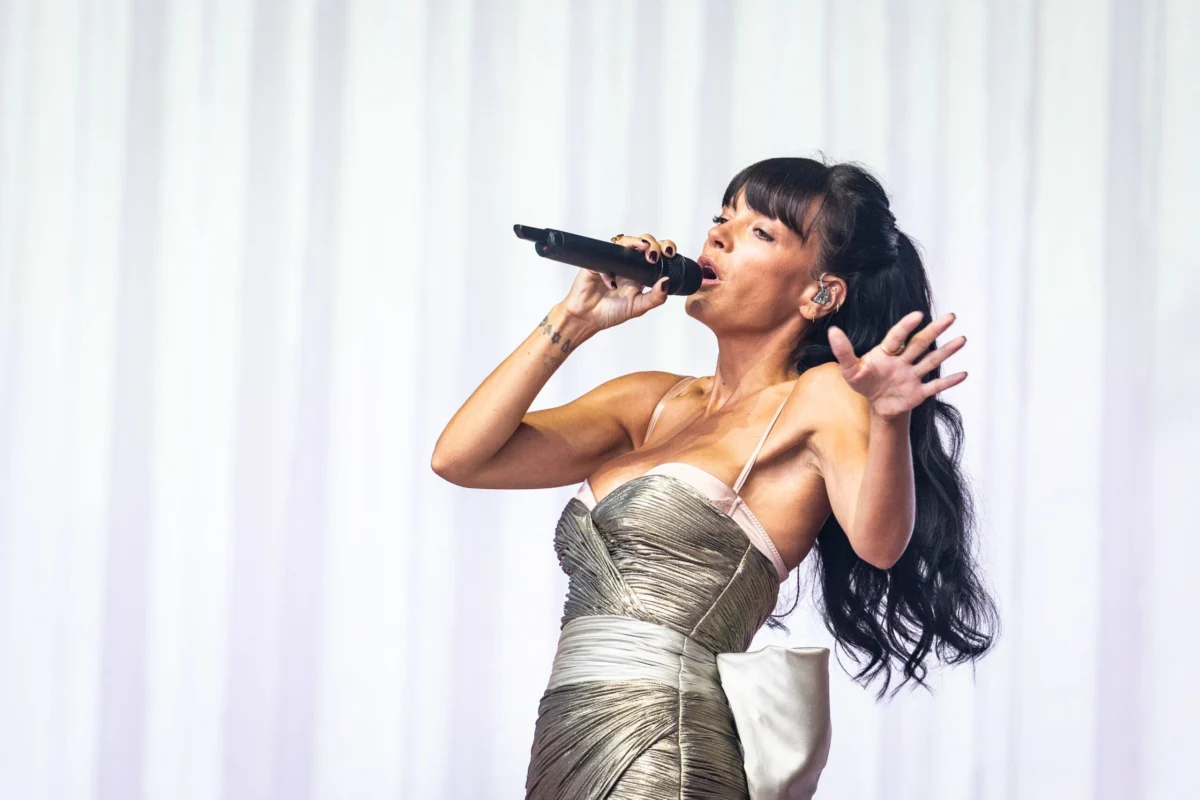
HangupsMusic.com – Lily Allen has long occupied a unique position within the global pop landscape, operating as both a participant and a cynical observer of the industry’s many machinations. Known for her acerbic wit and a career-long commitment to self-satire, the British singer-songwriter has rarely sought to avoid the spotlight, even when it burns with the heat of public criticism. Her latest creative chapter, centered around the album West End Girl, has proven to be no exception. As Allen transitions from the recording studio back to the international stage, she finds herself at the center of a complex conversation regarding the expectations of live performance, the volatility of the touring market, and the defiant power of a well-timed PR pivot.
The rollout for the "Lily Allen Performs West End Girl" tour began with a specific, curated vision. Following her successful stint in theater—most notably her acclaimed run in the West End play 2:22 A Ghost Story—Allen appeared to have brought a theatrical sensibility back to her musical endeavors. The tour was initially framed as a series of intimate engagements in smaller theaters and clubs throughout the United Kingdom. These venues were chosen to complement the atmospheric, narrative-driven nature of West End Girl, an album that trades the bouncy ska-pop of her youth for a more sophisticated, often melancholic exploration of heartbreak and personal evolution. However, the initial surge of interest from a fanbase hungry for her return prompted a rapid expansion of the itinerary. Theaters were exchanged for arenas, and a comprehensive North American leg was added to the schedule, signaling an ambition to recapture the massive commercial heights of her earlier career.
As the tour commenced, however, the disconnect between the artist’s vision and the audience’s expectations became a point of public contention. Unlike the traditional pop concert, which often relies on high-energy fan interaction, "greatest hits" medleys, and a permeable barrier between the performer and the crowd, Allen’s new show was designed as a rigid, linear presentation of the new album in its entirety. For the duration of the set, Allen maintained a strict "fourth wall," refusing to engage in the standard stage banter that defines most modern touring experiences. This creative choice left some segments of the audience feeling alienated, leading to a wave of social media commentary suggesting that the show lacked the warmth or "value for money" typically associated with arena-level tickets.
Allen, never one to let a critique go unanswered, took to social media to defend her methodology. She framed the lack of interaction not as a sign of apathy, but as a deliberate artistic tool intended to preserve the integrity of the storytelling. On the platform X, she explained that the fourth wall was essential to the immersive experience she was trying to create, noting that the show was built to be an "effective" piece of performance art rather than a standard recital. She emphasized the hard work of her crew and her own pride in the production, attempting to bridge the gap between her artistic intent and the financial expectations of her ticket holders. Yet, the friction remained, and as the "prurient interest" in the album’s personal lyrical content began to stabilize, the realities of the touring economy began to set in.
The phenomenon known colloquially as "blue-dot fever"—a reference to the sea of blue unsold seat icons on Ticketmaster’s digital seating charts—began to plague the larger venues on the tour. In an era of skyrocketing ticket prices and a saturated touring market, even established stars can find it difficult to fill 15,000-seat arenas without a massive radio hit or a populist "hits-only" setlist. For Allen, the ambitious jump from theaters to arenas proved to be a logistical overreach. Two weeks into the cycle, the North American leg of the tour underwent a significant restructuring. Several dates were moved from large-scale arenas to more modest amphitheaters and smaller arena configurations. A planned performance in Montreal was removed from the calendar entirely, while a new date in Seattle was added to help balance the West Coast logistics.
While many artists might view such a downsizing as a blow to their public image, Lily Allen has built a career on turning vulnerability into a weapon. Rather than issuing a sanitized corporate statement regarding "unforeseen logistical challenges," Allen chose to lean into the narrative of the "struggling" tour with her trademark irony. In a move that delighted fans and neutralized critics, she appeared in a custom-designed onesie and jacket patterned with blue dots—a literal manifestation of the unsold tickets she had been teased about. By wearing the "blue-dot fever" as a fashion statement, she reclaimed the narrative, transforming a potential PR disaster into a moment of self-deprecating performance art.
This pivot is characteristic of Allen’s "shameless" persona. On Instagram, she shared images of the outfit with the caption "Never beating the allegations," accompanied by the hashtag #bluedotfever. It was a signal to her audience that she was in on the joke, effectively de-fanging the "flop" narrative that often follows artists when they scale back their live ambitions. This level of transparency is rare in a high-stakes industry where the appearance of constant growth and sold-out success is usually maintained at all costs. Allen’s willingness to acknowledge the empty seats while simultaneously refusing to compromise on the "unfriendly" format of her show highlights the tension at the heart of her current era: she is an artist who demands to be taken seriously, even if she refuses to take the business of being a celebrity seriously.
The "West End Girl" tour serves as a fascinating case study in the current state of the music industry. It highlights the dangers of the "arena-or-bust" mentality that has gripped promoters in the post-pandemic landscape, where mid-tier and legacy acts are often pushed into venues that exceed their current market reach. It also raises questions about the "contract" between the artist and the audience. In a world where fans feel entitled to a personalized, interactive experience—largely due to the intimacy fostered by social media—Allen’s insistence on a theatrical fourth wall is a radical act of boundary-setting. She is essentially arguing that a concert ticket is a license to observe an artist’s work, not a demand for a two-way social interaction.
As the tour continues in its more appropriately scaled venues, the focus has shifted back to the music and the meticulous production of the show itself. Reports from the downsized dates suggest a more cohesive atmosphere, where the intimate storytelling of the album can actually reach the back of the room without being swallowed by the cavernous acoustics of a half-empty hockey rink. The "blue-dot" onesie may have been a joke, but it also represented a moment of professional recalibration. By acknowledging the reality of the situation, Allen has managed to keep the conversation centered on her personality and her choices rather than her "relevance."
Ultimately, Lily Allen’s journey through the West End Girl cycle reinforces her status as pop music’s premier ironist. Whether she is singing about the disintegration of a marriage or joking about her own unsold tickets, she remains a figure who thrives on the friction between her private reality and her public persona. The tour may have faced logistical hurdles and a skeptical public, but by embracing the "blue dots," Allen has ensured that she remains the one holding the pen in the story of her own career. In the volatile world of live music, perhaps the greatest "pop trick" of all is the ability to fail upward with a smile and a well-placed hashtag.
