 By admin
HangupsMusic.com – Los Angeles, The vibrant world of live music, often a stage for bold artistic expression, recently became the backdrop for a significant legal dispute, pitting the iconic Dallas Cowboys Cheerleaders (DCC) against rock band My Chemical Romance (MCR) and concert promoter Live Nation. At the heart of the contention lies a series of performances at the legendary Hollywood Bowl, where dancers adorned in uniforms strikingly similar to the DCC’s famed blue-and-white ensemble participated in an elaborate, theatrical skit. This artistic choice has sparked a legal battle centered on the delicate balance between creative freedom and the protection of a widely recognized brand’s intellectual property, raising questions about what constitutes parody versus actionable infringement in the realm of performance art.
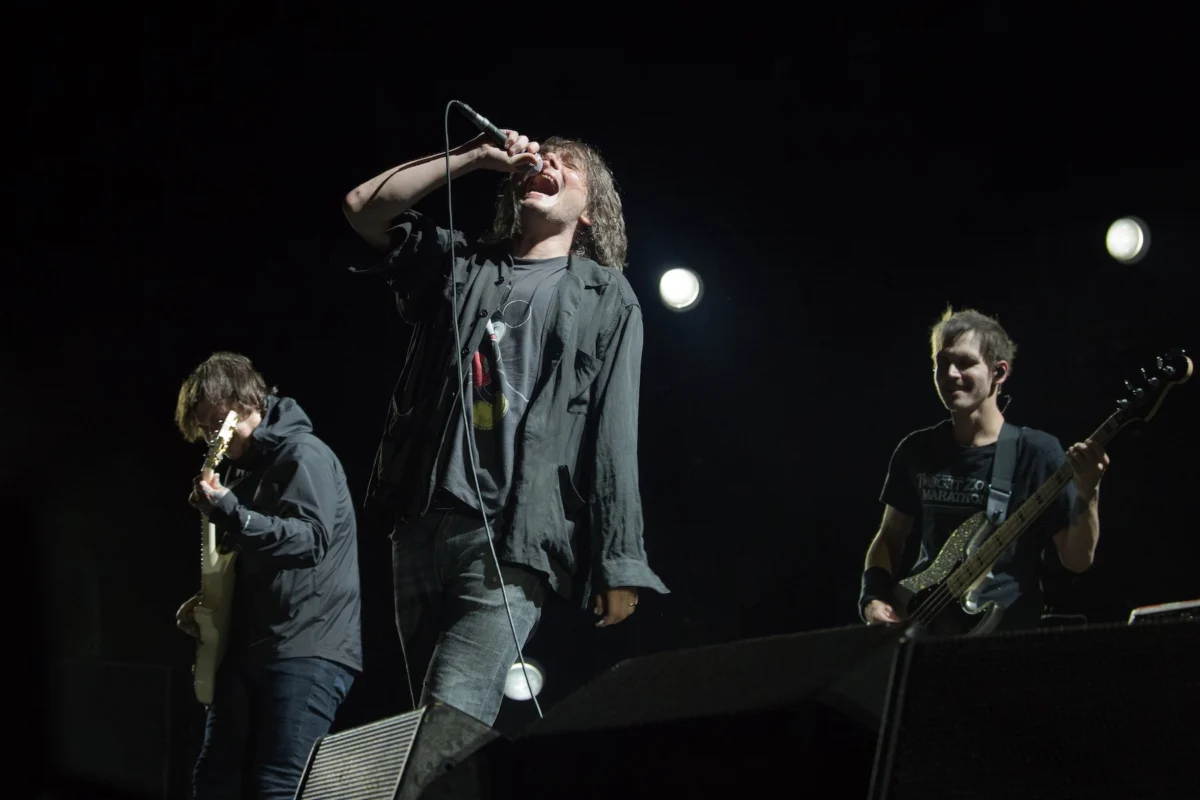
The controversy erupted following My Chemical Romance’s three-night residency at the Hollywood Bowl, which concluded on October 24th. During these highly anticipated shows, a segment of the band’s elaborate stage production featured performers dressed in uniforms closely resembling the Dallas Cowboys Cheerleaders’ distinctive attire. These dancers engaged in a stylized "mock gun battle" alongside other performers, portraying a confrontation with figures in dark, military-esque uniforms. The theatrical segment, circulating widely online through fan videos, depicted the cheer-uniformed dancers brandishing prop rifles and simulating being shot, a dramatic spectacle consistent with My Chemical Romance’s often dark and narrative-driven aesthetic. However, what MCR and Live Nation viewed as a piece of artistic commentary, the Dallas Cowboys Cheerleaders’ parent company, Pro Silver Star, considered a direct assault on their protected trade dress and brand image, initiating swift legal action.
For decades, the Dallas Cowboys Cheerleaders uniform has transcended its origins to become a powerful cultural icon. Comprising a distinctive blue star-spangled vest, white short shorts, and white go-go boots, the ensemble is immediately recognizable, synonymous with American sports entertainment, glamour, and a meticulously cultivated image of wholesome professionalism. This uniform is not merely clothing; it is a meticulously protected piece of "trade dress" – a legal term referring to the visual appearance of a product or its packaging that signifies its source and distinguishes it from others in the market. Pro Silver Star has painstakingly built and safeguarded the DCC brand, emphasizing values of dedication, character, and community involvement, including extensive tours entertaining American troops worldwide. The company argues that the uniform, and by extension the brand it represents, carries significant commercial value and goodwill that demands stringent protection under trademark and trade dress law. Any unauthorized use, particularly in a context perceived as "degrading" or incongruous with their established image, is viewed as a direct threat to this carefully constructed brand equity.
My Chemical Romance, conversely, is renowned for its theatricality and narrative-driven performances, often exploring themes of rebellion, dystopia, and social commentary. From their early days, particularly with their seminal album "The Black Parade," the band has integrated elaborate costumes, stage sets, and character arcs into their live shows, transforming concerts into immersive experiences. Their music frequently delves into darker themes, critiques of conformity, and explorations of societal anxieties. The "mock gun battle" skit, featuring cheerleaders as part of a resistance against an authoritarian force, aligns with the band’s established artistic sensibility, which often employs striking visual metaphors and cultural references to provoke thought and emotion. From the band’s perspective, this was an act of artistic expression, a creative choice intended to comment on societal constructs or tell a story within their performance, not to mislead or infringe upon another entity’s commercial interests.
Pro Silver Star’s initial lawsuit, filed in Collin County, Texas, sought an emergency restraining order to prevent the use of the lookalike uniforms in any future MCR performances. The cheer squad’s legal representatives contended that the costumes infringed upon their legally protected trade dress, causing irreparable harm to their brand. They argued that the association with a "gun-toting" performance, where performers were "shooting and being shot," was antithetical to the DCC’s family-friendly image and the values they uphold. Beyond the immediate restraining order, the lawsuit also demanded unspecified profits and damages resulting from the alleged infringement, along with a permanent injunction to prevent My Chemical Romance from ever using similar costumes in future performances, ultimately seeking a trial to resolve the dispute.
The expected courtroom showdown over the restraining order, however, was averted. Representatives for My Chemical Romance did not appear at the scheduled hearing, as a separate agreement had been reached. The band’s manager provided a declaration stating that the contentious costumes were never intended for use beyond the three Hollywood Bowl dates, effectively rendering the immediate need for a restraining order moot. This was further corroborated by an email from My Chemical Romance’s music attorney, David Byrnes, confirming to the Dallas Cowboys Cheerleaders’ legal team that "there was no need to proceed" with the restraining order request since the performances featuring the costumes had concluded. While this resolved the immediate urgency, the broader lawsuit concerning alleged trade dress infringement and damages remains very much alive.
Following this development, Live Nation, acting as the concert promoter and a co-defendant, moved the ongoing case to federal court. In its new federal filing, obtained by Rolling Stone, Live Nation mounted a robust defense grounded in the First Amendment, arguing that the use of the uniforms constituted protected artistic expression and a legitimate parody. "This is a trademark case about a musical group’s artistic expression and the First Amendment," Live Nation’s filing asserted. It contended that Pro Silver Star was improperly attempting "to use trademark law to line edit theatrical staging at a Los Angeles concert because [it] dislikes the way the show parodied one of the most famous uniforms in the United States." This argument invokes a critical legal principle in intellectual property law, often articulated through cases like Rogers v. Grimaldi, which provides greater leeway for artistic works using trademarks than for commercial goods. The test generally asks whether the use of the trademark has "some artistic relevance to the underlying work" and, if so, whether it "explicitly misleads as to the source or content of the work."
Live Nation’s defense heavily emphasizes the concept of parody, asserting that the performance was "a successful parody" and that "no viewers believed the dancers were real Dallas Cowboys Cheerleaders." The promoter argued that the highly stylized, dramatic context of a My Chemical Romance concert, combined with the fantastical narrative of the skit, would have immediately signaled to any audience member that the depiction was not genuine. "Recognition is not confusion," the filing eloquently stated, drawing a crucial distinction in trademark law. It posited that observers "understood the performance as an allusive, exaggerated, theatrical reference within a My Chemical Romance show," rather than a false endorsement or affiliation with the actual Dallas Cowboys Cheerleaders. This argument suggests that the audience’s sophistication and the clear artistic intent of the performance prevented any likelihood of confusion, a cornerstone of trademark infringement claims.
Despite Live Nation’s First Amendment defense, Pro Silver Star remains steadfast in its position. While acknowledging My Chemical Romance’s right to artistic expression, the cheer squad’s lawyers clarified that they were not attempting to dictate the band’s setlist, narrative, politics, or choreography. Their contention is narrowly focused: "Silver Star asks only that those performers not wear the DCC uniform while doing it. The universe of alternative costume designs is effectively unlimited," the lawsuit stated. This highlights the core tension: the band’s right to express itself versus the brand owner’s right to control the use of its distinctive identifiers. The DCC argues that the specific use of their iconic uniform, regardless of the artistic context, degrades their carefully cultivated brand and dilutes its commercial power, particularly given the violent imagery associated with the skit.
As the case moves forward in federal court, both parties face a complex legal battle. The outcome could set an important precedent for the entertainment industry, clarifying the boundaries between artistic parody and trademark infringement, particularly when iconic brands are referenced in theatrical performances. For My Chemical Romance, the immediate focus shifts to their upcoming Asian tour dates, beginning November 7th in South Korea, with subsequent concerts in Singapore, the Philippines, Thailand, Malaysia, and Indonesia. While the band will continue its global performances, the legal dispute over their Hollywood Bowl costumes will unfold in the background, a testament to the intricate interplay of culture, commerce, and creative expression in the modern age. The resolution of this case will undoubtedly be closely watched by artists, brand owners, and legal scholars alike, as it navigates the compelling intersection of the First Amendment and intellectual property rights.
