
 By Azzam Bilal
HangupsMusic.com – Philadelphia, the landscape of independent music is often defined by its periods of intense activity followed by stretches of enigmatic silence, and few figures embody this ebb and flow more than Bradford Cox. As the visionary leader of the influential band Deerhunter, Cox has spent decades carving out a niche at the intersection of avant-garde experimentation and pop sensibility. However, it is his solo moniker, Atlas Sound, that has perhaps always offered the most intimate glimpse into his creative psyche. For years, the project remained dormant, leaving fans to wonder if the Atlas Sound chapter had reached its conclusion. That question was answered in spectacular fashion during the Making Time ∞ festival in Philadelphia, where Cox returned to the stage for a performance that was as unexpected as it was revelatory.
The road to this return has been a long one. Prior to his appearance last month, Cox had largely retreated from the live circuit. His last significant run of performances concluded in 2019, just before the global landscape shifted. In the intervening years, his public appearances were exceedingly rare, characterized only by a fleeting and unannounced noise set at a vintage market in Athens, Georgia, in 2023. While that impromptu moment signaled that his experimental spirit remained intact, it did little to suggest a full-scale return to the Atlas Sound identity. The announcement that he would join the bill at Making Time ∞ was therefore met with a mixture of celebration and curiosity. Fans flocked to the festival expecting perhaps a retrospective of his celebrated early work, but Cox, true to his reputation for subverting expectations, had other plans.
Rather than leaning on the nostalgia of his critically acclaimed catalog, Cox utilized the Philadelphia stage to debut an entire album’s worth of brand-new material. The eight-song set was a masterclass in atmospheric tension and minimalist beauty. For those in attendance, the experience was transfixing, defined by an intentional sparseness that highlighted the raw emotional core of the compositions. The instrumental arrangement was unconventional yet effective, consisting of a set of brass bells, a bass guitar, and Cox’s long-preferred Roland SP-404 sampler. This tool, a staple of his workflow for years, allowed him to layer textures and loops in real-time, creating a "wall-of-sound" effect that felt both massive and fragile. The reliance on such a focused set of instruments underscored a new direction for the project—one that strips away the density of his previous studio work in favor of something more skeletal and haunting.
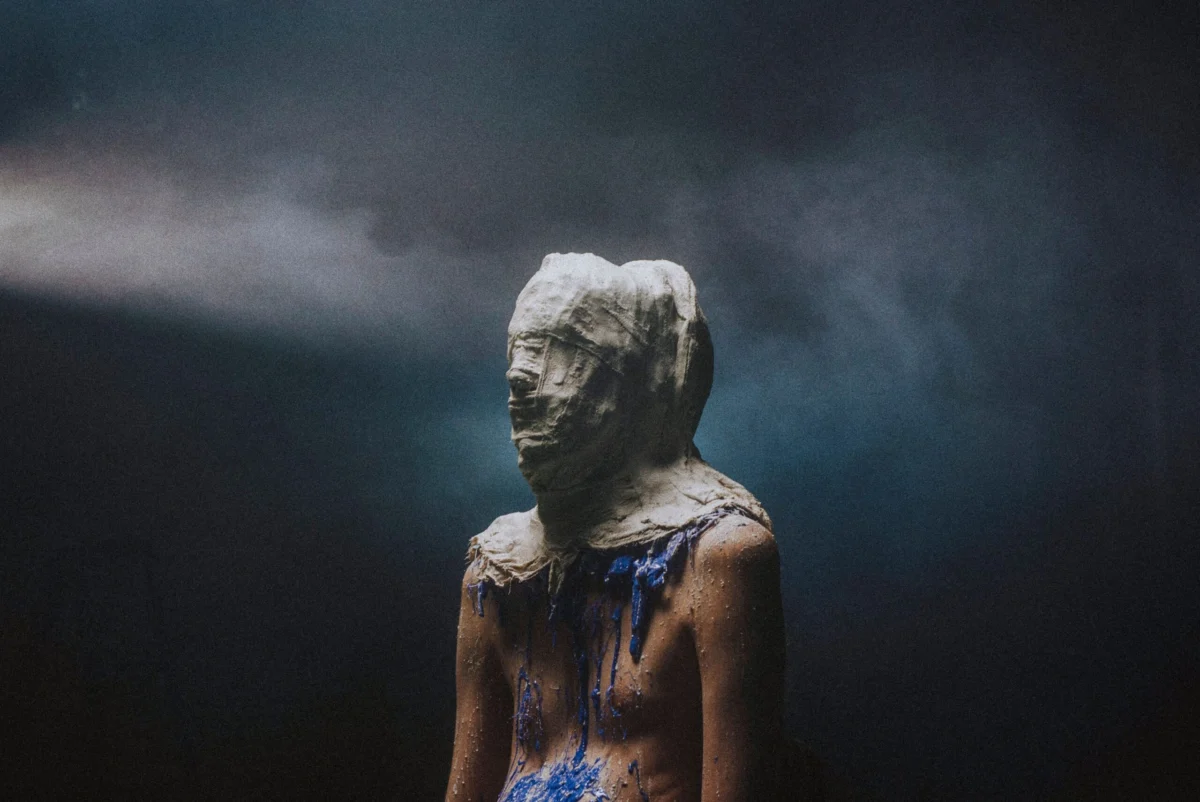
The momentum generated by the live performance has now culminated in the official release of "Octoberland," the first studio recording from the new Atlas Sound era. The track serves as a bridge between the minimalist live interpretations and a more fully realized studio vision. In its recorded form, "Octoberland" is a lush, evocative piece that captures the specific brand of melancholia Cox has mastered. It arrives accompanied by a music video directed by Cox himself, which further expands the song’s aesthetic world. The visual component is a chilling, atmospheric companion to the audio, utilizing shadow and abstract imagery to evoke a sense of displacement and seasonal decay. The video reinforces Cox’s status as a multidisciplinary artist, one whose visual instincts are as sharp as his melodic ones.
To understand the weight of this return, one must look back at the origins and evolution of the Atlas Sound project. The name itself is steeped in personal history, derived from a cassette karaoke machine that a middle-school-aged Cox used to document his earliest sonic explorations. This origin story is vital to understanding the project’s DNA; Atlas Sound has always been about the solitary act of creation, the "bedroom" artist utilizing whatever tools are at hand to build vast internal worlds. While Deerhunter provided a platform for collaborative energy, krautrock rhythms, and shoegaze intensity, Atlas Sound became the vessel for Cox’s more idiosyncratic impulses.
The project reached its commercial and critical zenith between 2008 and 2011, a period of staggering productivity. During these years, Cox released a trilogy of albums that redefined the boundaries of indie pop. 2008’s Let the Blind Lead Those Who Can See But Cannot Feel was a sprawling, experimental debut that blended electronic glitch with folk-tinged songwriting. It was followed in 2009 by Logos, an album that many consider to be his masterpiece. Logos moved toward a more accessible, though no less inventive, sound, featuring collaborations with the likes of Panda Bear and Laetitia Sadier. By the time 2011’s Parallax arrived, Atlas Sound had become synonymous with a specific type of "modern nostalgia"—music that felt deeply rooted in the past yet entirely forward-thinking. This era also saw the release of the Bedroom Databank series, a four-volume collection of demos and sketches that showcased Cox’s relentless work ethic and his ability to find beauty in the unfinished.
The distinction between Atlas Sound and Deerhunter has always been a point of fascination for music historians. While Deerhunter often explored the external—the power of a live band, the friction of interpersonal dynamics, and the heavy influence of 1970s experimental rock—Atlas Sound was always an internal dialogue. It leaned heavily into the art of sampling and the manipulation of found sounds. This "wall-of-sound" pop approach allowed Cox to explore themes of isolation, illness, and childhood memory in a way that felt more direct and vulnerable than his work with a full band. The new material debuted in Philadelphia seems to carry this tradition forward, though it trades the psychedelic density of Logos for a more somber, reflective tone.
For the fans who were unable to witness the Philadelphia set, the road ahead offers several opportunities to reconnect with Cox’s work. The artist has already confirmed a series of high-profile festival appearances scheduled for 2027. These dates include sets at Big Ears in Knoxville, Tennessee—a festival known for its appreciation of avant-garde and boundary-pushing artists—as well as the Kilby Block Party in Salt Lake City and the prestigious Primavera Sound. The gap between the current year and these 2027 dates suggests a deliberate, slow-burn rollout for the new project, perhaps allowing the studio album time to breathe and find its audience before it is taken on a global circuit.
The inclusion of Atlas Sound in discussions regarding the best of "dream pop" is a testament to the project’s enduring influence. Critics have long cited Logos as a foundational text for the genre’s 21st-century revival, placing it alongside the works of Beach House and Cocteau Twins. Cox’s ability to weave together disparate influences—ranging from 1950s doo-wop to 1990s ambient techno—created a sonic language that felt entirely his own. With "Octoberland," he appears to be expanding that language once again, proving that his time away from the spotlight was not a period of stagnation, but one of refinement.
As the music industry continues to grapple with rapid cycles of content and the pressure for constant visibility, Bradford Cox’s return serves as a reminder of the power of the hiatus. By stepping away, he allowed the Atlas Sound moniker to regain its sense of mystery and purpose. The Philadelphia performance was not just a concert; it was a reassertion of artistic identity. With a new album on the horizon and a curated list of festival dates set for the future, the next chapter of Atlas Sound promises to be as challenging and rewarding as the ones that preceded it. Whether through the ringing of brass bells or the digital loops of a sampler, Cox remains a singular voice in the modern era, guiding his audience into the haunting, beautiful territory of "Octoberland."
