
 By Azzam Bilal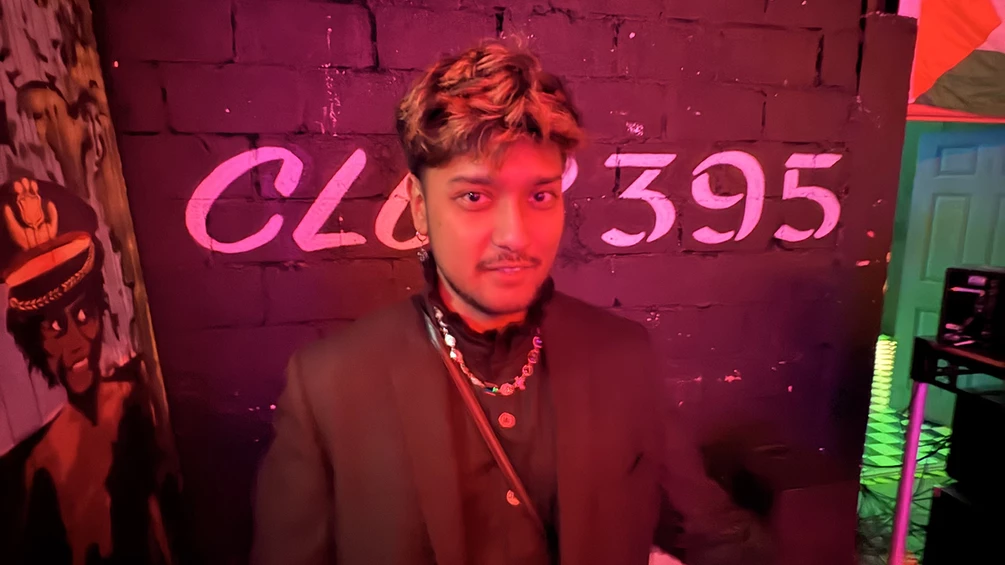
HangupsMusic.com – Bristol, The intersection of immigration policy and grassroots cultural preservation recently became a focal point for the UK music industry, centered on the precarious status of one of Bristol’s most influential creative producers. Ridwanul Kabir Shakib, known throughout the electronic and arts community as Ray, has successfully navigated a high-stakes legal battle to remain in the United Kingdom. While the victory ensures that Ray’s vision for the arts will continue, it comes at a bittersweet moment as Club395—the venue that served as the heartbeat of his efforts—has been forced to shutter its doors. This sequence of events has sparked a wider conversation about the fragility of independent music spaces and the vital role that immigrant creatives play in sustaining the British "cultural R&D" ecosystem.
The saga began in January when Ray’s application for a UK Global Talent Visa was initially rejected. The Global Talent Visa is designed for individuals who can demonstrate exceptional promise or leadership in specific fields, including the arts. Despite Ray’s extensive portfolio as a producer and his role in co-founding a venue recognized by the Music Venue Trust, the Home Office initially failed to see the merit in his continued residency. The rejection sent shockwaves through the Bristol underground, prompting an immediate and passionate mobilization of the local community. Organizations like Save Our Scene took the lead in advocating for Ray, and the campaign eventually reached the halls of Parliament, garnering the public endorsement of Bristol Green Party MP Carla Denya.
For Ray, the rejection was more than a bureaucratic hurdle; it was a deeply personal blow that triggered a period of intense self-doubt. In the wake of the news, he admitted to battling "imposter syndrome," questioning whether his contributions were truly valued by the country he had helped enrich. The emotional weight was compounded by the fact that the campaign for his visa became a lightning rod for online vitriol. When MP Carla Denya shared her support on social media, the post was met with a wave of anti-immigrant sentiment and racist commentary. Ray noted that the experience highlighted a distressing gap in cultural and historical knowledge, where immigration is often weaponized for political gain rather than being recognized as a foundational element of the UK’s creative strength.
The community’s response, however, eventually outweighed the negativity. Robin Collins, the founder of Lost Horizons and a key figure behind Glastonbury’s Shangri-La, observed that Bristol’s unique subcultural identity was the catalyst for the successful appeal. He described the city as an environment where integration is not just a policy but a lived reality, allowing the music scene to act as a unified front when one of its own is threatened. This solidarity proved effective. By February, the Home Office reversed its decision, granting Ray a five-year visa and acknowledging his status as a vital contributor to the nation’s cultural landscape.
While Ray’s personal future in the UK was secured, the physical home of his work, Club395, was facing its own existential crisis. The venue, a former film studio, had been transformed by Ray and his partner, the Bristolian rapper Kwazi, into a thriving hub for "queercentric" and diverse artistic expression. Over three years, the duo took a derelict unit and soundproofed it, renovated the interior, and turned it into a "third space" where emerging artists could experiment without the pressure of commercial viability. Club395 became synonymous with variety, hosting everything from hardcore techno and drum and bass to niche UK-Bengali fusion nights that bridged the gap between South Asian heritage and modern club culture.
The venue’s success as a cultural incubator, however, could not shield it from the harsh economic realities of the post-pandemic UK nightlife sector. Despite the renovations and the venue’s growing prestige, the landlord moved to increase the rent by 42%, bringing the monthly cost to £3,500 and demanding a £7,000 deposit. These financial demands were coupled with licensing frustrations. Although Ray and Kwazi had invested heavily in soundproofing to be good neighbors, the local authorities denied the venue a late-night license. This restriction severely limited the venue’s revenue potential, making it impossible to service the loans taken out for the initial building work or to meet the new, inflated rental costs.
The closure of Club395 is not an isolated incident but rather a symptom of a systemic crisis facing grassroots music venues across the United Kingdom. According to the Music Venue Trust’s 2025 annual report, more than half of the country’s independent venues failed to turn a profit last year. These spaces are often described as the "Research and Development" labs of the music industry—places where artists play their first sets, where genres are cross-pollinated, and where the next generation of festival headliners is forged. When these spaces close, the pipeline for talent is constricted, and the cultural diversity of the city is diminished. Ray pointed out that by transforming a "dark, empty unit" into a vibrant community center, they had provided jobs and fostered collectives that would otherwise have no place to go.
Despite the loss of the physical venue on February 28th, the spirit of the project is evolving into new forms. Kwazi is currently pivoting toward the digital and multimedia landscape with the launch of BeVibes TV. Supported by major industry players like Love Saves the Day and Silver Hayes, the project aims to provide a high-production platform for emerging artists to showcase their work to a global audience. Kwazi noted that while the loss of the physical space was difficult to process, the community and the vision they built at 395 remain intact. BeVibes TV has already begun hosting live jazz and hip-hop sessions at other Bristol institutions like the Gallimaufry, proving that the network established at the club can exist independently of a single address.
Ray is also continuing his mission through the Bristol Creative Co, a non-profit collective that grew out of the incubator environment of Club395. The collective has already been instrumental in launching the careers of artists like Nadi, who transitioned from playing Bengali-fusion nights at the club to performing at Glastonbury’s Silver Hayes. Ray’s work is also moving into the technological frontier with Co:AI, an initiative designed to help grassroots creatives understand and utilize artificial intelligence. By demystifying complex technology, Ray aims to ensure that independent artists are not left behind in the rapidly changing digital economy.
The story of Ray and Club395 serves as a powerful testament to the resilience of the immigrant experience in the British arts. Ray reflected that his journey proves it is possible to arrive in the UK with no existing networks and build a recognized cultural infrastructure within a few short years, provided there is a community willing to support the vision. He emphasized that the goal of Club395 was never merely to run a nightclub, but to unify creatives into a collective strong enough to survive the loss of a building.
As the UK continues to grapple with the economic pressures on nightlife and the complexities of immigration, the legacy of Club395 stands as a blueprint for "infrastructure without validation." It highlights the necessity of protecting the people who create culture, even when the spaces they inhabit are under threat. While the keys to the venue have been returned to the landlord, the "R&D ecosystem" Ray and Kwazi built continues to expand, moving into new venues, new media, and new technologies, ensuring that Bristol’s reputation as a sanctuary for subculture remains unchallenged.
