
 By Azzam Bilal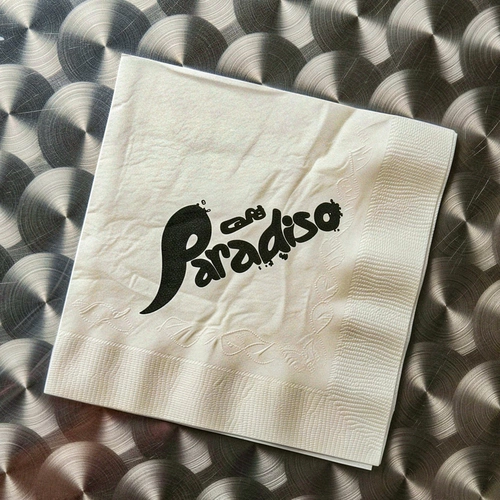
HangupsMusic.com – In the modern era of social media, where a single cryptic phrase can ignite a firestorm of speculation, few artists have managed to accidentally orchestrate a more dramatic moment of confusion than Mykki Blanco. Late last month, a post appeared on Blanco’s Instagram profile featuring the headline “Mykki Blanco has found paradise.” For a fleeting, panicked moment, the digital landscape interpreted this as a euphemism for a final departure, leading many to fear the worst for the pioneering rapper, writer, and performance artist. However, the "paradise" in question was not a celestial afterlife, but a creative one. It served as the grand announcement for his latest studio effort, Cafe Paradiso, an album that marks a significant stylistic pivot and a profound personal resurgence for an artist who has spent over a decade dismantling the boundaries of genre and identity.
Cafe Paradiso arrives at a pivotal moment in Blanco’s career. Since bursting onto the scene in the early 2010s, Blanco (born Michael Quattlebaum Jr.) has been a central figure in the transformation of hip-hop, often credited as a vanguard of the "queer rap" movement—a label he has both embraced and transcended. His journey has been one of radical transparency, from his early noise-rap experiments to his public disclosure of his HIV-positive status, which shifted his role from underground provocateur to a global symbol of resilience. Now, with this new collection of songs, Blanco appears to be stepping away from the heavy lifting of cultural advocacy to focus on something arguably more radical: joy, humor, and self-love.
The album is framed through the charmingly eccentric lens of a solo date. Blanco is essentially taking himself out on the town, and the listener is invited to observe from a nearby table. This conceptual framework allows the record to breathe in a way his previous, more abrasive works did not. Produced in close collaboration with the versatile electronic musician Drew Lustman (better known to many as FaltyDL), Cafe Paradiso is a kaleidoscopic journey through "sepia-tinted" arrangements. It is a record that feels vintage yet immediate, blending the dust of old Motown records with the crispness of modern lo-fi production.
The synergy between Blanco and Lustman is the heartbeat of the project. Lustman, who has long been celebrated for his ability to navigate the fringes of house, garage, and IDM, provides a foundation that is surprisingly organic. Together, they have crafted a sound that frequently pays homage to the experimental spirit of Outkast’s Speakerboxxx/The Love Below era. There is a specific kind of melodic fearlessness at play here—a willingness to lean into the "ridiculous" to find the "sublime."
One of the most striking elements of Cafe Paradiso is its unabashed sensuality. Blanco has never been one to shy away from provocative themes, but here, the "horniness" is filtered through a lens of playful wit rather than shock value. The track "FOXES" is a masterclass in this approach. Built upon a foundation of rolling acid jazz, the song is thick with dry innuendo and a sophisticated swagger. It captures the atmosphere of a dimly lit lounge where the air is heavy with unspoken intent. In contrast, "Spread 4 Me" takes a more direct and sun-drenched path. Utilizing the bright, reverb-heavy guitars of surf-rock, Blanco delivers lines like “make like butter and spread” with a jubilance that makes the inherent humor of the lyric land perfectly. It is a song that manages to be both a high-energy anthem and a cheeky wink to the audience.
This genre-fluidity continues throughout the album’s duration, often taking sharp, unexpected turns that keep the listener off-balance in the best possible way. "Easy Does It" functions as a clever pastiche of 1990s West Coast hip-hop. It leans into the tropes of the G-funk era—lazy basslines, synthesized whistles, and a certain laid-back bravado—but Blanco’s delivery ensures it never feels like a mere imitation. Instead, it plays like a genre caricature, a loving send-up of the sounds that shaped a generation of rap.
The album’s ability to pivot on a dime is perhaps best exemplified by the transition between "Little Feet" and "NYC DOGS." The former is a scuzzy, high-energy slice of Motown-inspired jive, full of grit and soul. Just as the listener settles into that particular groove, the album lurches into the fuzzed-out, lo-fi rock ‘n’ roll swing of "NYC DOGS." These "ridiculous left turns" are not signs of a lack of focus; rather, they are the very essence of the record’s liberating spirit. Blanco is refusing to be pinned down by a single aesthetic, choosing instead to inhabit whatever sonic space feels most authentic to the moment.
The "paradise" Blanco has found is clearly one of creative autonomy. In an industry that often demands marginalized artists remain in boxes of trauma or high-concept political struggle, Cafe Paradiso feels like an act of reclamation. It is an album about the pleasure of one’s own company and the freedom to be silly, sexy, and experimental all at once. The "renewed vigour" mentioned by critics is palpable in every verse. Blanco sounds more comfortable in his skin than ever before, using his voice not just as a tool for storytelling, but as an instrument of pure expression.
Furthermore, the album serves as a reminder of Blanco’s skill as a writer. Beyond the infectious beats and the genre-bending production, there is a sharp intelligence at work. His lyrics are peppered with cultural references and linguistic flourishes that reward multiple listens. Whether he is skewering hip-hop tropes or exploring the nuances of modern romance, his perspective remains uniquely his own—informed by his history as a poet and a performance artist.
The production by Lustman deserves further praise for its texture. There is a "lo-fi" quality to the record that avoids the cliches of the genre. Instead of sounding amateurish or overly muffled, the songs have a tactile, lived-in feel. It sounds like a record that has been played a thousand times on a slightly worn turntable, giving the music a sense of history and weight. This "sepia-tint" effect adds a layer of nostalgia to the proceedings, grounding the more experimental elements in a familiar warmth.
As the music industry continues to grapple with the pressures of streaming algorithms and the demand for constant "content," an album like Cafe Paradiso stands out as a defiant piece of art. It is not designed to fit neatly into a "chill study beats" playlist, nor is it trying to chase the latest viral trend. It is a cohesive, albeit chaotic, body of work that demands to be heard as a whole. It captures an artist in the midst of a second act—or perhaps a third or fourth—demonstrating that the most interesting place for a creator to be is exactly where they want to be.
Ultimately, Cafe Paradiso is an invitation to witness a metamorphosis. Mykki Blanco has shed the weight of expectation and emerged with a project that is breezy, playful, and deeply liberating. By "finding paradise," Blanco hasn’t reached an end point; he has found a new beginning. It is a record that celebrates the joy of the unexpected and the beauty of taking oneself out on a date, proving that sometimes, the most revolutionary thing an artist can do is simply have a good time. For the fans who feared they had lost a visionary, the reality is far more exciting: Mykki Blanco is more alive, and more creatively vibrant, than ever.
