
 By Azzam Bilal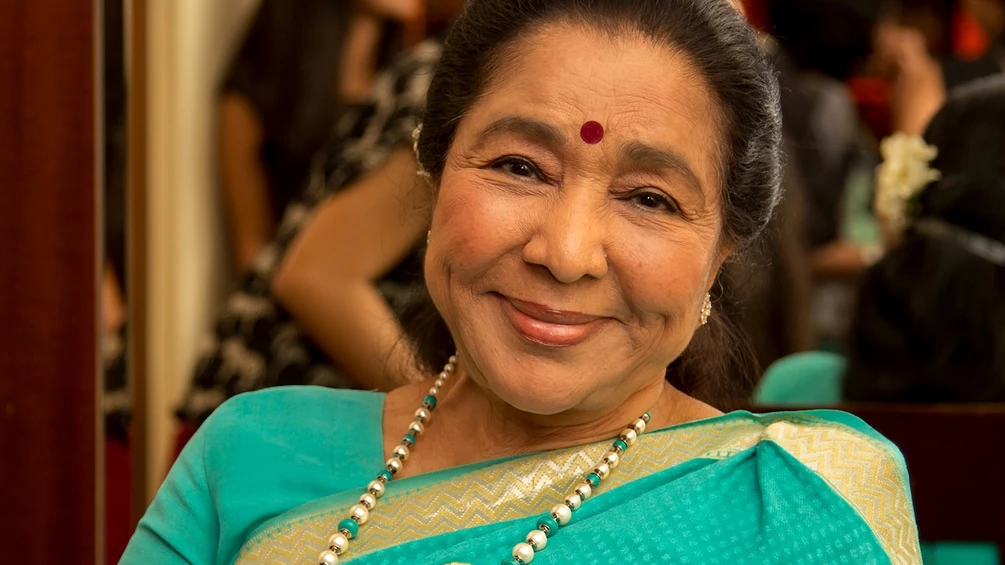
HangupsMusic.com – Mumbai, The global music community is in mourning following the announcement that Asha Bhosle, the legendary "Queen of Playback" whose voice defined the golden age of Indian cinema, has passed away at the age of 92. Her death marks the end of an extraordinary era for Bollywood and the international music scene, concluding a career that spanned more than eight decades and influenced generations of artists across the globe.
Bhosle passed away on Sunday, April 12, at a specialized medical facility in Mumbai. She had been admitted to the hospital earlier in the week suffering from acute exhaustion and a persistent chest infection. While medical teams worked to stabilize her condition, her son, Anand Bhosle, later confirmed to the press that his mother succumbed to multiple organ failure. The news triggered an immediate wave of grief across India and among the global diaspora, as fans realized that one of the last remaining titans of the Mangeshkar musical dynasty had taken her final bow.
In recognition of her unparalleled contribution to the nation’s cultural identity, the Indian government accorded Bhosle full state honors. On Monday, April 13, her residence in Mumbai became a site of pilgrimage for grieving fans, colleagues, and dignitaries who were invited by her family to pay their final respects. By Monday evening, a solemn ceremony was held at the historic Shivaji Park, where her last rites were performed amidst a sea of mourners and the formal salutes of a state funeral.
Born Ashalata Dinanath Mangeshkar in 1933 in the Maharashtra region, Bhosle was destined for a life of melody. She was born into a family where music was not just a profession but a way of existence. Her father, Deenanath Mangeshkar, was a renowned classical singer and theater actor. Following his early death, the responsibility of supporting the family fell upon the children, leading Asha and her elder sister, the late Lata Mangeshkar, to enter the film industry as playback singers. While Lata became known as the "Nightingale of India," specializing in soulful, ethereal melodies, Asha carved out a distinct niche for herself through her incredible versatility and a slightly more rebellious, experimental spirit.
The sheer scale of Bhosle’s professional output is staggering. With a career beginning in 1943, she is credited with recording more than 12,000 songs. Her discography serves as a map of Indian popular culture, evolving through the decades from the monochromatic elegance of the 1940s to the synthesized pop of the 21st century. She was the primary voice for the "vamp" or the "item girl" in early Bollywood—characters who were often more spirited and worldly than the traditional heroines—but she quickly proved that her range was limitless. From the haunting depths of Urdu ghazals and the spiritual devotion of bhajans to the rhythmic complexity of qawwalis and the poetic grace of Rabindra Sangeet, there was no genre she could not master.
Bhosle’s collaboration with the legendary music director R.D. Burman, who would later become her husband, transformed the sound of Indian cinema. Together, they infused Bollywood scores with elements of jazz, rock and roll, and Latin beats, creating timeless hits that remain staples of Indian celebrations today. Her ability to modulate her voice—sometimes sultry and low, other times high-pitched and playful—earned her the reputation of being a director’s singer, capable of bringing any character to life through sound alone.
While her impact on Indian soil was absolute, Bhosle was also one of the first Indian artists to achieve significant crossover success in the West. Long before the term "world music" became a marketing category, she was collaborating with international stars. In the late 1990s, she gained a new generation of British fans when the indie-rock band Cornershop released "Brimful of Asha," a tribute to her influence on the migrant experience and the joy of her music. The song’s remix by Fatboy Slim became an international chart-topper, cementing her status as a global icon. Over the years, her list of collaborators grew to include diverse names such as Boy George and Michael Stipe of R.E.M.
Even in her final years, Bhosle refused to remain a relic of the past. She continued to seek out contemporary sounds and fresh perspectives. Most recently, she surprised the music world by appearing on the Gorillaz album, The Mountain, released in February. Her contribution to the track "The Shadowy Light" saw her working alongside Gruff Rhys and the celebrated sarod players Amaan Ali Bangash and Ayaan Ali Bangash. The track was a haunting blend of traditional Indian instrumentation and modern avant-pop, proving that her voice remained as potent and adaptable at 92 as it had been in her youth.
Just a month prior to her passing, Bhosle shared a deeply philosophical reflection on her life and her final recording via social media. In a statement that now serves as a poignant epitaph, she described her journey as a crossing of a "deep river." She spoke of her music not merely as a career, but as the "boatman" guiding her through the complexities of her roles as a daughter, mother, and artist. She expressed a serene readiness for what she termed moksha—the ultimate liberation. She envisioned her transition from the physical world as becoming one with the "thousands of sounds floating all around us," eventually settling into a musical note that would be heard for generations to come.
Throughout her life, Bhosle was the recipient of numerous accolades, including two Grammy nominations and the Padma Vibhushan in 2008, India’s second-highest civilian honor. Despite the fame and the staggering statistics of her career, she remained grounded in her love for the craft. In a 2016 retrospective, she noted that while her life had been marked by moments of profound tragedy and intense hardship, music had always provided her with the necessary solace. She stated with characteristic resilience that if she were given the chance to live her life over again, she would choose the exact same path.
The vacuum left by her departure is felt across the political and cultural spectrum. Prime Minister Narendra Modi led the national tributes, describing her as a "versatile voice" that enriched India’s cultural heritage and touched hearts across every continent. Fellow musicians and actors have filled social media with stories of her kindness, her culinary skills—she was a renowned chef who opened a chain of successful restaurants—and her legendary sense of humor.
Asha Bhosle’s legacy is not merely found in the Guinness World Records or the trophy cabinets, but in the ambient noise of daily life in India and beyond. Her voice plays in the taxis of Mumbai, the wedding halls of Delhi, and the clubs of London. She was an artist who broke the barriers of language and geography, proving that a beautiful tune is a universal language. As she joins the "thousands of sounds" she spoke of, her recordings ensure that the "Queen of Playback" will never truly be silent. The river has been crossed, the journey is complete, and the music remains eternal.
