
 By admin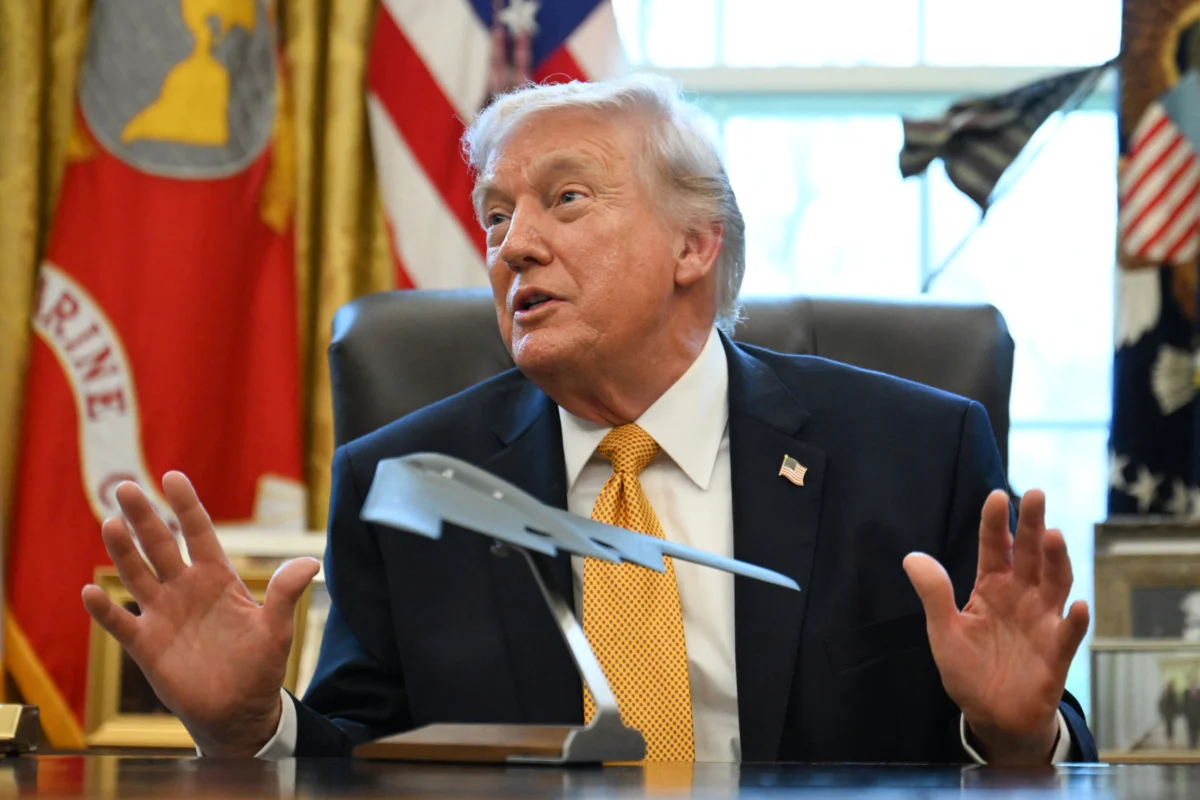
HangupsMusic.com – In a striking demonstration of what critics are calling a profound policy contradiction, President Donald Trump has recently intensified his rhetoric and actions against financial malfeasance, simultaneously as reports emerge detailing his extensive use of presidential clemency for individuals convicted of fraud, many with direct ties to his political campaigns and personal network. This dual approach has ignited a fierce debate about the integrity of the justice system, the exercise of executive power, and the perceived double standards at the highest levels of government.
On Monday, from the resonant setting of the Oval Office, President Trump formally unveiled an executive order establishing a new "Task Force to Eliminate Fraud." This initiative, which the President has declared a "very big thing," is set to be spearheaded by Vice President J.D. Vance, whom Trump has informally christened his "Fraud Czar." The President underscored the pervasive nature of fraud, citing, "all of the fraud that’s taking place in our country," and specifically highlighted an ongoing situation in Minnesota, claiming a staggering "$19 billion dollars" in illicit gains. This figure, however, has been disputed by federal prosecutors investigating the case, who estimate the actual sum stolen from Medicaid-funded programs since 2018 to be closer to $9 billion, while still acknowledging the immense scale of the financial crime.
The announcement on Monday followed earlier declarations by President Trump, notably during his State of the Union address, where he vowed to launch a comprehensive "War on Fraud." During that address, he articulated an ambitious vision, suggesting that "If we’re able to find enough fraud, we’ll actually have a balanced budget overnight." Such statements paint a picture of an administration singularly focused on rooting out financial deception and safeguarding taxpayer dollars, projecting an image of unwavering commitment to fiscal accountability and the punitive pursuit of those who defraud public systems.
Yet, this staunch public stance on fraud prevention appears to stand in stark contrast to the President’s actions regarding executive clemency. According to a recent investigation by The New York Times, President Trump has, across his two terms in office, granted pardons or commutations to over 70 individuals convicted of various fraud-related offenses. A significant number of these beneficiaries, the report meticulously details, are individuals who have either made substantial financial contributions to his political campaigns or are closely allied with him and his political apparatus. This pattern of clemency raises critical questions about the criteria for such presidential acts and whether personal connections might be overshadowing the traditional considerations of justice, rehabilitation, or public good.
The rate at which these pardons and commutations have been issued has accelerated considerably during his second term. Nearly half of the total clemency grants related to fraud convictions have occurred since President Trump recommenced his tenure last January, indicating a heightened pace in the exercise of this potent executive power. This acceleration further fuels the discussion about the timing and motivations behind these decisions, particularly as the administration simultaneously champions an aggressive anti-fraud agenda.
Several high-profile examples cited in The New York Times report illustrate the apparent nexus between financial support for the President and the receipt of clemency. Among them is Trevor Milton, the founder of the electric vehicle startup Nikola, who was pardoned after he and his spouse contributed $1.8 million to the Trump campaign. Similarly, Julio Herrera Velutini, another individual granted clemency, saw his daughter provide a substantial $3.5 million to MAGA Inc., a political action committee supporting the President. These instances, among others, draw a direct line between significant political donations and presidential mercy, leading to accusations that clemency has become a transactional commodity rather than a judicious application of executive discretion.
The financial implications of these pardons are substantial. The Times investigation reveals that those granted clemency by President Trump collectively owed an astounding $700 million in restitution and fines. These funds, intended to compensate victims and the public purse for losses incurred through criminal activity, have effectively been waived or rendered uncollectible through the presidential act of forgiveness. This figure underscores the tangible cost to taxpayers and victims when such large-scale financial crimes are ultimately absolved.
The roster of individuals receiving clemency includes prominent figures convicted in some of the nation’s largest taxpayer fraud cases, particularly within the healthcare sector. Philip Esformes, for instance, the former owner of a chain of South Florida nursing and assisted-living facilities, was originally sentenced to two decades in prison. His crime involved orchestrating a colossal $1.3 billion scheme to defraud Medicare and Medicaid, a case prosecutors famously dubbed "the largest-ever criminal health care fraud case brought against individuals." Another beneficiary of clemency was Salomon Melgen, a Palm Beach County physician, who had been handed a 17-year prison sentence after being found guilty of defrauding Medicare of over $42 million. Lawrence Duran, who owned a Florida mental health care company, also received clemency after pleading guilty to charges stemming from a $205 million Medicare fraud scheme. These cases represent not just abstract financial figures but direct theft from public health programs vital to millions of Americans, making their pardons particularly contentious.
The congressional response to these clemency actions has been sharp and critical. Last year, Democrats on the House Judiciary Committee conducted an analysis of the financial impact of the President’s pardon spree, which included both white-collar criminals and individuals involved in the January 6th Capitol riot. Their comprehensive report estimated that the U.S. government suffered a loss of $1.3 billion in owed restitution and fines due to President Trump’s clemency actions. This figure highlights the systemic cost of presidential pardons when applied to individuals with significant outstanding financial obligations to the state and its citizens.
Representative Jamie Raskin (D-Md.), a prominent member of the Judiciary Committee, did not mince words in a statement released at the time of the report’s publication. He asserted, "The Trump presidency is overseeing a massive transfer of wealth not only from the poor to the rich but from the innocent to the guilty." Raskin’s strong critique suggests a fundamental perversion of justice and economic equity under the current administration. He further characterized Trump’s "pardon spree" as "an astonishing giveaway to lawbreakers to keep the money they stole from their employees, their investors, and all the American taxpayers." The Maryland congressman concluded with a pointed observation: "Whoever said crime doesn’t pay has certainly not studied the Trump Administration."
These remarks encapsulate the profound concern among critics that the President’s clemency powers are being wielded in a manner that undermines the rule of law, incentivizes political patronage, and erodes public confidence in the impartiality of justice. The juxtaposition of a declared "War on Fraud" with the extensive pardoning of convicted fraudsters, many linked to political donations, creates a deeply complex and ethically charged narrative that continues to unfold on the national stage, inviting scrutiny and intense debate over the true meaning of accountability in American governance.
