
 By admin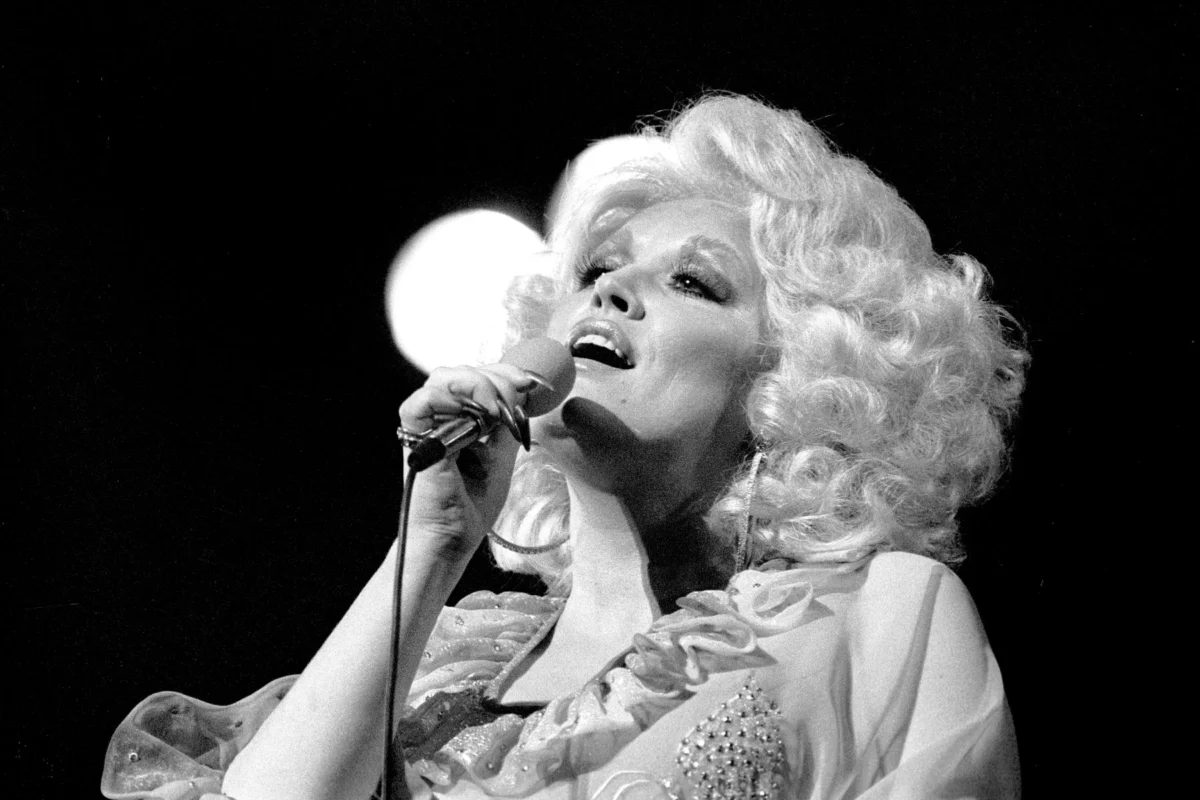
HangupsMusic.com – The world paused last week as news rippled through global communities of Dolly Parton’s passing at the age of 80. From the quiet of a home office, the digital world buzzed with tributes, and a mother’s text, "Work must be so busy. She was so young," encapsulated the profound sense of loss and disbelief. Parton, even at eighty, remained a force of nature, a relentless innovator, and a beacon of ambition, a spirit profoundly admired by many, including the author’s own mother. Their shared reverence for Parton often led to phone calls, reminiscing about the iconic artist’s extraordinary life. When asked what resonated most deeply, the reply was unwavering: "Her openness, her no-nonsense approach to life, and her humor." These qualities, so intrinsic to Parton, mirrored the very essence of the women who shaped the author’s world.
Born in the humble confines of a one-bedroom cabin nestled deep within the Great Smoky Mountains, Dolly Parton was the fourth of twelve children. Her early life, marked by modesty and sheer determination, bore striking resemblances to the upbringing of the author’s mother, who herself grew up in a similarly modest home, albeit one teeming with a dozen siblings on the scenic shores of the Philippines’ Bataan Peninsula. Their paths, though geographically disparate, converged in a shared ambition upon arriving in new, challenging landscapes. At the tender age of eighteen, Parton, armed with little more than "dreams, my old guitar, [and] the songs I had written," as she chronicled in her 1994 autobiography, boarded a Greyhound bus bound for Nashville. Simultaneously, the author’s mother embarked on her own transformative journey, arriving in America with a vision for a new life. Both women, in their respective fields, fought fiercely to carve out their own space and demand recognition. Parton, through sheer talent and tenacity, ascended to become the most successful female country artist of all time, while the author’s mother, with unwavering resolve, established herself as a doctor, building a thriving medical practice in California’s Central Valley.
Parton’s journey was a masterclass in embracing one’s authentic self and unapologetically asserting one’s worth. Her towering bleached-blond hair, distinctive long acrylic nails, and vibrant red lips became an unmistakable signature, a visual declaration of her unique identity in an industry often eager to mold its stars. For six decades, she navigated the complex currents of the entertainment world entirely on her own terms, an unwavering force in her pursuit of the American dream. This fierce independence was perhaps best exemplified in her pivotal decision to depart from the wildly popular Porter Wagoner Show. Rather than a contentious breakup, she penned a song, "I Will Always Love You," a poignant and respectful farewell that soared to the top of the country charts in 1974. Yet, her business acumen was soon tested when Elvis Presley expressed interest in recording the song. His formidable manager, Colonel Tom Parker, demanded half of the publishing rights, a condition Parton famously, and bravely, refused. That decision, born of principle and foresight, proved monumental, as Whitney Houston’s iconic rendition for the 1992 film The Bodyguard would later generate millions in royalties for Parton, cementing her legacy not just as a singer, but as a shrewd and principled businesswoman.
This same indomitable spirit resonated deeply within the author’s mother, an immigrant woman forging her path in the United States. She too made courageous sacrifices, packing up her modest clinic in her hometown village in the Eighties, eventually finding herself in Chicago, diligently preparing for medical exams before embarking on her residency at Cook County Hospital. During this demanding period, while pregnant with the author, she tirelessly sold makeup and lugged heavy encyclopedias door-to-door to supplement her income and manage household bills. Later, when the family relocated to California and she and her husband had painstakingly saved enough to rent a clinic, they faced an unexpected hurdle. The landlord, judging them by their beat-up Toyota, denied their application. Undeterred, and much like Dolly, she refused to let external judgments define her path. Within two weeks, they had secured and purchased the clinic directly across the street, a testament to her unyielding determination.
The anthemic "9 to 5" became a soundtrack to the author’s youth, played on repeat during high school runs through suburban streets, its lyrics sung with the unburdened gusto of someone yet to enter the workforce. However, the true weight and resonance of the song shifted dramatically after college, with the author’s first professional experiences. It was then that the stark realities of the workplace, particularly for women and especially women of color, became acutely clear. Ideas dismissed, contributions appropriated, trivialization, unwanted advances – the insidious ways in which women were often relegated to second-class status, forced to exert monumentally more effort than their male counterparts. Dolly’s "9 to 5" was not just a catchy tune; it was a searingly accurate depiction of the systemic inequities that persist, a rallying cry for fairness and respect. Yet, in the spirit of her mother and Dolly herself, this wasn’t a narrative that defined or limited her.
Empathy, a profound wellspring in Parton’s songwriting, flowed through her lyrics, touching on themes of vulnerability, injustice, and the human condition. From the tragic narrative of "Down From Dover," which bravely recounts the story of an abandoned woman delivering a stillborn child, to the searing indictment of sexist double standards in "Just Because I’m a Woman," Parton consistently lent her voice to the marginalized and misunderstood. This empathetic lens extended powerfully to her 1980 album, 9 to 5 and Odd Jobs, a heartfelt tribute to working-class America. While Parton often maintained a politically neutral public stance, her music articulated a powerful social commentary. The LP unflinchingly explored the cruel realities faced by coal miners in "Dark as a Dungeon" and the alienation of autoworkers in "Detroit City." Perhaps most notably, she included a cover of Woody Guthrie’s devastating "Deportee (Plane Wreck at Los Gatos)."
Guthrie’s poignant song, penned in 1948, was a direct response to a tragic plane crash in Fresno, California, that claimed the lives of 32 people. Among the deceased were 28 Mexican farmworkers, some documented, others undocumented, who had been routinely dehumanized and simply referred to as "deportees" in media reports, while the four white victims on board were individually named. Guthrie’s scathing protest aimed to restore dignity to the nameless, and his song has since been covered by numerous artists, from Joni Mitchell to the country supergroup The Highwaymen. However, Parton’s decision to include "Deportee" within an album dedicated to American laborers was a particularly profound act of solidarity. It symbolically united the often-separated narratives of U.S.-born working-class individuals and immigrant laborers, bridging a divide that political and media narratives have historically exploited. This recognition of Mexican immigrants, acknowledging their invaluable contributions and inherent worth, resonated with the songs her own mother, Avie Lee, sang to her children, tales of European immigrants who similarly sought new lives in Southern Appalachia. (It is worth noting that the 28 farmworkers would finally be honored with a memorial 65 years after the tragedy).
When the author listens to "Deportee" and "9 to 5," a deep connection forms, linking Dolly Parton’s lifelong dedication to uniting people through shared struggles, joys, and humanity, to her own family’s story. She envisions her mother, seated on a plane bound for America, a suitcase her sole companion, leaving behind all that was familiar to bravely embark on a new beginning. She reflects on her grandmothers, who watched their daughters navigate a country that often diminished their worth, yet witnessed them rise with unwavering resilience each time they were challenged. And she sees her sister, and herself, daughters of immigrants, raised with boundless love and pride by women who crossed an ocean so that they, like Dolly, could dare to dream, too. Parton’s legacy is not just one of glittering awards and chart-topping hits; it is a profound testament to the power of perseverance, empathy, and the universal human spirit, inspiring generations to find their voice and claim their seat at the table.
