
 By admin
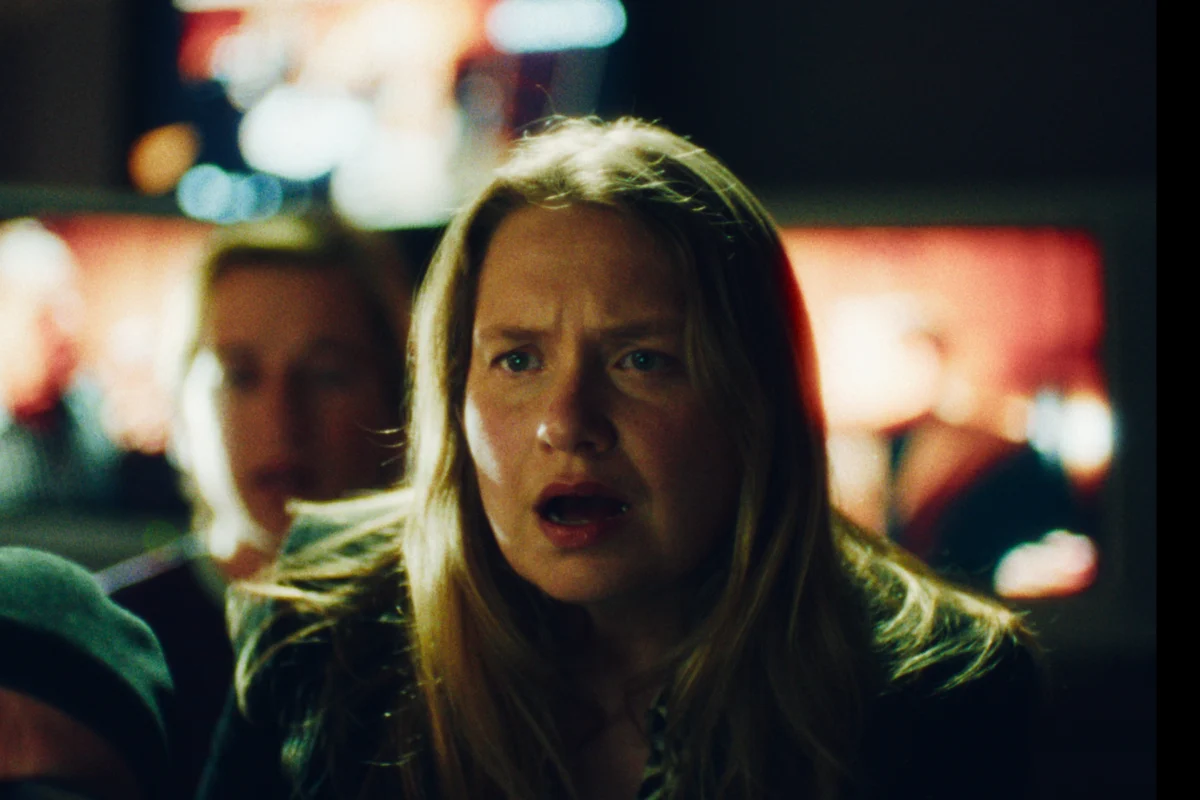
HangupsMusic.com – Merritt Wever has long been revered as one of Hollywood’s most consistently compelling performers, a master of subtle nuance who elevates every project she touches. From her comedic timing on New Girl to her deeply empathetic portrayal of a nascent nurse on Nurse Jackie, which famously earned her the first of three Primetime Emmys and a delightfully bewildered acceptance speech that instantly went viral, Wever has proven her formidable range. Her steely resolve in the Western miniseries Godless and her tenacious detective work in the harrowing sexual assault drama Unbelievable further cemented her reputation for both physical comedy and profound emotional depth. Now, in Lance Oppenheim’s provocative directorial debut, Primetime, Wever plunges into a moral quagmire, embodying a character that left an indelible, unsettling mark.
Primetime is not merely a dramatization of the infamous reality show To Catch a Predator; it is a meticulously crafted, stylized pressure-cooker that dissects the dark underbelly of tabloid television. Oppenheim’s vision, while rooted in a true story, blurs the lines between satire, horror, farce, and genuine pathos, creating a uniquely "warped" world as Wever describes it. The film pulls back the curtain on the behind-the-scenes theatrics, exposing the cutthroat ambitions and ethical compromises inherent in producing such controversial content.
At the heart of this media maelstrom is Wever’s character, Andie Bender, a Dateline NBC producer driven by an insatiable hunger for ratings. Andie is a composite figure, an amalgamation of the real-life producers who collaborated with Chris Hansen during the show’s peak. She is depicted as relentlessly assured, wielding her authority with a constant, almost aggressive, smack of chewing gum. Andie is a woman who manipulates not only her crew and the naive young actor (played with captivating vulnerability by Skyler Gisondo) hired as "bait," but also her host, Chris Hansen, portrayed by a chameleon-like Robert Pattinson. While Hansen may be the public face, Andie is the unseen architect, pulling every string with calculated precision. This portrayal stands in stark contrast to Wever’s own feelings about her performance, which she admits left her profoundly uncertain.
"More than anything else I’ve been involved in, I walked away from [Primetime] knowing I wasn’t going to know what we made, and even to a certain extent what version of the character was going to end up in the film, until I saw the cut," Wever candidly reveals. She confesses a rare need for external validation on this project: "More than ever before, I need other people to be the mirror for this film, given all of the ways in which the content of the film is so warped and manipulated." This admission speaks volumes about the challenging nature of the material and the character, suggesting a performance so immersive and complex that even the actor herself found it difficult to objectively assess.
Despite Wever’s self-professed hesitancy, her colleagues offer nothing but effusive praise. Robert Pattinson, her scene partner for much of the film, lauds her unique talent. "Merritt brings such singular coherence to her character yet from take to take she always conjures a mystery that you can never quite pin down but always draws you closer," Pattinson shares via email. He emphasizes her meticulous preparation: "She’s so prepared and has so much character detail at her fingertips that you can really go anywhere in a scene with her and it’s always totally authentic." This sentiment underscores Wever’s ability to imbue even the most morally ambiguous characters with an undeniable, if unsettling, humanity.
Wever has enjoyed witnessing audience reactions at recent film festivals, including Venice, Toronto, and an intimate New York screening. She observes a shared understanding, noting that viewers seem to speak "the same cultural language" as the film. Yet, she remains characteristically guarded about dissecting her own performance or process. Her approach to acting is instinctual, eschewing intellectualized analysis for visceral connection. "There are some actors who are very good at thinking about the outside in, like [about] the gaze of the audience. But I’ve found that when I think about things that way, I get less and less in touch with my guts," she explains. For Wever, the purity of the performance comes from within, untainted by external perception: "That’s not my job. That’s yours."
Prior to Primetime, To Catch a Predator was already a part of Wever’s "cultural landscape." Having watched the original show, she remembers being astonished by what was being filmed and broadcast. "I remember I just couldn’t believe what I was seeing filmed," she recalls, pondering how younger generations, accustomed to ubiquitous internet access and smartphone cameras, might perceive its sensationalism. The show existed in a nascent era of reality television, a time when the boundaries of media ethics were still being aggressively tested.
Wever’s decision to embrace the role of Andie Bender was a deliberate artistic pivot. After a string of characters defined by their inherent goodness and compassion, she felt creatively depleted. "I’d been playing a lot of good hearts and good people and I’d worn myself out on them. I needed those parts of my heart to come back," she explains. The allure of Andie lay in her moral ambiguity, offering a chance for "regeneration." "I was scraping the bottom of the barrel and I was like, ‘Oh, you’ve got to put those roles down for a while.’ That was the draw. I needed to regenerate."
The character of Andie, a composite of multiple real producers, was conceived with "something a little rotten in her," a core quality that remained consistent through numerous script iterations. Wever and Oppenheim frequently discussed the "parable of the two wolves" in relation to Andie, highlighting her constant choice between improving her moral standing or "doubling down" on her darker impulses. Wever’s preparation was extensive, involving deep dives into literature like a 60 Minutes producer’s memoir and conversations with two veteran television producers. These discussions illuminated the intricate, often muddled dynamics between producers and on-air talent, revealing how a producer might assume roles ranging from logistician to manipulator, friend, therapist, or even "pharmacist" to wrangle their hosts.
This role marks a stark departure from her acclaimed performance as Detective Karen Duvall in Unbelievable, a character dedicated to seeking justice and protecting victims. "Yes! They’re complete opposites!" Wever exclaims. In Primetime, the traditional crusader for justice is conspicuously absent. Instead, the film zeroes in on the profound impact of the events on Skyler Gisondo’s character, whom Wever identifies as the true "final victim." Wever’s trust in the film’s message was contingent on its underlying compassion, referencing an Esquire article she read before signing on. She hopes the film sheds light on the "cycle of harm" that often plagues those who commit such offenses, acknowledging that many perpetrators were themselves victims of abuse.
The emotional toll of inhabiting such complex, morally compromised characters has become more pronounced for Wever with age. "As you get older, everything seems to wear on you a little more than it used to," she observes. While not necessarily taking the emotions home, the character can become a persistent presence, "like having the character on a spin bike in my brain." Andie, with her lack of "catharsis" or "reckoning," left a particularly bitter taste. Following a similar experience playing Sydney Sweeney’s mother in Christy, Wever describes it as a "one-two punch of playing people that tasted badly. I didn’t know how to spit it out." Moving forward, she plans to be more mindful of "how to get those kinds of flavors out of my body."
The on-set dynamic with Robert Pattinson, a renowned actor drawn to "extreme" and uniquely voiced characters, presented an intriguing contrast. Wever acknowledges their differences, hoping audiences will accept their co-existence within the film’s reality. Lance Oppenheim’s directorial style, influenced by his documentary background, further shaped the production environment. His preference for loose blocking and multiple cameras to mimic the chaos of reality television production sometimes created a tension with Wever’s more focused approach. "The things that make Lance get free on set and the things that help me get free were, at times, diametrically opposed," she notes. The constantly evolving script also contributed to a sense of "catching up," a feeling that serendipitously mirrored Andie’s own character arc of gradually being sidelined from the show she once controlled.
Chris Hansen, the real-life host of To Catch a Predator, has publicly denounced Primetime as "predatory" towards his work and life. Wever, while acknowledging she doesn’t know if Hansen has seen the film, offers a nuanced perspective. Given Oppenheim’s documentary roots and his exploration of the interplay between "supposed fact and supposed fiction," Wever muses that Hansen’s comments might inadvertently "end up feeding the conversation opposed to diminishing it." She also empathizes with the discomfort of having a chapter of one’s life dramatized, a fate she hopes to avoid.
The film’s exploration of spectacle and punishment resonates deeply with contemporary society. Wever observes a pervasive "mainstream headline culture" where individuals are "raked over the coals" online, reminiscent of the "whipping posts" of old. She laments the lack of nuanced conversations around crime and punishment, noting the extreme polarity and the fear of being denounced that often stifles genuine discourse. "I wish that we were able to have more honest conversations about the content of these things. But that’s not the way the internet works," she states, highlighting the simplistic, often brutal, nature of online justice.
One of Andie’s most chilling lines occurs at the film’s climax, after a tragedy unfolds on camera, yet she coldly asserts, "I think I can make this work." Wever admits she never anticipated the visceral, audible audience response to this line. It underscored a final, unexpected beat for Andie, a moment of "acidic shock" that solidified her unwavering, almost pathological, commitment to the show’s success above all else. The audience’s reaction, a mix of disappointment and strickenness, revealed a lingering hope that Andie might yet find a shred of sanity amidst the chaos.
Beyond the complexities of her current role, Wever maintains a charming nostalgia for older technologies. She still uses a day planner, preferring to jot down appointments by hand rather than on her phone. Longhand writing is her preferred method for creative expression, believing it fosters a "more pure and clear and potent" connection between her brain and the page. She also insists on reading physical books, comparing reading on a screen to "eating a meal that somebody else has already chewed by 30 percent." Echoing her mother’s sentiment that "books are like friends; you don’t just throw them away," Wever values the tangible presence of literature in her home.
Finally, her iconic, stunned 2013 Emmy acceptance speech for Nurse Jackie remains a cherished moment of unfiltered authenticity. "What was going through my head was exactly what came out of my mouth," she confirms. The unexpected win, occurring early in the ceremony, left no room for practiced composure. "Because that wasn’t an option, what I was feeling and what came out of my mouth were directly connected and in sync. That was not planned." Wever expresses profound gratitude that such a raw, honest moment was met with affection, considering it a true gift. It is this very honesty, whether in a spontaneous speech or in her fearless embrace of morally challenging roles, that continues to define Merritt Wever’s remarkable and enduring appeal.
