
 By Azzam Bilal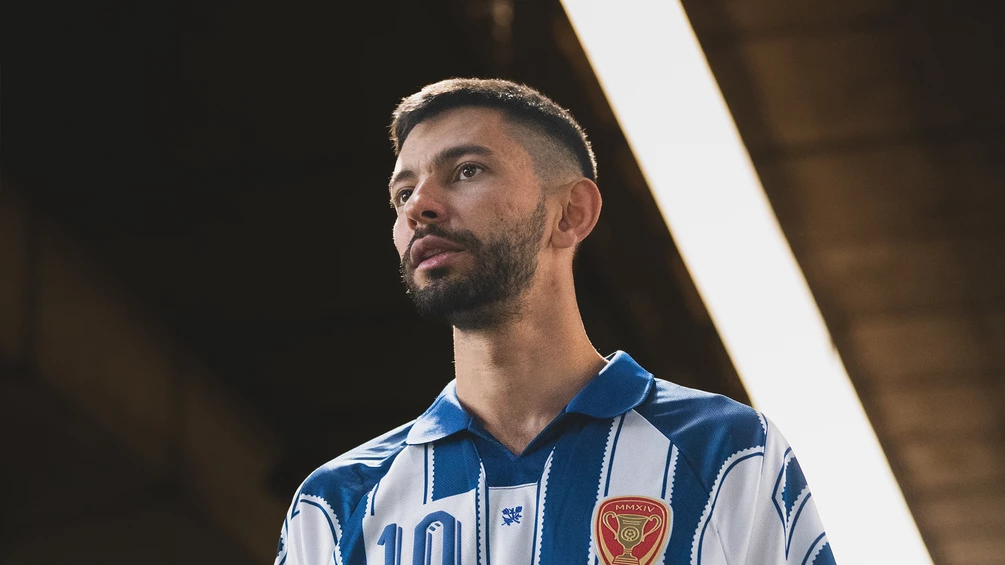
HangupsMusic.com – London, Atop the grassy vantage point of Primrose Hill, the skyline of London stretches out in a haze of grey and glass. It is a moment of uncharacteristic stillness for Alex Hamdi, the Oxford-born producer who has spent the better part of the last three years in a state of perpetual motion. Known to the world simply as Hamdi, the 28-year-old artist has become the face of a new, revitalized era of dubstep and bass music—one that bridges the gap between the gritty basements of the United Kingdom and the pyrotechnic-laden main stages of American festivals. As he looks toward the future, Hamdi is not just planning his next tour; he is architecting a career designed for longevity in an industry often defined by fleeting viral moments.
The ascent has been nothing short of meteoric. In a relatively short window, Hamdi has checked off milestones that most veteran DJs only dream of: a landmark debut at Coachella, a headline-grabbing performance at Red Rocks Amphitheatre, and a support slot for Fred again.. at the cavernous Alexandra Palace. Last year, he completed his largest North American tour to date and established a residency at a premier Chicago superclub. Yet, despite the dizzying heights of the "US mega-scene," Hamdi remains remarkably tethered to his roots. He is an artist who prizes the sweaty, intimate energy of a 300-capacity club just as much as the roar of a 20,000-strong festival crowd. This duality—the ability to navigate the underground and the mainstream simultaneously—is the secret sauce behind his burgeoning empire.
Central to Hamdi’s current philosophy is his "Anywhere & Everywhere" tour concept. Born from an idea he conceived in 2018, the tour challenges the traditional constraints of a DJ set. The premise is simple but demanding: the genre must switch with every single track. For Hamdi, this isn’t just a gimmick; it’s a reflection of his identity as a producer. While the world largely recognizes him as a dubstep heavyweight, his creative output spans bassline, grime, garage, and more maximalist electronic sounds. By choosing to launch this concept in smaller, intimate venues, Hamdi made a deliberate statement. Even as he sells out massive spaces like Brooklyn’s Knockdown Center, he continues to advocate for the small-cap vibe where the barrier between the booth and the dancefloor is non-existent.
This preference for intimacy is rooted in a desire for genuine connection. Hamdi admits that his self-confidence isn’t always as high as his stage presence might suggest. In a dark, massive arena where the front row is fifty feet away, he often feels disconnected. In a small club, however, he can see the sweat on people’s faces and feel the immediate reaction to every drop. This "feedback loop" is essential to his performance. It is why, even during his larger "Hamdi FC" tours, he often requests that the decks be placed off-stage or in the middle of the room to recreate that enclosed, communal feeling of a basement rave.
To understand Hamdi’s trajectory, one must look back to the mid-2010s in Oxford. His first foray into the nightlife scene took place at Cellar, a legendary, now-shuttered basement venue that served as his proving ground. Long before he owned professional equipment, Hamdi was honing his craft on a basic controller gifted by his mother for his 18th birthday. His musical education, however, began even earlier. At age nine, he was captivated by the raw energy of UK grime, specifically Dizzee Rascal’s "Showtime" and Chipmunk’s "League Of My Own." By 12, an unlikely mentor—his tennis coach—introduced him to the music of Document One, an Oxford production duo. This sparked a fascination with dubstep that led a young Hamdi to burn CDs of his early, "terrible" demos and hand them to his idols, who graciously offered feedback and eventually took him to his first 14-plus shows.
The digital landscape of the late 2010s also played a pivotal role in his development. Hamdi was a staple of "Lengoland," a Facebook community that became a vital incubator for UK bass talent. Alongside now-famous peers like Skepsis and Sammy Virji, Hamdi used the group to test tracks. If a clip of a tune "popped" on Lengoland, he would release it as a free download on SoundCloud the next day to capitalize on the momentum. This grassroots strategy built a loyal following and led to early successes, such as his collaboration with Virji, "Show Me," which garnered hundreds of thousands of plays.
Despite the early traction, the road wasn’t always smooth. After graduating from university in Brighton in 2020, Hamdi found himself back in his childhood bedroom as the world went into lockdown. The period between 2018 and 2021 was a time of soul-searching; the steady rise he had experienced seemed to plateau, and he questioned whether he wanted to continue releasing music at all. That uncertainty vanished in December 2021 with the release of "Skanka." Originally a modest Bandcamp upload, the track’s stripped-back, infectious energy became a viral phenomenon. It bypassed the usual UK channels and exploded in the United States, championed first by underground artists like Ternion Sound and eventually by stadium-fillers like Subtronics and Of The Trees.
The "Skanka" effect eventually reached the ears of Hamdi’s ultimate idol: Skrillex. In late 2022, the two connected after Skrillex began playing the track in his sets. What followed is a story that has already become lore in the bass music community. Skrillex, seeking a quiet place to work while in the UK, took a train to Oxford. Hamdi picked him up from the station, walked him through his hometown, and brought him back to his childhood bedroom. There, the two spent the day jamming on laptops and sharing a takeaway meal with Hamdi’s mother. This meeting wasn’t just a career milestone; it was a masterclass in humility for Hamdi, who marveled at how one of the most successful artists in the world remained so grounded. Their collaboration eventually produced "Push," a track that debuted before 100,000 people at Coachella before its official release.
Hamdi’s ability to move between worlds is perhaps his greatest strength. While he collaborates with mainstream giants like Marshmello on melodic, catchy anthems like "Fired Up," he simultaneously releases EPs on Mala’s DEEP MEDi MUSIK, the gold standard for "heads-only" dubstep. This versatility allows him to bridge the gap between the "brostep" sounds often favored in the US and the deep, foundational dubstep of the UK. He doesn’t seek to gatekeep or claim a single genre; instead, he pulls from a vast palette that includes everything from reggaeton and grime to Euro-synth and jungle.
As his brand grows—complete with his "Hamdi FC" merchandise line inspired by his love of vintage football shirts—Hamdi remains disciplined. In an industry often synonymous with excess, he is a teetotaler who avoids the "afters" circuit in favor of "touring sanity." His rider consists of smoothies and bananas, and he admits to being nervous before every show until the moment he touches the decks. He even employs a "30% rule" for his stage presence: he aims to be exactly 30% more energetic than the crowd to lead them, but never so much that he loses the connection.
Looking ahead to the next 18 months, Hamdi is focused on "setting the tone" for the next five years of his career. He is no longer just a bedroom producer with a viral hit; he is the CEO of a global brand with a team of people depending on his success. Yet, the core of his mission remains unchanged. Whether he is playing for ten people or ten thousand, Hamdi is driven by the same fearless curiosity that led him to burn those first CDs in Oxford. He is an artist who has reached for the stars but has made a conscious, daily effort to keep his feet firmly on the ground. For Hamdi, the goal isn’t just to stay at the top; it’s to enjoy the journey and ensure that the music—pure, unadulterated, and maximalist—remains the beating heart of everything he does.
