
 By admin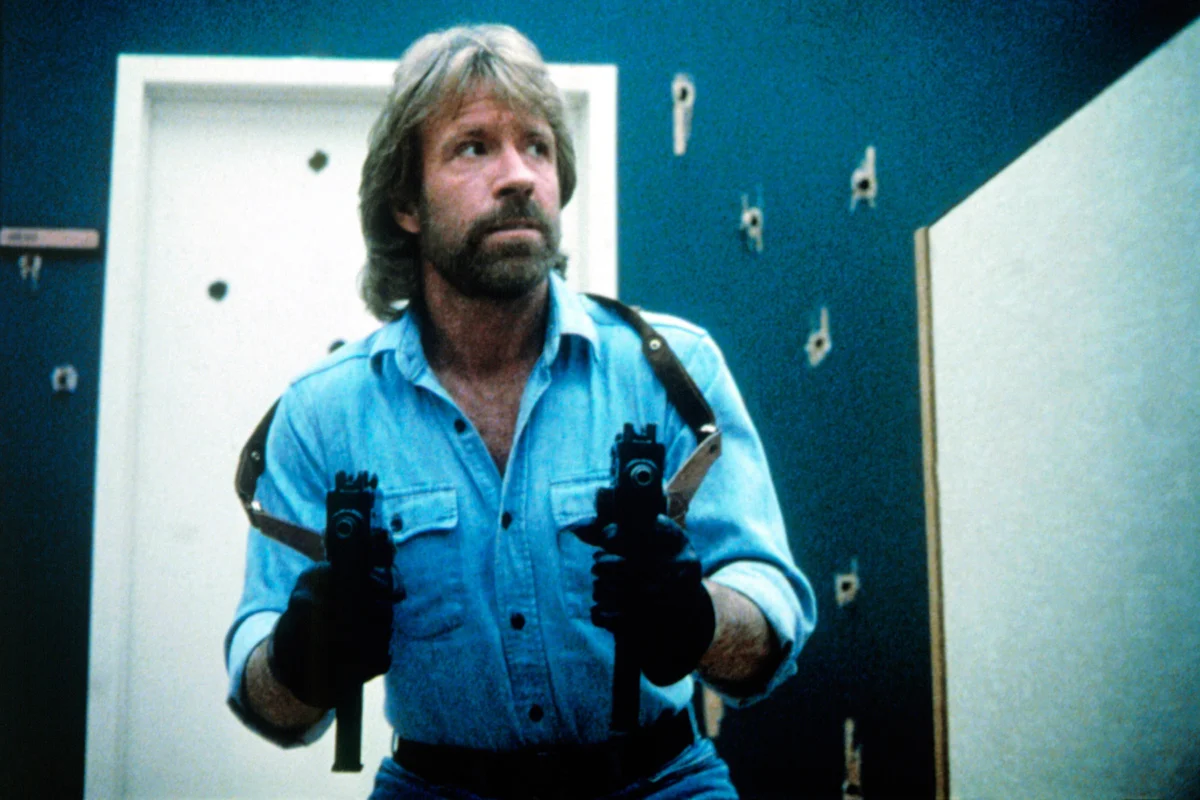
HangupsMusic.com – The recent news of Chuck Norris’s passing at 86 reverberated through the cultural landscape, prompting a wave of reflection on a career that spanned nearly five decades. For many, the martial-arts legend and action-movie icon was more than just a star; he was a cultural touchstone whose image evolved dramatically from a stoic symbol of disciplined masculinity to an internet-fueled punchline, only to be re-evaluated yet again as a complex figure in cinema and pop culture history. His passing invites a deeper look into the arc of an individual whose persona, both real and manufactured, offered a mirror to shifting societal values and anxieties.
The early 2000s marked a peculiar inflection point in Norris’s public persona. His long-running CBS series, Walker, Texas Ranger, concluded its run in 2001, effectively signaling the end of his consistent mainstream presence. Just a few years later, a new phenomenon emerged from the nascent internet landscape: ChuckNorrisFacts.com. This website, conceived by Brown University student Ian Spector, quickly became a pre-social media viral sensation. Its premise was deceptively simple: to exaggerate Norris’s tough-guy image to absurd, hyperbolic levels, transforming his indestructible on-screen persona into a source of comedic legend. "Chuck Norris drinks napalm to fight his heartburn," read one such "fact." Another proclaimed, "Chuck Norris’s tears cure cancer. Too bad he never cries." And perhaps most famously, "Chuck Norris doesn’t cheat death. He wins fair and square."
These bite-sized, ludicrous assertions spread like wildfire across early internet forums, message boards, and email chains, predating and foreshadowing the modern meme culture. More than just a collection of jokes, this viral explosion represented a subtle generational shift. It was, in many ways, a playful, yet potent, critique by millennials of the traditional American masculinity celebrated by their Baby Boomer parents. This archetype, prevalent in late 20th-century action cinema, often depicted tight-lipped, muscular lone wolves who dispensed justice with perfectly timed quips and brute force. The "Chuck Norris Facts" turned this earnest, often unquestioned heroism into a subject of collective jest, a lighthearted revolt against an earlier, less self-aware form of heroism.
Yet, to dismiss Norris solely as a punchline would be to overlook the profound impact he had on a generation that came of age in the 1980s. For children navigating the complexities of the Cold War and the excesses of "yuppie" culture, Chuck Norris was anything but funny. He embodied a unique blend of cowboy stoicism and ninja precision, a singular force capable of confronting and conquering the various "bogeymen" that loomed large in the Reagan era imagination: Middle Eastern terrorists, South American drug lords, and, perennially, communist threats, whether Soviet or Vietnam-era. His films offered a clear, often simplistic, narrative of good versus evil, providing a comforting sense of order in a tumultuous world.
Norris carved out a distinct niche for himself among the pantheon of 1980s action stars. While titans like Arnold Schwarzenegger and Sylvester Stallone dominated the box office with their hyper-muscular physiques and theatrical performances, and others like Jean-Claude Van Damme and Steven Seagal offered their own brand of martial arts prowess, Norris possessed a different kind of gravitas. His bona fides as a competitive martial artist were undeniable, holding black belts in judo and Brazilian jiu-jitsu. He famously trained with and fought kung-fu legend Bruce Lee in 1972’s The Way of the Dragon, a cinematic showdown that instantly cemented his legitimacy in the martial arts world. Unlike the sculpted bodies of Schwarzenegger or Van Damme, Norris projected a more approachable, almost "everyman" physicality. His tightly trimmed reddish beard and signature feathery mullet, contrasting with the often hairless hulks of his peers, lent him an air of grounded authenticity. He was soft-spoken and deliberate, a quiet force whose power seemed to emanate from within, rather than purely from outward display.
His films, often produced by Cannon Films, became staples in video stores, offering a consistent diet of high-octane action. For many young viewers, these movies were a thrilling exploration of firepower and resolve. Films like the Missing in Action series resonated deeply, offering a fantastical "what if" scenario for a nation still grappling with the trauma of the Vietnam War. Much like Stallone’s Rambo: First Blood Part II, these movies allowed audiences to fantasize about a triumphant return, a reversal of fortune that could redeem the perceived national humiliation of the Fall of Saigon. The deeply unpopular and brutal conflict, which had forced thousands of young men into service, cast a long shadow over the cultural consciousness of Generation X. Norris’s cinematic interventions offered a cathartic, albeit simplistic, narrative of reclamation.
Similarly, 1985’s Invasion U.S.A. tapped into another Cold War fear, depicting Norris as the sole defender against a surprisingly small but ruthlessly effective army of communist insurgents threatening American suburbia. While the explicit conservative politics underpinning these narratives might have escaped the understanding of a child, the underlying message was clear: the enemy of Chuck Norris was, by extension, our enemy. This dynamic, a rudimentary form of propaganda, proved incredibly effective in shaping a young viewer’s perception of safety and justice. In a world that often felt chaotic, these action fantasies offered a comforting assurance that good would triumph over evil, and that selfless heroes would protect those they loved.
As one matures, the lens through which such media is viewed inevitably shifts. The stark prejudices and simplistic jingoism that fueled Republican policies of the era, and which regrettably persist today, become glaringly apparent. For many, the adult realization of Norris’s conservative political leanings created a dissonance with the childhood hero worship. It became clear that, despite the shared enjoyment of his films, there might be little common ground on a deeper ideological level. Yet, some films transcended these political boundaries. His 1983 modern-day Western, Lone Wolf McQuade, for instance, often cited by fans as one of his best, served as a point of surprising consensus, a testament to its raw, unpretentious charm.
Perhaps the most iconic example of Norris’s cinematic output, and a potent symbol of 1980s American resolve, was 1986’s The Delta Force. The film opens with a fictionalized recreation of a very real and traumatic national humiliation: the failed 1980 "Operation Eagle Claw" mission by the Carter administration to rescue 53 U.S. embassy workers held hostage in Tehran by Iranian revolutionaries. That mission, one of the real Delta Force’s earliest operations, ended in withdrawal and the tragic deaths of eight servicemen due to a helicopter accident. The Delta Force offered a powerful fantasy of redemption, reimagining the unit as a formidable fraternity of highly skilled operatives, led by Norris’s stoic Scott McCoy, who exact their revenge not on Iranians, but on Lebanese hijackers. The casting of veteran white actor Robert Forster, complete with heavy eyeliner and a spray-on tan, as the primary antagonist with a fluctuating Middle Eastern accent, highlights the cultural blind spots and crude stereotypes prevalent in filmmaking of that era. These geopolitical simplifications and caricatures, while jarring to a contemporary audience, remain an honest, if uncomfortable, reflection of a specific time and culture, echoing William Faulkner’s enduring observation that "The past is never dead. It’s not even past."
The film’s first half meticulously details the hijacking of an American airliner carrying a diverse group of passengers, including U.S. sailors, nuns, a priest played by disaster-movie veteran George Kennedy, and Jewish Americans who are specifically targeted. Israel is portrayed as America’s steadfast ally in the region, further cementing the film’s geopolitical stance. The second half, however, erupts into classic 1980s mayhem: a symphony of bullets, explosions, and, most memorably, Norris astride a heavily armed motorbike, complete with mini-machine guns and rocket launchers. This iconic vehicle, a far cry from any actual Delta Force equipment used in real operations like the raid on Osama bin Laden’s compound decades later, nevertheless captured the imagination. The climax, with Norris speeding down a Beirut runway, miraculously boarding a departing jet carrying rescued hostages and fellow Delta Force warriors to the safety of Israel, is pure, unadulterated action fantasy – a cinematic escape into a world where heroes always find a way.
Chuck Norris’s death is a definitive fact. Yet, his legacy is anything but simple. He was a genuine martial arts master who captivated audiences with his quiet strength and unwavering resolve. He was also a figure whose unwavering adherence to a particular brand of masculinity became ripe for parody in a changing world. His films, while often problematic in their politics and stereotypes, remain undeniably entertaining and serve as vivid historical documents of a specific cultural moment. They endure as a testament to the power of action cinema to both reflect and shape societal anxieties and aspirations. The "silly, entertaining, occasionally offensive" movies of Chuck Norris live on, a complex and indelible part of the cinematic tapestry. That, too, is a fact.
